

Search Has Changed — Here’s What AI Search Optimization Services Actually Do
AI search optimization services help your business get cited, recommended, and featured inside AI-powered platforms like ChatGPT, Google AI Overviews, and Perplexity — not just ranked in a list of blue links.
Here’s a quick breakdown of what they cover:
- What they are: Strategies that make your content readable, trustworthy, and citable by AI engines
- Who they’re for: Any business that wants to stay visible as search shifts away from traditional Google results
- Core tactics: Structured data, Q&A content formats, entity optimization, and citation authority building
- Key platforms targeted: ChatGPT, Google AI Overviews, Perplexity, Gemini, and Microsoft Copilot
- Main goal: Become the answer an AI gives — not just a link it might show
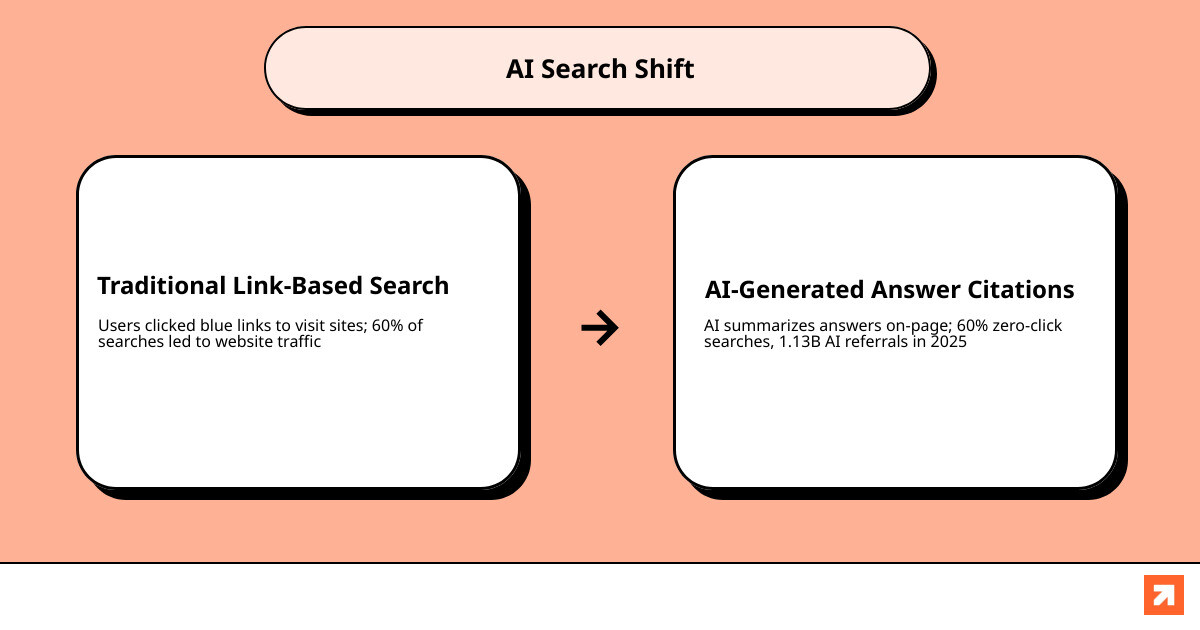
The way people find businesses online has fundamentally shifted. In June 2025 alone, AI platforms drove over 1.13 billion referral visits to websites — a 357% jump year-over-year. At the same time, 60% of Google searches now end without a single click, because AI answers the question right on the page.
That means your customers may never even see your website — unless you’re the source the AI is pulling from.
This isn’t a future trend. It’s already happening. Over 100 million people search with AI every day, and 40% of users now start product and service searches through AI tools instead of traditional search engines.
The old playbook — keywords, backlinks, and page-one rankings — is still relevant, but it’s no longer enough on its own. A new layer of optimization is now required to stay visible where your customers are actually searching.
I’m Craig Flickinger, founder of SiteRank and a digital marketing specialist with over 15 years of SEO experience, including hands-on work developing AI search optimization services for businesses navigating this new landscape. In this guide, I’ll walk you through exactly what these services involve, how they work, and how to use them to grow your visibility — without the technical overwhelm.
What are AI Search Optimization Services?
At a simple level, AI search optimization services are SEO services adapted for how AI systems retrieve, interpret, summarize, and cite information.
You may also hear overlapping terms like:
- Generative Engine Optimization, or GEO
- Answer Engine Optimization, or AEO
- LLM Optimization, or LLMO
- AIO, which we explain in Meaning of AIO
They all point to the same big idea: your content must be easy for AI systems to understand and confident enough for them to quote.
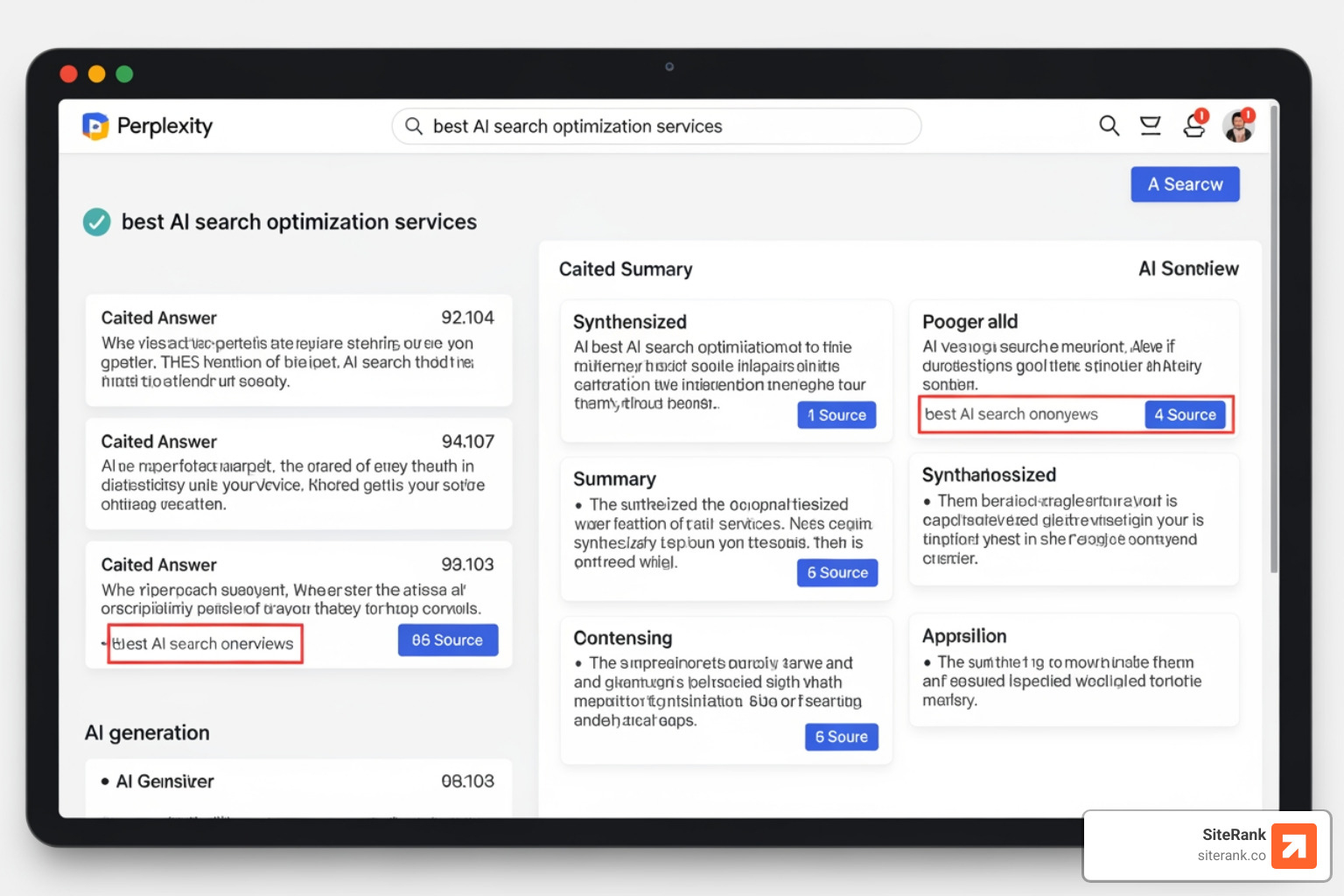
Traditional SEO tries to help a page rank. AI SEO tries to help a page get selected.
That difference matters. Search engines mostly index pages and order them. AI systems often break pages into chunks, compare those chunks against a question, and assemble an answer from the sources they trust most.
Here is the simplest comparison:
| Traditional SEO | AI Search Optimization |
|---|---|
| Focuses on rankings | Focuses on citations, mentions, and inclusion in answers |
| Optimizes for search result pages | Optimizes for chat interfaces and AI summaries |
| Targets keywords and clicks | Targets intent, entities, and retrieval |
| Measures positions and CTR | Measures citation rate and AI visibility |
| Rewards relevance and authority | Rewards clarity, structure, authority, and extractability |
If you want a deeper primer, our guides on AIO Optimization and AI Search Engine Optimization Guide break down the foundations.
Core Components of AI Search Optimization Services
Most strong AI SEO campaigns include a mix of strategy, content, technical SEO, and measurement.
The core components usually include:
- Semantic clarity so AI can tell exactly what a page is about
- Modular content blocks that can stand alone when quoted
- Q&A sections that match conversational prompts
- Structured headings that act like signposts for machine parsing
- Entity optimization so your brand, products, and services are unambiguous
- Structured data that labels content for machines
- Authority signals like quality links, mentions, reviews, and consistent brand profiles
One especially important idea is modular content. AI tools do not always read a page the way a human does from top to bottom. They often parse it into smaller pieces. If one paragraph, list, or answer block makes sense by itself, it is easier to lift into an AI-generated response.
That means fluffy intros, vague claims, and wall-of-text paragraphs are not doing you any favors. Sorry to all the dramatic homepage copywriters out there.
Why AI Search Optimization Services Matter in 2026
In 2026, this is no longer experimental.
The numbers are hard to ignore:
- Gartner predicts a 25% drop in traditional search volume by 2026
- 60% of Google searches now end without a click
- Over 100 million people use AI search daily
- ChatGPT handles 9% of global searches and was growing 15% month over month as of late 2025
- Google AI Overviews now appear far more often than they did just months earlier
- AI-referred traffic has shown 3x higher engagement than traditional search traffic
For businesses, that means visibility is spreading across more surfaces than just Google rankings. We need to think about presence in AI answers, summaries, recommendation lists, product comparisons, and research workflows.
This is especially true for B2B, where 60% of buyers now use tools like ChatGPT or Perplexity during research, and for product discovery, where 40% of users begin with AI.
If you want a broader look at service types and use cases, see our AIO Services Complete Guide and AI Rankings.
Optimizing for ChatGPT, Perplexity, and Gemini
Not all AI platforms work the same way, but they share a few patterns.
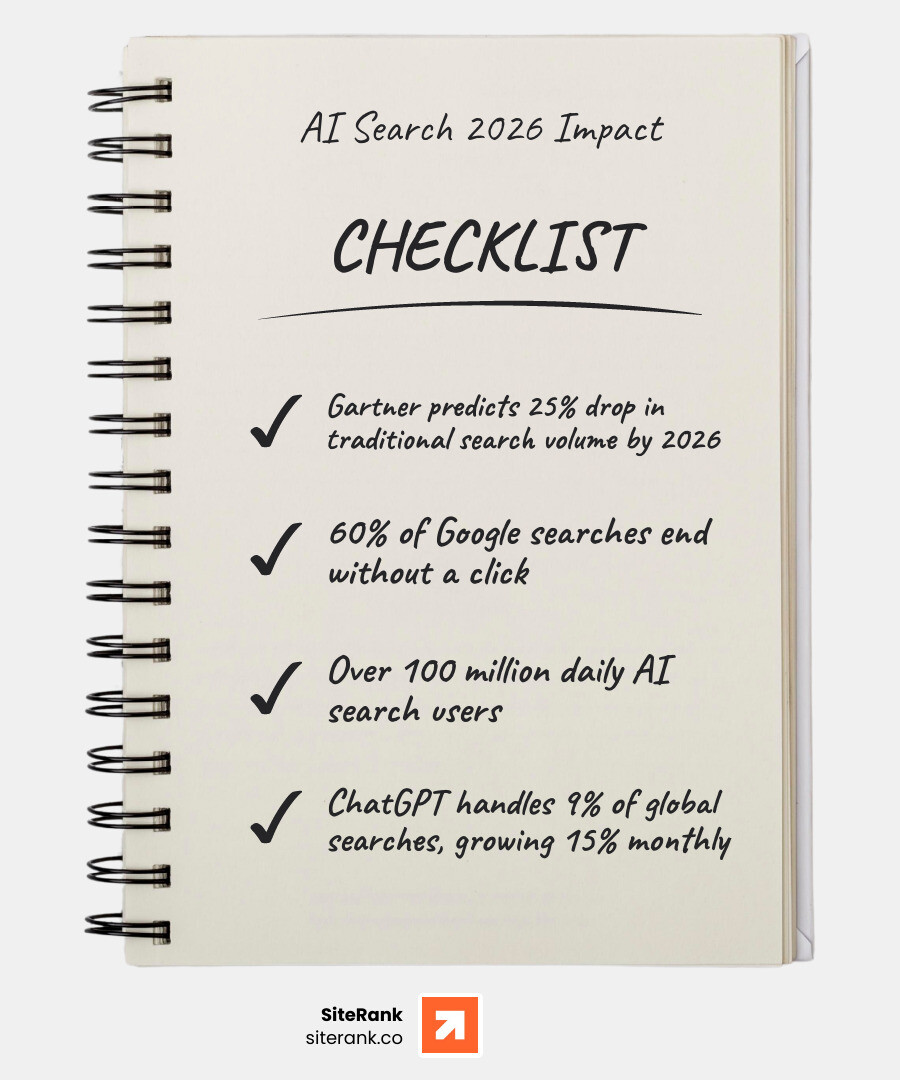
ChatGPT and Gemini often synthesize answers from trusted web sources, known entities, and structured information. Perplexity leans heavily into live web citations and often shows sources directly. Google AI Overviews blend generative summaries into classic search results. Microsoft Copilot also draws from web and search index signals.
Why optimize for them?
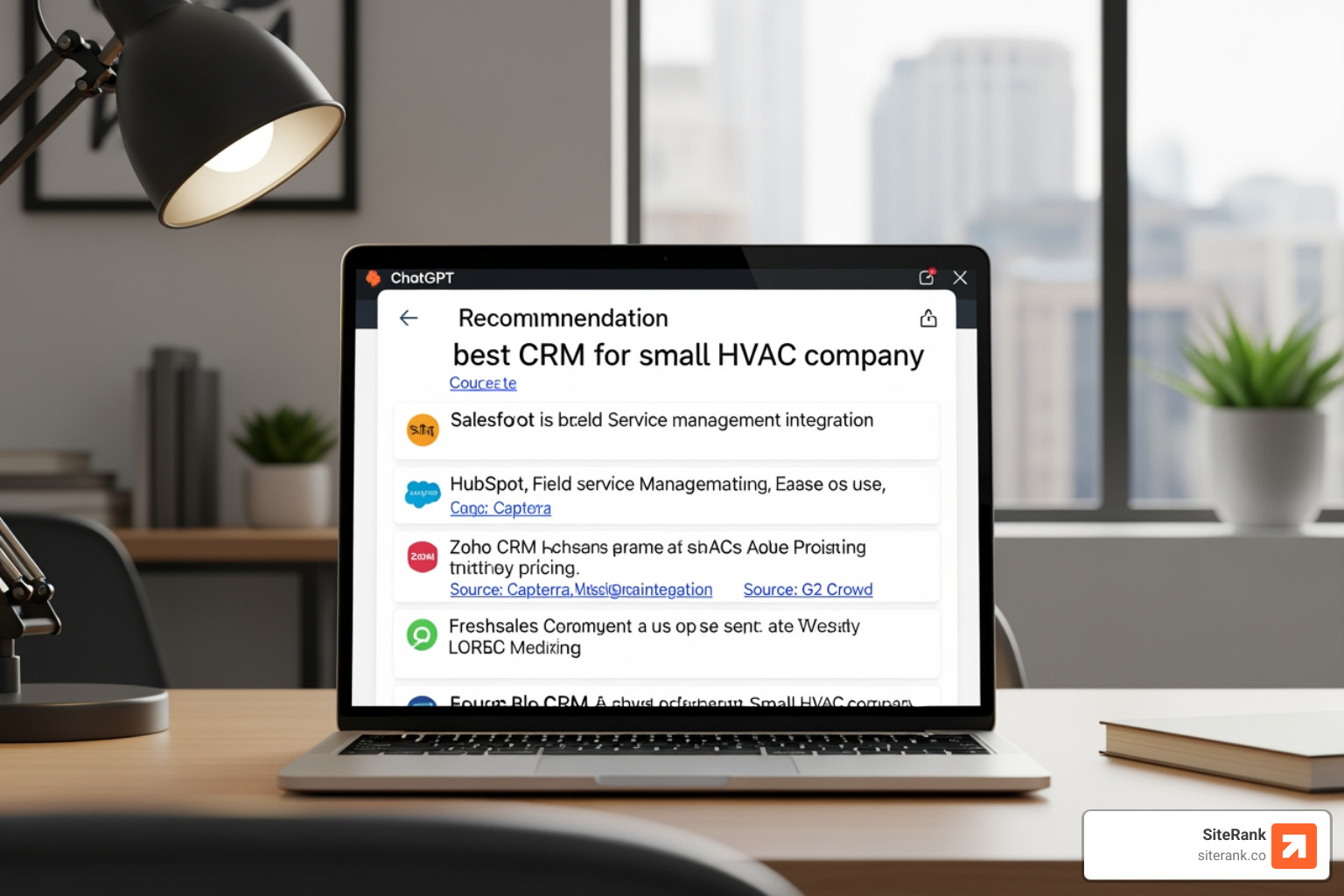
Because they are increasingly acting like recommendation engines. If someone asks, “What is the best CRM for a small HVAC company?” or “Which local accountant is known for startup tax planning?” the AI may name brands directly. If your business is absent, your competitor gets the free introduction.
A good starting point is our guide on Perplexity SEO and the Art of Search Everywhere Optimization.
Content Architecture for AI Search Optimization Services
Content architecture is where many businesses win or lose.
AI-friendly content usually includes:
- Clear H1, H2, and H3 hierarchy
- Short paragraphs with one idea each
- Bulleted and numbered lists
- Concise definitions
- FAQs and Q&A blocks
- Comparison tables
- Self-contained answer sections
- Consistent terminology across titles, headings, and body copy
This structure helps with what many teams call vector-friendly or retrieval-friendly content. In plain English: content that can be easily understood, matched to a question, and reused in an answer.
A strong page might answer a question like this:
- What is AI search optimization?
- Why does it matter in 2026?
- How much does it cost?
- How long does it take?
That is far easier for AI systems to extract than three long paragraphs saying your company is “innovative, world-class, and passionate.” Those words are fine for a trophy shelf. They are less helpful for retrieval.
For more practical formatting guidance, see How to Make AI Search Engines Fall in Love with Your Site.
Technical Requirements for AI Visibility
Content matters, but the technical layer still does heavy lifting.
The most important technical requirements include:
- Clean HTML with key information on-page, not buried in images or PDFs
- JSON-LD schema markup
- Clear internal linking
- Consistent entity references across your site
- Crawlable site architecture
- Accurate metadata, titles, and descriptions
- Updated business information across the web
Structured data is one of the biggest wins. Schema helps label what a page contains: organization details, products, services, FAQs, reviews, articles, authors, and more. That increases machine confidence.
Entity linking also matters. Your company should be consistently described everywhere: site, social profiles, directories, articles, and business listings. AI tools do better when they can connect all those mentions into one trusted entity instead of guessing whether “Site Rank,” “SiteRank,” and “Siterank Agency” are three different businesses.
For more on the technical side, visit Generative Engine Optimization and our AI SEO Tool Guide 2025.
Measuring Success and Avoiding Common Pitfalls
The old SEO dashboard is no longer enough on its own. Rankings still matter, but AI visibility introduces new metrics.
We usually look at:
- AI citation rate
- Share of AI Voice compared with competitors
- Branded mentions inside AI tools
- AI referral traffic in analytics
- Engagement and conversion from AI-referred visitors
- AI Overview presence for target queries
- Growth in non-brand discovery prompts
Some businesses see early citation improvements in around 60 days, especially after fixing content structure and schema. More meaningful compounding often happens across 3 to 6 months as authority, freshness, and coverage improve.
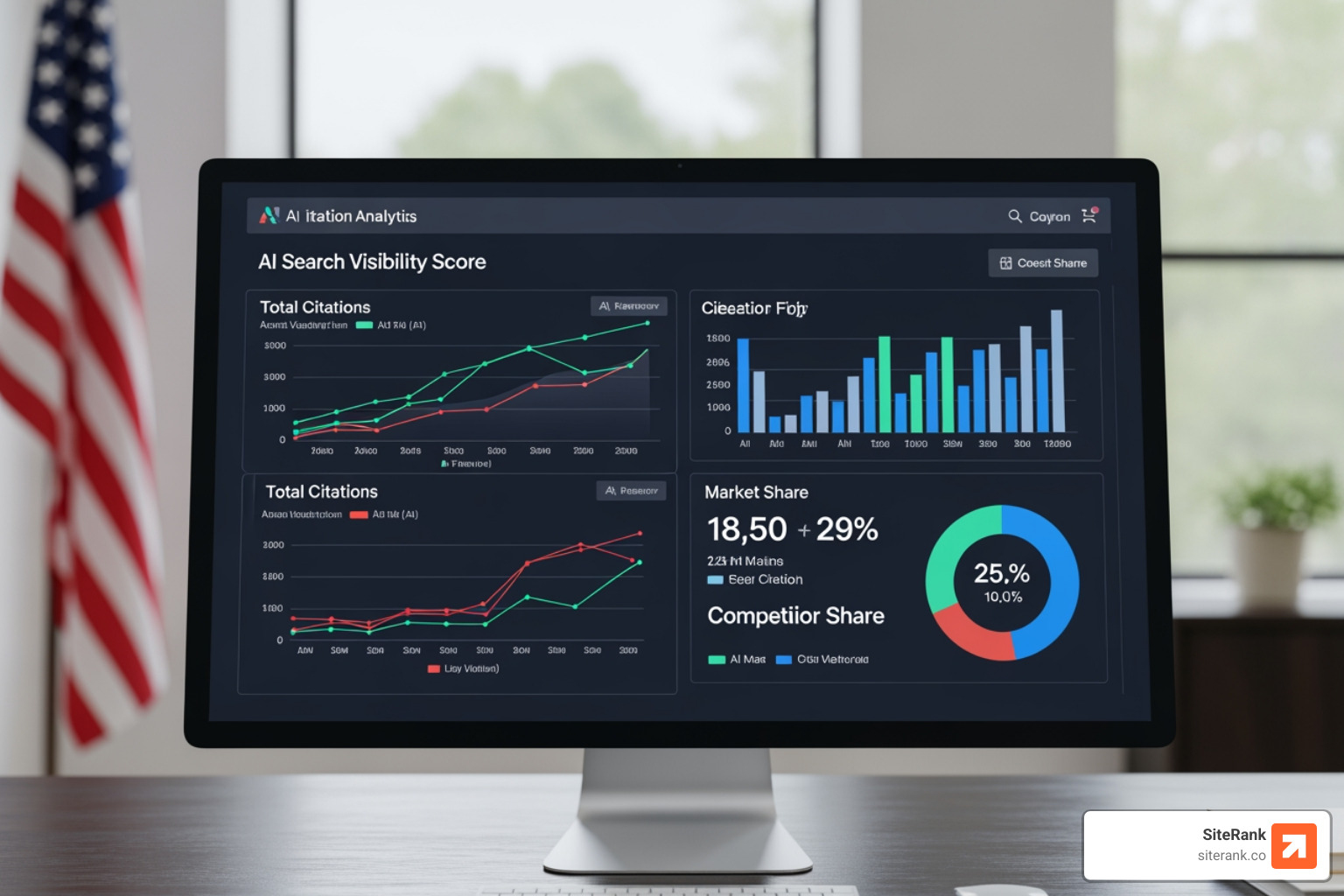
You can also track prompt sets manually across platforms, though that gets tedious fast. Tools in this space increasingly monitor AI visibility, citations, and competitive share. Research also points to newer platforms focused on AI visibility scoring, automated scans, and managed content optimization. In practice, we care less about shiny dashboards and more about whether they connect to business outcomes.
For niche examples, our contractor-focused guide on How to Build Better AI Search Visibility for Contractors shows how these ideas apply in the real world.
Common Mistakes in AI Optimization
A lot of businesses are trying to optimize for AI search and accidentally making it harder.
The most common mistakes include:
- Hiding critical information inside PDFs
- Using decorative symbols or odd formatting that breaks parsing
- Writing vague claims instead of concrete facts
- Publishing giant blocks of text with no structure
- Ignoring schema markup
- Using inconsistent brand names, product names, or service descriptions
- Chasing only one AI platform instead of broader visibility
- Treating AI SEO as a total replacement for core SEO
Let us expand on three big ones.
First, PDF reliance. AI systems generally understand structured HTML better than PDFs. If your pricing, service explanations, or product details only live in downloadable files, your best information may be practically invisible.
Second, decorative formatting. Fancy arrows, icons, unusual punctuation, and styled text can look slick to humans but confuse machine parsing. It is not glamorous advice, but plain formatting often wins.
Third, vague marketing language. “Best-in-class solutions” tells AI almost nothing. “ERP software for distributors with serial tracking and demand forecasting” tells it a lot.
Our article Why AI Thinks Your Contracting Business is the Best explores how clarity and proof signals shape AI perception.
Industry-Specific AI SEO Benefits
Different industries benefit in different ways.
For eCommerce:
- Product specs, comparisons, reviews, and schema help products appear in AI recommendations
- AI users often ask for “best” or “top” products, making listicles and comparison pages especially valuable
For SaaS:
- Category pages, alternatives pages, and solution guides can earn citations during software research
- Topical authority helps AI systems trust your brand for category-level queries
For B2B tech:
- High-intent buyers use AI tools for vendor shortlists, comparisons, and due diligence
- Expert-led explainers and case-study-backed pages can influence evaluation-stage prompts
For local businesses:
- Consistent NAP data, local schema, reviews, and service-area pages help AI answer “near me” and local intent queries
- Local businesses should also check out our Local Business SEO Services

Frequently Asked Questions about AI Search
How much do AI SEO services cost?
Pricing varies a lot by scope.
In 2026, common ranges look like this:
- Audit-only projects: around $2,000 to $10,000
- Monthly retainers for focused campaigns: often starting around $3,000
- Broader enterprise or multi-market programs: $10,000 to $50,000+ per month
What affects pricing:
- Number of pages or products
- Technical complexity
- Number of target platforms
- Whether content creation is included
- Reporting depth
- Entity and authority building work
- Local, national, or international scope
At SiteRank, we believe in tailored strategies rather than padding invoices with unnecessary deliverables. If a business needs schema cleanup, content restructuring, and better reporting, we focus there instead of selling a kitchen sink nobody asked for.
How long does it take to see results?
Some businesses see early AI citation gains in 30 to 60 days, especially after technical fixes and content restructuring.
A more realistic timeline is:
- Month 1: audit, fixes, content prioritization
- Months 2 to 3: early citation and retrieval improvements
- Months 3 to 6: stronger compounding visibility, referral traffic, and conversion impact
This is similar to SEO in one important way: trust takes time. AI systems tend to favor brands with consistent authority, fresh content, and reliable signals across the web.
Does AI SEO replace traditional SEO?
No. It builds on top of it.
Traditional SEO still provides the foundation:
- Crawlability
- Indexability
- Backlinks
- Site speed
- Content quality
- Internal linking
- Topical authority
AI SEO adds a second layer:
- Retrieval-friendly formatting
- Q&A structures
- Entity optimization
- Structured data
- Citation tracking
- Prompt-based visibility strategy
The smartest strategy is not SEO versus AI SEO. It is SEO plus AI SEO.
If you want to future-proof your search presence, you need both.
Conclusion
AI search is changing the rules, but the businesses that adapt early have a clear edge. The winners in 2026 are not just ranking pages. They are building content and technical foundations that help AI systems understand, trust, and cite them.
That is exactly what AI search optimization services are designed to do.
At SiteRank, we combine proven SEO fundamentals with AI-focused strategy, structured content, and advanced reporting so you can earn more visibility where real discovery now happens. We do not believe in bloated retainers or random deliverables. We believe in tailored work that drives more clicks, better engagement, and stronger business outcomes.
If you want help getting found in AI-powered search, start with a smart foundation and build from there. Explore our Local Business SEO Services or dive deeper with:
- AIO Services Complete Guide
- Meaning of AIO
- AIO Optimization
- AI Rankings
- AI Search Engine Optimization Guide
The short version? Search is no longer just about being found. It is about being chosen.