

Why You Need to Rank in AI Search Right Now
Learning to rank in AI search has become one of the most important things a business owner can do in 2026. Here’s a quick summary of what it takes:
How to rank in AI search engines:
- Build entity authority – Make sure your brand is clearly defined across the web (Google Knowledge Graph, Wikipedia, consistent NAP data)
- Create answer-first content – Lead every page with a direct, citable answer to the question your audience is asking
- Add structured data – Deploy schema markup (FAQPage, Organization, Article) so AI engines can read and cite your content
- Allow AI crawlers – Check that your robots.txt doesn’t block GPTBot, PerplexityBot, ClaudeBot, or Google-Extended
- Earn third-party mentions – Get covered in industry publications, review platforms, and forums where AI engines pull signals
- Refresh content regularly – Update key pages at least every 30 days; Perplexity AI starts ignoring content as early as 2-3 days after publication
- Track your citations – Monitor how often and where AI engines mention your brand across platforms like ChatGPT, Perplexity, and Google AI Overviews
Search has shifted. Fast.
Not long ago, ranking meant showing up in Google’s ten blue links. You optimized for keywords, built backlinks, and watched your position climb. That still matters — but it’s no longer the whole game.
Today, a growing share of high-intent searches happen inside AI tools. Someone asks ChatGPT which accounting software to use. Another person asks Perplexity for the best local contractor. Google’s AI Overviews now appear on roughly 16.5% of all queries — and that number keeps climbing.
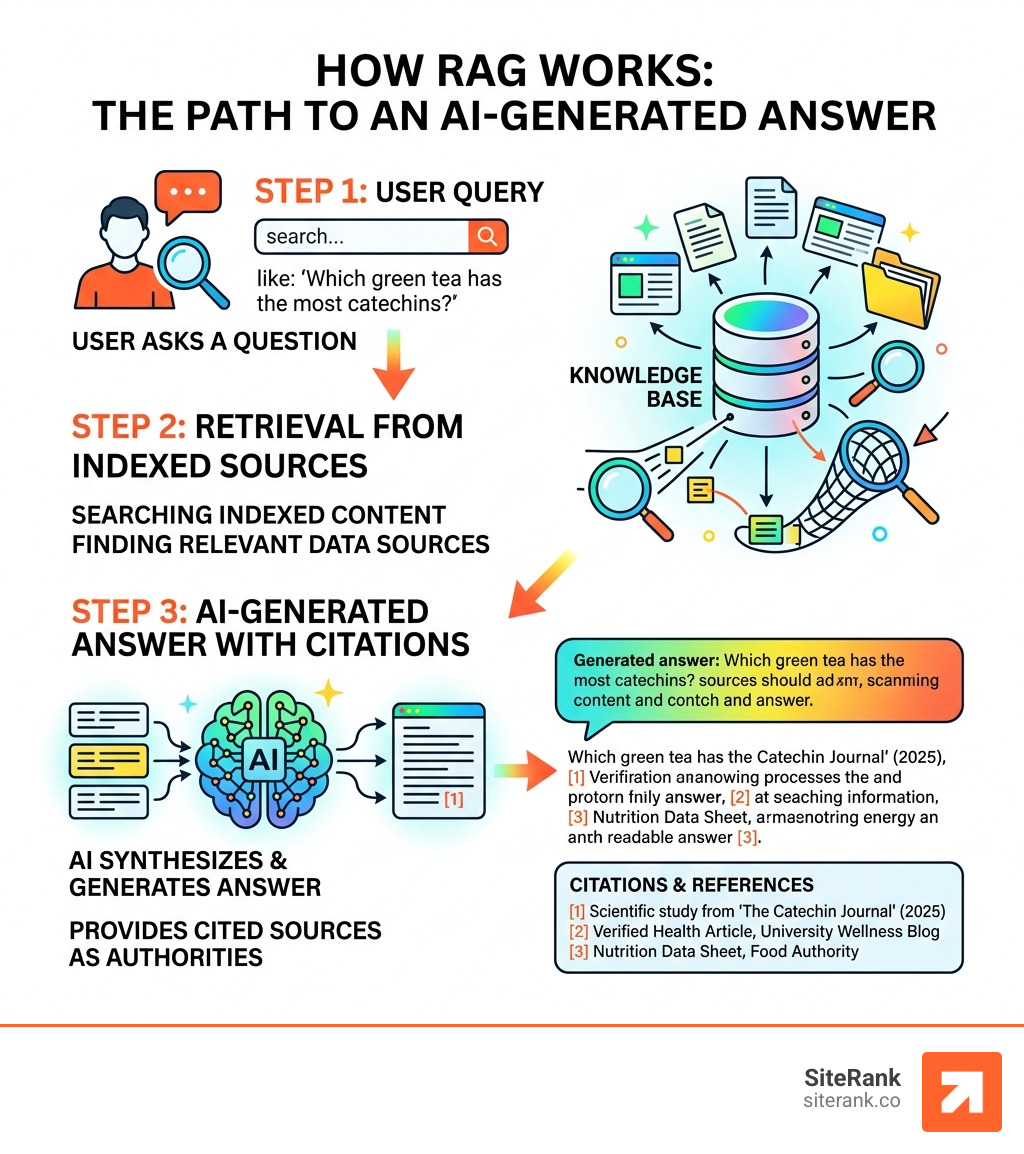
These AI engines don’t return a list of links. They generate a synthesized answer and cite a handful of sources as authorities. If your brand isn’t one of those sources, you’re invisible — even if you rank #1 on Google.
The field built around fixing this is called Generative Engine Optimization (GEO). It’s different from traditional SEO, and most businesses haven’t started yet. That’s actually good news for you.
I’m Craig Flickinger, founder of SiteRank.co, with over 15 years of SEO experience helping businesses earn real visibility in competitive search environments — and increasingly, that means helping clients rank in AI search engines alongside traditional results. This guide covers everything you need to know to get there.
The Evolution of Search: Why You Need to Rank in AI Search
The search landscape in April 2026 looks nothing like it did just a few years ago. We’ve moved from a “library” model—where you ask for a book and the librarian points to a shelf—to a “consultant” model. Now, the librarian reads the books for you and summarizes the answer.
This shift is driven by Generative Engine Optimization, or GEO. While traditional SEO focuses on keyword density and link counts, GEO focuses on content-answer fit. AI models like Perplexity and SearchGPT don’t just look for keywords; they look for the most authoritative, structured, and easy-to-digest explanation of a topic.
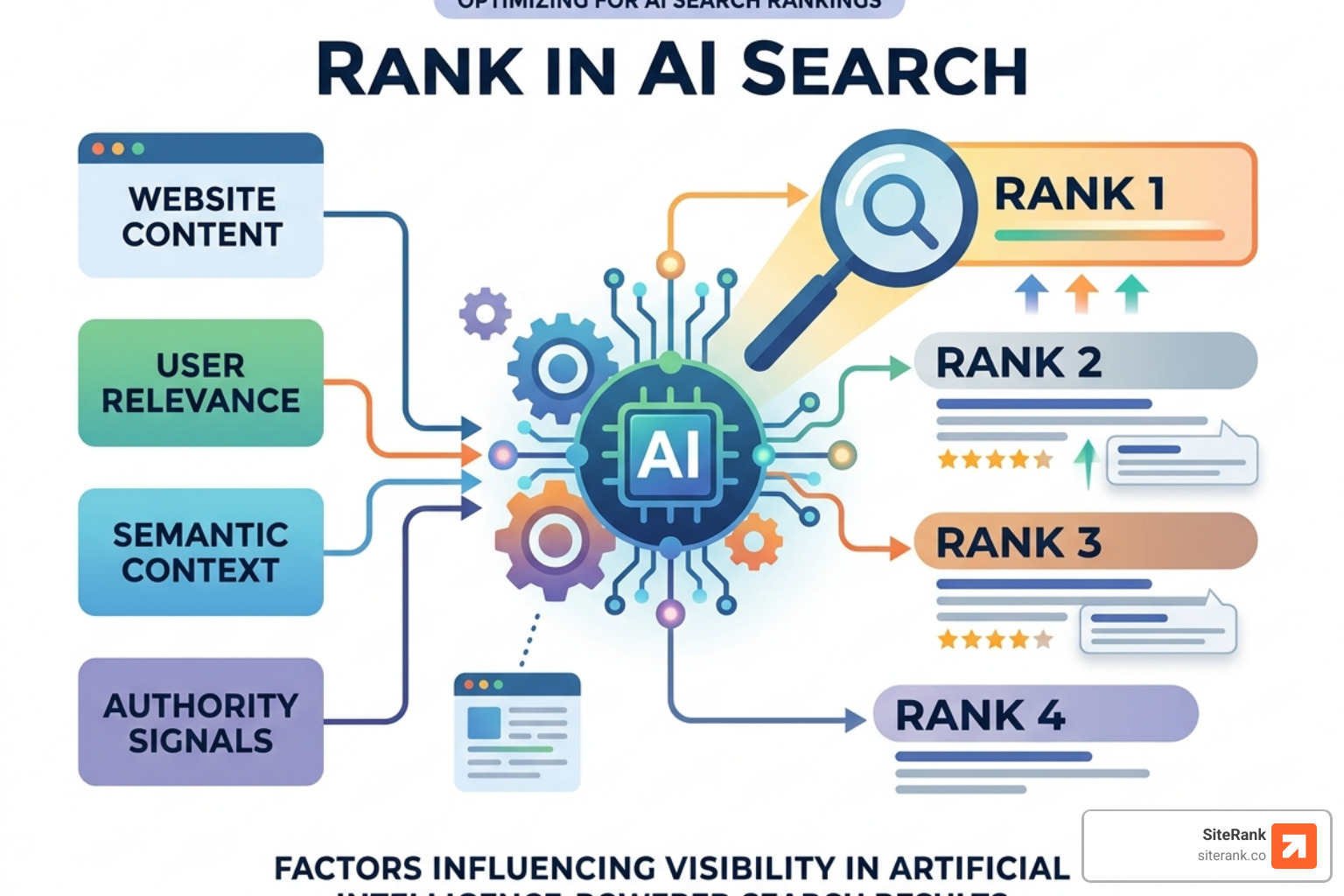
Currently, AI Overviews (AIOs) surface on approximately 16.5% of all queries. For informational “how-to” or “what is” searches, that number can skyrocket to over 70%. If you want to stay relevant, understanding the meaning of AIO is step one. Step two is realizing that AI engines prioritize user intent over raw traffic. They want to provide a satisfying, conversational experience that saves the user from clicking through five different websites.
AI vs. Traditional Search: A Comparison
| Factor | Traditional SEO | AI Search (GEO) |
|---|---|---|
| Primary Goal | Rank in the top 10 blue links | Earn a citation in the AI summary |
| Content Focus | Keyword optimization & length | Direct answers & semantic depth |
| Authority Signal | Backlinks & Domain Rating | Entity signals & third-party mentions |
| Structure | Standard HTML & H-tags | JSON-LD Schema & answer blocks |
| Freshness | Updated every 6-12 months | Updated every 2-30 days |
Building Entity Authority to Rank in AI Search
In AI, your website isn’t just a collection of pages; it’s an Entity. An entity is a distinct, well-defined “thing” (a person, place, or brand) that the AI understands. To rank in AI search, you must prove to the Large Language Models (LLMs) that your entity is the most trustworthy source for a specific topic.
This starts with the Google Knowledge Graph and Wikidata. If your brand has a Wikipedia page or a robust Wikidata entry, you’re already miles ahead. But even without those, you can build authority through consistent brand mentions across the web. AI engines are constantly scanning Reddit, Quora, and industry-specific forums to see what real humans are saying about you.
Third-party corroboration is the “backlink” of the AI era. When independent news sites or “best of” lists mention your brand, it sends a massive trust signal to models. You can track which models are currently leading the pack on the AI Search Arena Leaderboard 2026 | KEAR AI to see which engines you should prioritize for your niche.
At SiteRank, we help clients build this authority by focusing on AI Rankings—tracking not just where you sit on Google, but how often you are cited as the “recommended” choice by ChatGPT and Claude.
Content Architecture and Freshness to Rank in AI Search
If you want an AI to cite you, you have to make its job easy. We recommend an “answer-first” structure. Instead of burying your conclusion at the bottom of a 2,000-word post, put the direct answer in the first 100 words. Use H2 and H3 headers that mirror the exact questions users are asking.
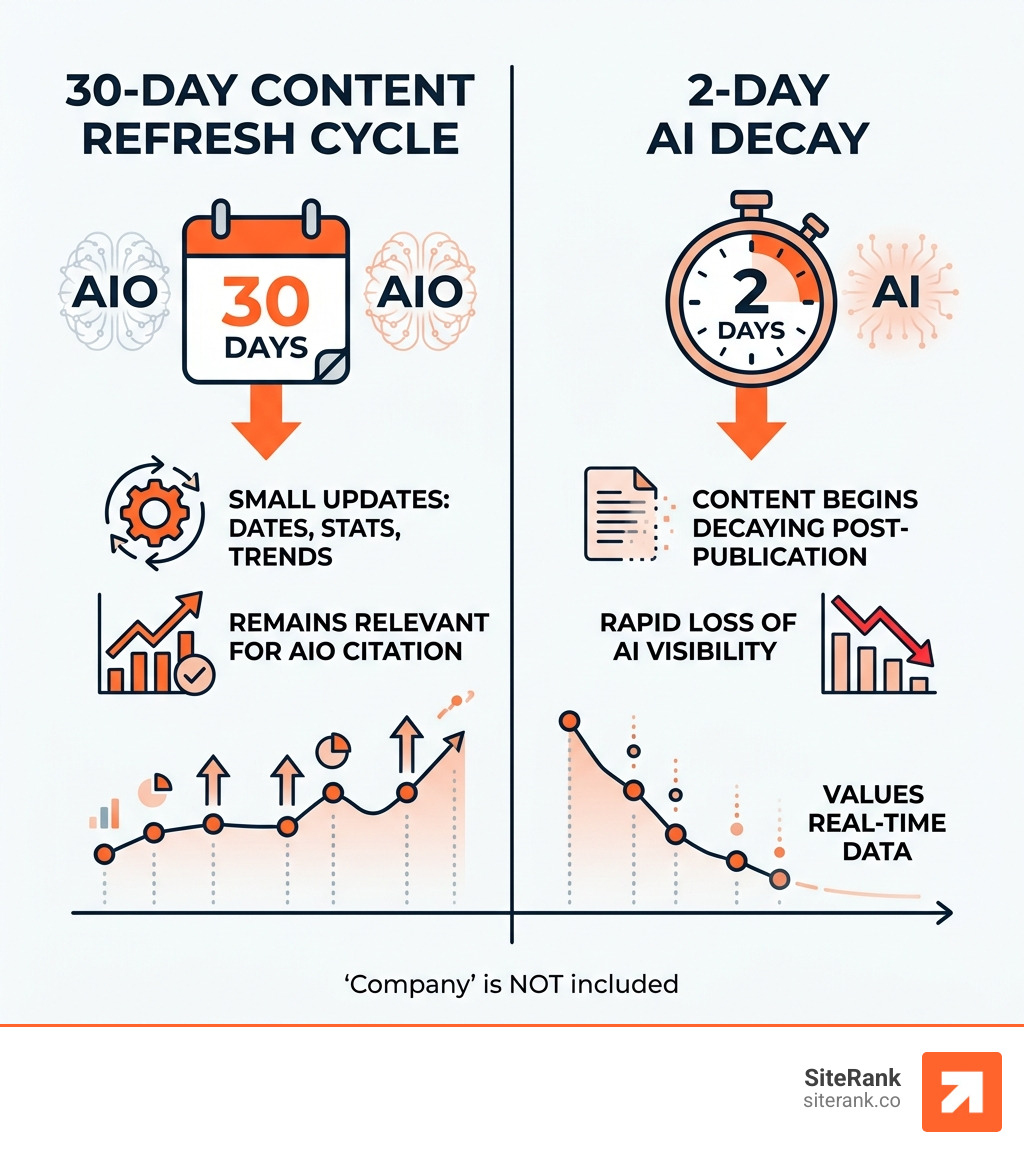
Freshness is where most sites fail. In traditional SEO, a post from a year ago might still rank #1. In AI search—specifically on platforms like Perplexity—content decay begins just 2-3 days post-publication. Perplexity processes over 780 million queries a month and values real-time data above all else.
To maintain visibility, we suggest a 30-day refresh cycle for your most important pages. Even small updates to dates, statistics, or current trends can provide the “recency boost” needed to stay in the citation block. This AIO Optimization strategy ensures that when an AI looks for the “latest” information, your site is the one it finds.
Technical and Structural Requirements for AI Visibility
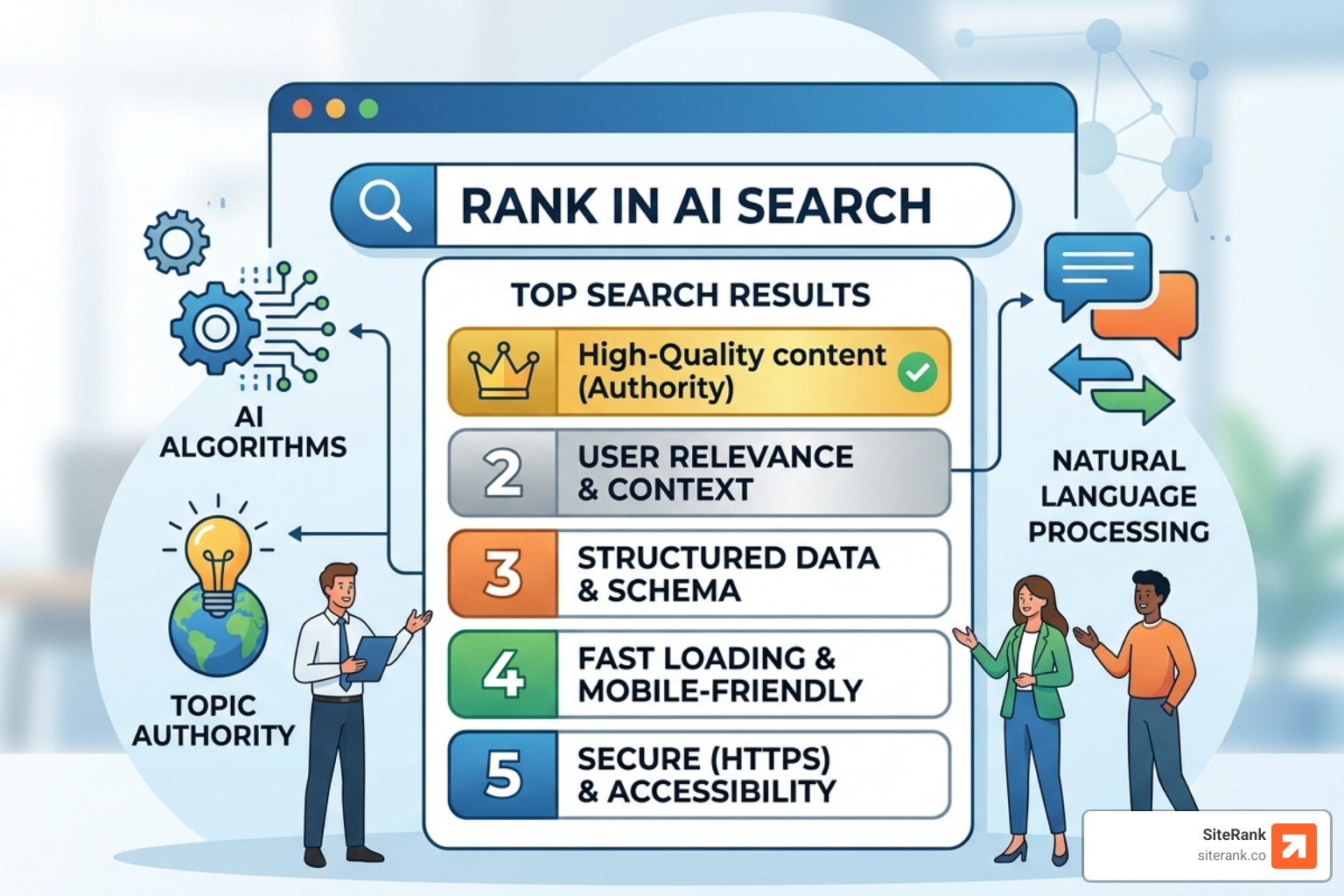
Behind every great AI answer is a mountain of structured data. While humans read your text, AI bots read your code. If your technical foundation is shaky, you won’t rank in AI search, no matter how good your writing is.

The Power of Schema Markup
Schema markup is essentially a translator for AI. By using JSON-LD (the preferred format), you tell the AI exactly what your content is about. For example:
- Organization Schema: Defines who you are and links your social profiles (using
sameAs). - FAQPage Schema: Directly feeds the AI “question and answer” pairs.
- Article Schema: Highlights the author, date published, and main entity.
Research shows that implementing comprehensive schema can increase your appearance in AI summaries by up to 36%. If you’re looking for a deeper dive, check out our AI Search Engine Optimization Guide for specific code templates. For those who want a “done-for-you” approach, our AIO Services Complete Guide explains how we handle these technical hurdles for our clients.
Optimizing Crawlability to Rank in AI Search
You can’t rank if the bots can’t find you. In 2026, managing your robots.txt and llms.txt files is mandatory. Many site owners accidentally block AI crawlers, fearing they will “steal” content. However, blocking them also means you lose out on citations and the high-intent traffic they bring.
Ensure your site allows the following bots:
- GPTBot (OpenAI/ChatGPT)
- PerplexityBot (Perplexity AI)
- Google-Extended (Google Gemini/AI Overviews)
- ClaudeBot (Anthropic)
We also recommend implementing IndexNow. This protocol allows your server to instantly notify search engines (including Bing, which powers much of ChatGPT’s browsing) whenever you update a page. Since AI search values speed, being the first to be indexed gives you a massive advantage.
Technical accessibility also means ensuring your site uses server-side rendering. If your content is hidden behind complex JavaScript, an AI bot might struggle to “see” the full picture, leading to misattribution or being ignored entirely. Our AI SEO Tool Guide 2025 lists several crawlers you can use to test your site’s “AI-readiness.”
Strategies to Dominate Major AI Search Platforms
Not all AI engines are created equal. To rank in AI search effectively, you need to tailor your approach to the specific “personality” of each platform.
Perplexity AI: The Freshness King
Perplexity is a Retrieval-Augmented Generation (RAG) engine. It searches the live web for every query. To win here, you need high-authority citations and lightning-fast updates. Perplexity cites an average of 5.28 sources per response—aim to be the first one listed by providing unique, data-driven insights that no one else has.
ChatGPT (with Search): The Conversational Hub
ChatGPT (powered by SearchGPT technology) favors topical depth. It likes “how-to” guides and comprehensive explanations. Because it often relies on Bing’s index, having a strong presence on LinkedIn and Microsoft-owned properties can give you an edge. You can see how different models compare on the Search AI Leaderboard – Best AI Search Models Compared.
Google AI Overviews & Gemini: The Authority Play
Google still relies heavily on its 20+ years of indexing. To rank in Google’s AIOs, traditional E-E-A-T (Experience, Expertise, Authoritativeness, and Trustworthiness) is still the gold standard. High-quality images and videos are also crucial here, as Google is leaning heavily into multimodal search (searching with text, images, and voice simultaneously).
Gemini Flash and Speed-Optimized Models
In 2026, we are seeing a “Flash Revolution.” Models like Gemini 3 Flash are winning user favor because they are incredibly fast. For your site, this means performance matters more than ever. If your page takes 5 seconds to load, a speed-optimized AI model might skip your site in favor of a faster source during its retrieval phase.
Frequently Asked Questions about AI Search Rankings
How do I measure success in AI search?
Success in GEO isn’t measured by “Position 1” anymore. Instead, we track:
- Citation Frequency: How often does the AI mention your brand?
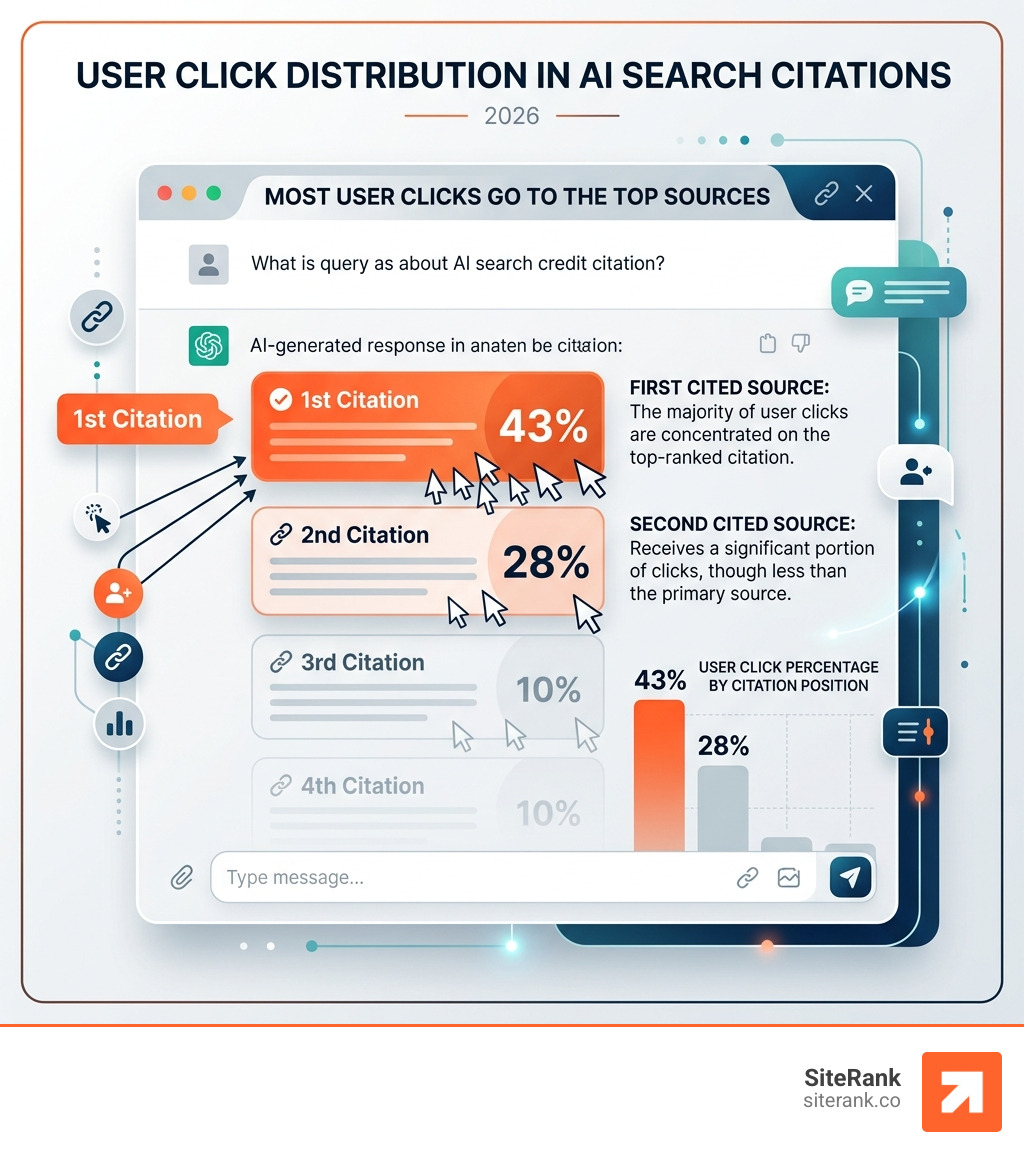
- Attribution Prominence: Are you the first source cited or the fifth?
- Share-of-Voice: What percentage of relevant queries include your brand?
- Sentiment Tracking: Is the AI speaking about your brand positively or neutrally?
What are common pitfalls to avoid in GEO?
- Keyword Stuffing: AI is smart. It ignores “robotic” writing. Focus on human-like, helpful content instead.
- Blocking Bots: As mentioned, if you block GPTBot, you’re opting out of the future of search.
- Stale Content: Letting your “Best of 2025” list sit unchanged in April 2026 is a recipe for invisibility.
- Schema Errors: A single missing bracket in your JSON-LD can make your structured data unreadable.
What future trends should site owners prepare for?
We expect to see even more personalized search. AI will tailor answers based on a user’s specific history and preferences. Additionally, multimodal optimization will be key—ensuring your images and videos are as “readable” to AI as your text. You can stay updated on the latest shifts by checking the AI Search Rankings by Users — Feb 2026 Edition | AICPB.
Conclusion
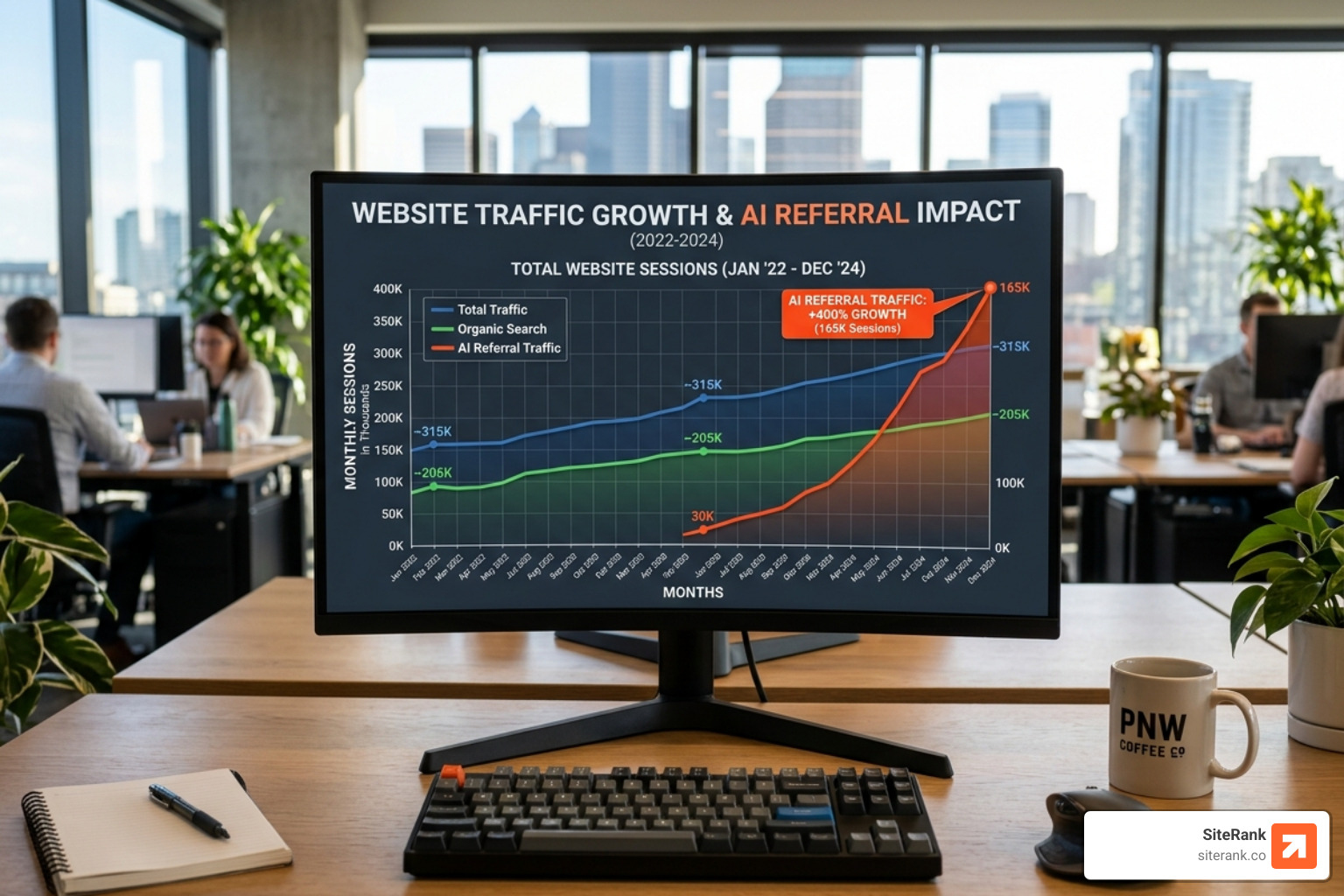
The window to establish yourself as an authority in AI search is wide open right now. Because so few businesses have optimized for GEO, those who act today are seeing 4x visibility improvements and massive traffic increases.
At SiteRank, we don’t believe in “fluff” deliverables. We focus on the high-leverage actions that actually move the needle: building your entity authority, fixing your technical schema, and creating content that AI engines can’t help but cite. The “rich get richer” dynamic is real in AI search—early citation leaders gain a compounding advantage that becomes harder to unseat every passing month.
Are you ready to make the bots fall in love with your site? Don’t get left behind in the “ten blue links” era. Learn more about our customized AI SEO services and let us help you dominate the new frontier of search.