

Core Foundations of Multi Location Contractor SEO
Local search accounted for nearly 23% of all website traffic in recent studies, making local visibility a primary source of high-intent leads. To tap into this demand, home service businesses must understand the technical and operational mechanics behind multi location contractor SEO.
For contractors, the local ranking environment hinges on how Google distinguishes physical brick-and-mortar stores from Service Area Businesses (SABs). When a homeowner searches for emergency plumbing, roof repair, or electrical work, Google prioritizes proximity, relevance, and local authority.
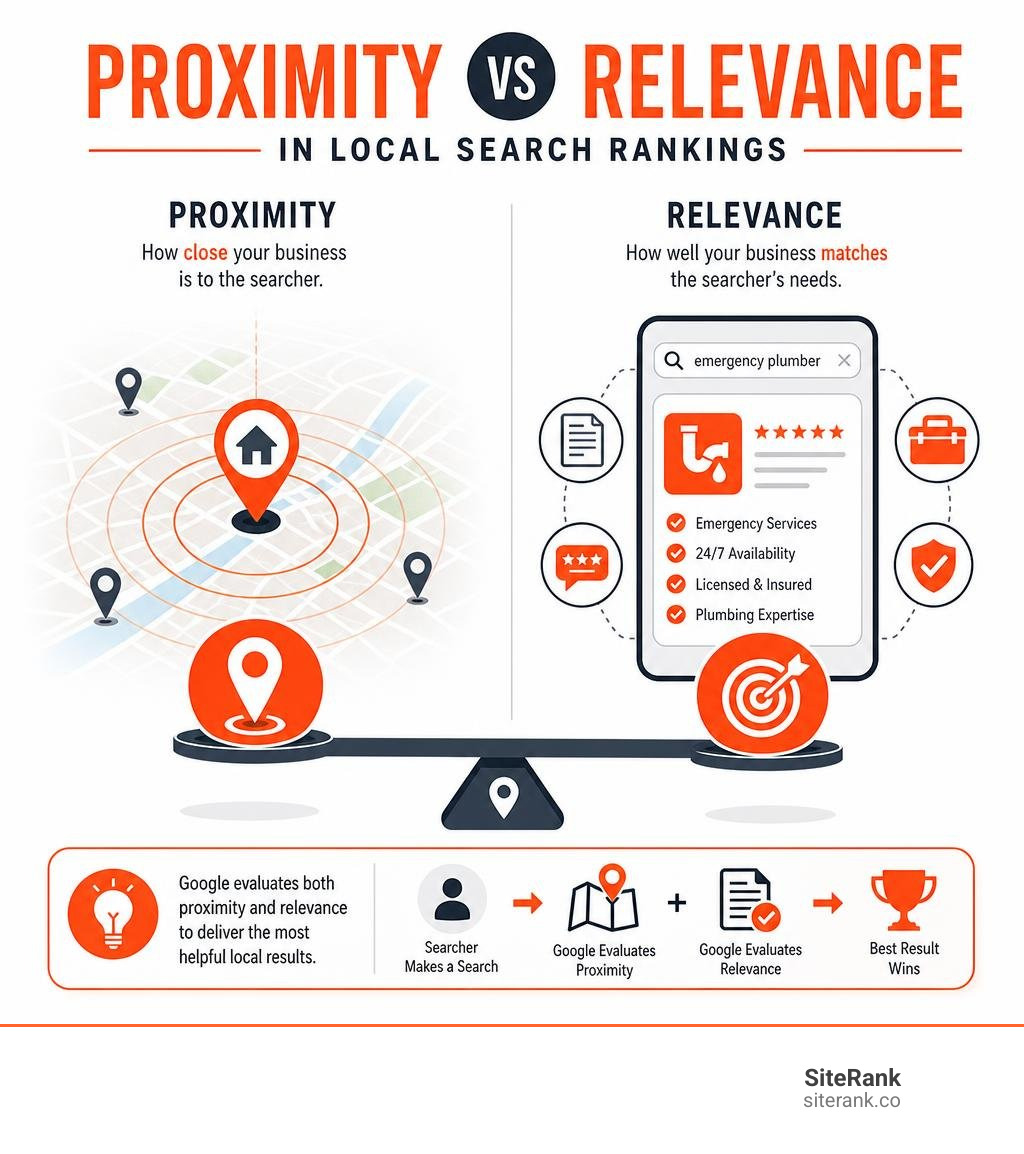
Proximity contributes roughly 15% to local search algorithms today—down from 25–30% in 2020. This shift means a well-optimized contractor located 30 miles away can outrank a poorly optimized competitor just 5 miles away. By following The Ultimate Guide to Local SEO for Home Services, you can align your digital footprint with modern ranking algorithms.
Strategic Differences in Multi Location Contractor SEO
Single-location businesses focus on a single geographic radius around their physical address. Multi-location contractors must win organic visibility and map pack positions across dozens of distinct municipalities simultaneously.
- Storefront Businesses: Rely heavily on foot traffic, physical addresses, and local citations tied directly to a visible storefront.
- Service Area Businesses (SABs): Travel to customers. They must build search authority using designated service areas, non-templated city landing pages, and localized project proof.
Because location-based searches generate 60% of contractor leads—and the Local Pack captures 44% of all clicks on those queries—contractors missing from secondary city searches forfeit nearly half of their prospective market share.
Google Business Profile Setup for Service Area Success
Your Google Business Profile (GBP) is your primary map listing driver. However, 72% of contractors only rank in their primary home city despite actively serving 15 or more markets.
To configure your profile correctly:
- Choose the option to hide your physical street address if you do not host customers at your shop.
- Add up to 20 specific cities or ZIP codes inside your Google Business Profile dashboard.
- Keep your total service perimeter within approximately two hours of driving time from your main shop.
Expanding past a 2-hour driving radius dilutes your relevance signals and creates logistical challenges for your crew. You can read more about planning geographic coverage in How to Map Out Your Home Service Location Strategy Without Losing Your Mind.
Designing City Landing Pages That Avoid SpamBrain Penalties
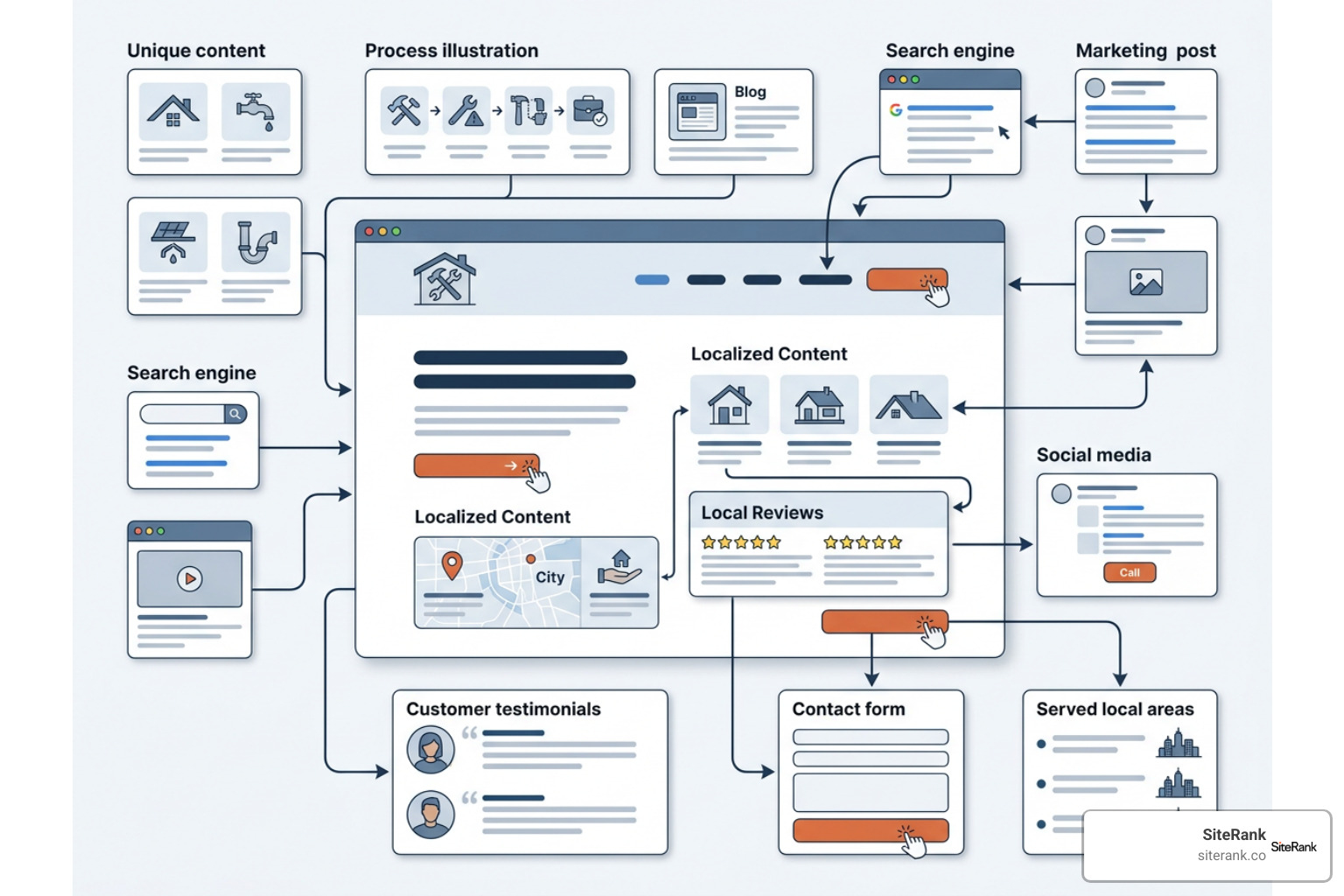
To rank in secondary cities where you lack a physical shop address, your website needs individual city landing pages. Google’s SpamBrain algorithm actively identifies thin, low-quality pages designed purely to manipulate rankings.
Eliminating Duplicate Content and Doorway Page Risks
Mass-producing landing pages by swapping out city names on identical templates is one of the quickest ways to trigger a doorway page penalty. Every city page must contain 80% to 100% unique body content.
To ensure high content uniqueness across your pages:
- Feature Regional Sub-Market Details: Discuss specific architectural styles, local building codes, or regional weather considerations (e.g., coastal salt air corrosion vs. inland freezing risks).
- Display Local Project Proof: Add geotagged project photos, job summaries, and client reviews originating directly from that specific city.
- Mention Local Landmarks: Incorporate references to well-known intersections, historic districts, or local supply houses to prove real physical operation in the area.
Learn more about building location pages that pass manual and algorithmic reviews in How Contractors Can Build Location Pages That Actually Rank.
Essential Elements of High-Converting City Geo Pages
Building high-ranking city pages requires combining localized copy with structured data elements, as outlined in The Ultimate Blueprint for Home Services Geo Pages.
City pages should include:
- ServiceArea and LocalBusiness JSON-LD Schema: Define the
areaServedproperty explicitly using standard Wikidata or Wikipedia links. - Localized Customer Testimonials: Publish reviews that mention specific service types alongside the city name.
- Clear Calls-to-Action (CTAs): Include local phone numbers or city-specific scheduling widgets to maximize conversion rates.
Website Architecture, Content Clusters, and Linking Infrastructure
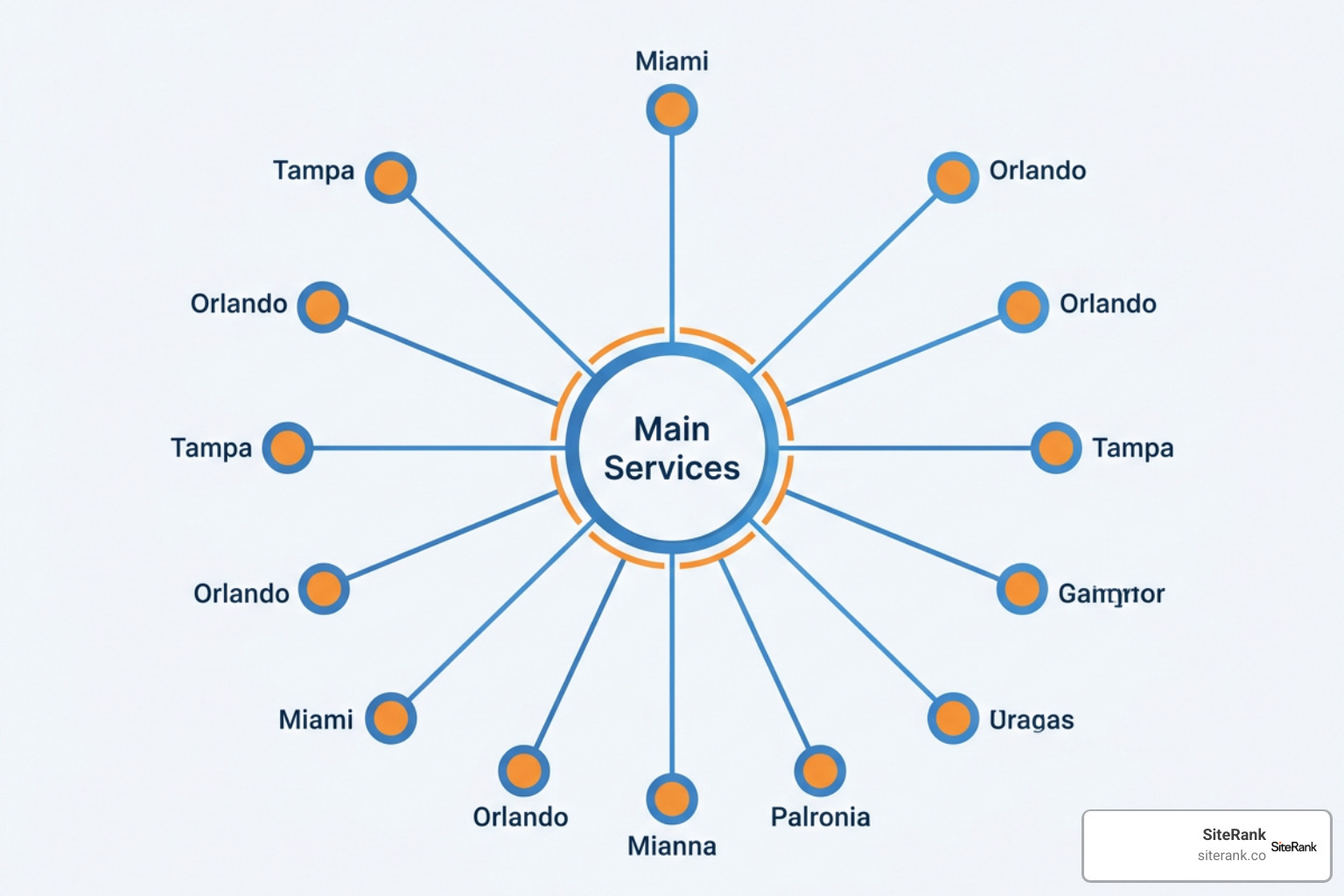
A scattered website structure makes it difficult for search crawlers to understand how your city pages relate to your main services. Establishing a structured hierarchy passes domain authority across all location pages.
Building a Hub-and-Spoke Internal Link Architecture
The hub-and-spoke model organizes geographic and service pages into logical clusters. Learn how to map this framework in our guide on Wiring for Growth with a Multi-Location Strategy.
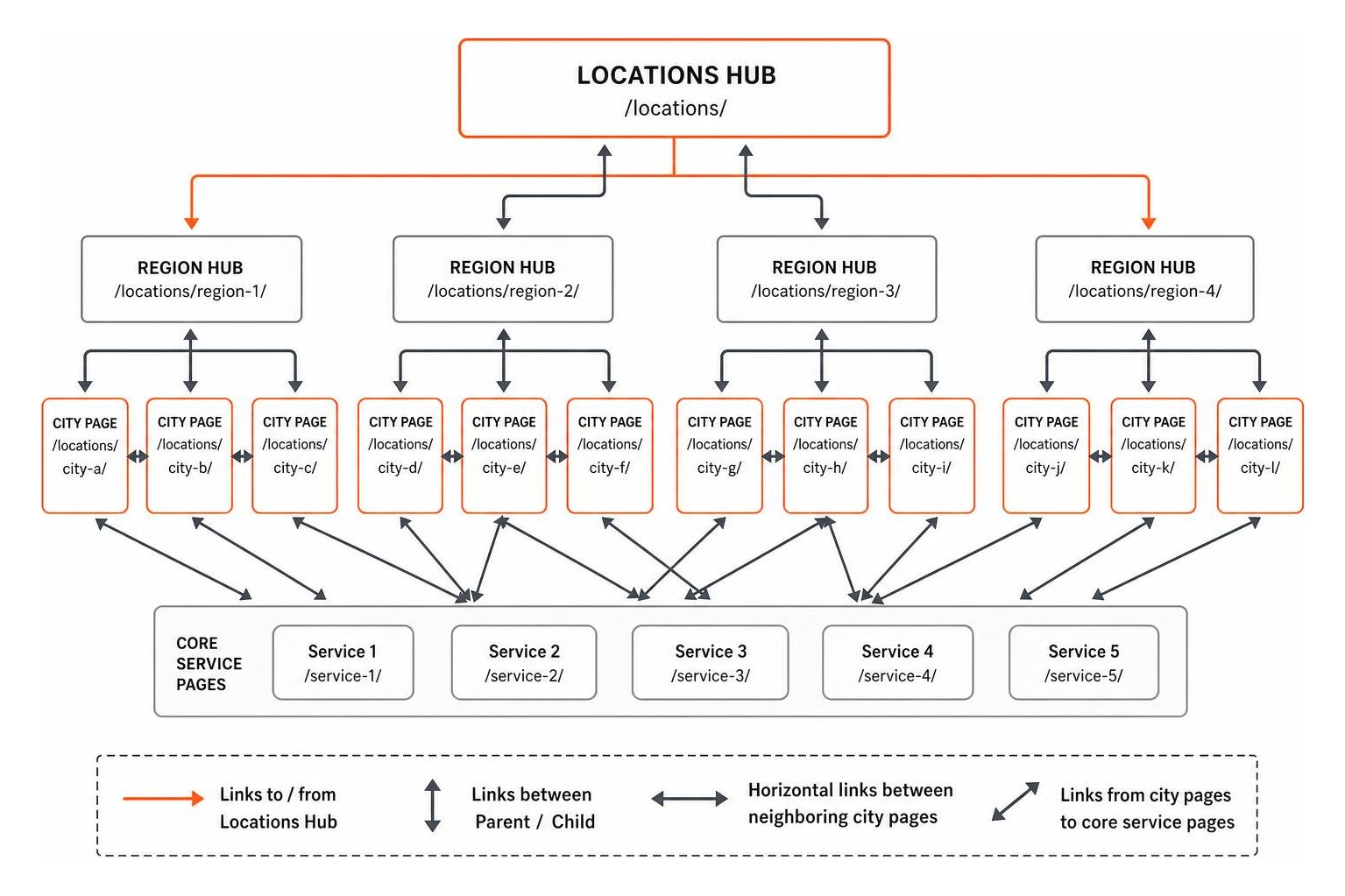
- Main Locations Hub Page: Functions as the primary directory (e.g.,
domain.com/locations/), linking out to regional hubs or individual city pages. - City Spoke Pages: Detailed landing pages (e.g.,
domain.com/locations/city-a/) that link back up to the main hub page, to relevant core service pages, and horizontally to 3–5 neighboring city pages. - Descriptive Anchor Text: Use contextual anchor text like “roof replacement in City A” instead of generic phrases like “click here.”
Content Clustering for Trade-Specific Relevance
To establish strong topical authority, support your location landing pages with targeted informational content. For example, trade-specific strategies like The Complete Local Search Optimization Guide for House Painters demonstrate how localized trade guides build search authority.
Create contextual guides addressing common local trade problems:
- How High Humidity Impacts Exterior Paint Cure Times in Coastal Cities
- Common Soil Conditions Causing Foundation Settlement in Regional Suburbs
Linking these informative guides directly to relevant city landing pages builds contextual relevance for trade keywords across secondary markets.
Off-Page Authority, Local Citations, and Geo-Targeted Signals
Off-page signals show Google that your business is trusted within target communities. To learn more about establishing domain authority, read The Local SEO Blueprint for Tradesmen to Rank Number One.
Maximizing Local Reviews with Location Signals
Customer reviews account for 10-15% of local ranking factors. Review quantity, recency, and response velocity directly impact map pack placement.
Encourage clients to naturally name their city and the specific work performed in their reviews. A review stating “The team replaced our AC unit in Boca Raton quickly” provides strong local relevance signals.
Targeted Local Backlinks and Tiered Citation Building
While average contractors maintain 15–25 local citations, fully optimized service area businesses often build 50–80 quality listings per primary market.
- Tier 1 (Core Directories): Ensure strict Name, Address, and Phone number (NAP) consistency on major aggregators (Data Axle, Localeze, Yext, Google Business Profile, Apple Maps).
- Tier 2 (Industry Directories): Secure complete profiles on trade platforms like Angi, Houzz, BuildZoom, and the Better Business Bureau.
- Tier 3 (Hyper-Local Links): Sponsor local Little League teams, join city-specific Chambers of Commerce, or partner with local trade schools to earn local
.organd.edubacklinks.
Operational Scale and Performance Tracking Across Markets
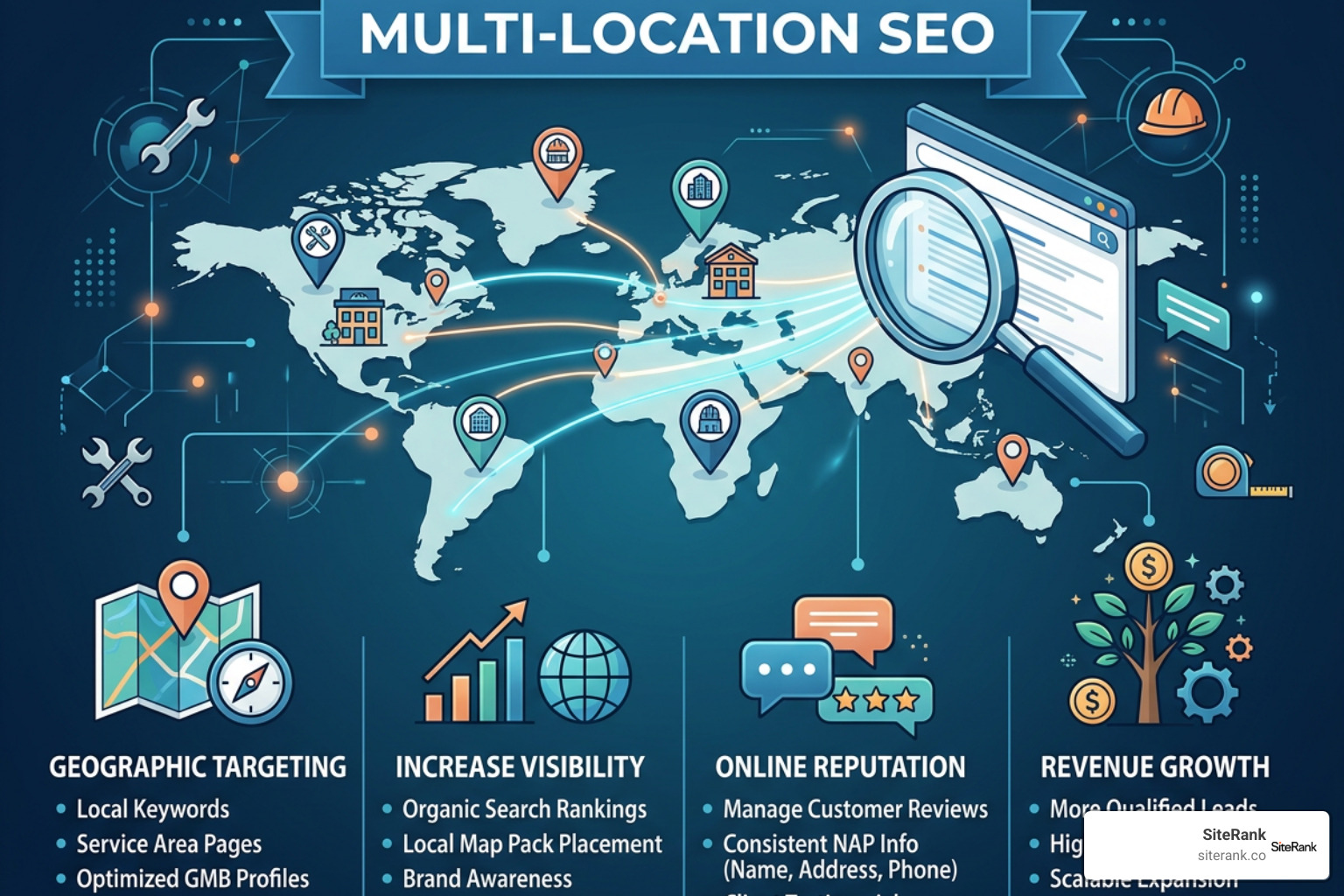
Scaling multi location contractor SEO from 5 cities to 50+ requires tracking performance metrics at the individual market level while maintaining reliable operational call handling.
Scaling Operations with Multi Location Contractor SEO
Expanding too fast without operational capacity can result in missed calls, slow response times, and bad reviews. Implement a phased rollout to protect service quality.
Ensure customer service reps (CSRs) use location-aware call scripts. If a caller asks for service in a newly added suburb and the CSR sounds confused about local landmarks, up to 40% of prospective leads can drop off.
Tracking Market-Level Metrics and Organic Attribution
Evaluating performance using nationwide averages hides underperforming markets. Tracking search rankings with localized geo-grid tools reveals precise visibility across target neighborhoods.
| Metric Type | Standard Rank Tracking | Geo-Grid Rank Tracking |
|---|---|---|
| Search Centerpoint | Single ZIP code or city center | Multi-point grid (e.g., 5×5 or 7×7 grid points) |
| Map Pack Accuracy | Low (shows average regional rank) | High (shows rank changes block-by-block) |
| Lead Attribution | Total site form submissions | City-page dynamic call track attribution |
| Actionable Insight | Generic domain performance | Pinpoints exact neighborhood ranking drops |
Using local call tracking numbers on dedicated city pages, like those discussed in Local SEO Landing Pages: The Secret Sauce for Local Dominance, helps attribute phone calls directly to specific landing page assets.
Frequently Asked Questions About Multi-Location Contractor SEO
How can contractors rank in cities where they do not have a physical office?
Contractors can rank in non-office cities by setting up their Google Business Profile as a Service Area Business (hiding physical street addresses) and building dedicated city landing pages on their website. Each page must contain 80% to 100% unique content, including local project photos, reviews, landmarks, and structured JSON-LD ServiceArea schema.
How many target cities should contractors launch at one time?
Contractors should launch 5 to 8 core cities initially. Expanding in structured phases prevents site architecture overload, avoids low-quality doorway page flags, and ensures your customer service team can handle new call volumes effectively before rolling out additional pages.
How many service areas can be added to a Google Business Profile?
Google allows up to 20 service areas on a single Google Business Profile listing. These areas should reflect cities or ZIP codes that fall within roughly a two-hour driving radius of your central operation.
Scaling Your Multi-Location Reach
Scaling your business across multiple service areas requires clear execution: properly setting up your Google Business Profile, building high-converting city landing pages, organizing a clean hub-and-spoke link structure, and tracking geo-grid metrics.
When executed properly, multi-location optimization creates a reliable pipeline of organic leads without relying entirely on paid ads. For more insights on scaling home service visibility, explore our guides on Local SEO Services USA: Why Local Expertise Matters and Home Service SEO.
At SiteRank, we specialize in helping trade professionals dominate competitive search environments through custom data-driven strategies. Ready to build your local search presence across all your service areas? Learn how our team can help you grow by visiting Dominate Your Local Markets with SiteRank Home Services SEO.