

Why Most Home Service Businesses Are Invisible Online (And How to Fix It)
Home service SEO pages are the individual web pages — service pages, location pages, and area coverage pages — that help plumbers, HVAC companies, roofers, electricians, and other contractors show up in Google search results when local homeowners need help fast.
Here’s a quick breakdown of what they are and why they matter:
- Service pages target specific jobs (e.g., “water heater installation” or “AC repair”)
- Location pages target specific cities or neighborhoods you serve
- Service area pages cover regions where you work but don’t have a physical office
- Together, they form the foundation of your entire local search visibility
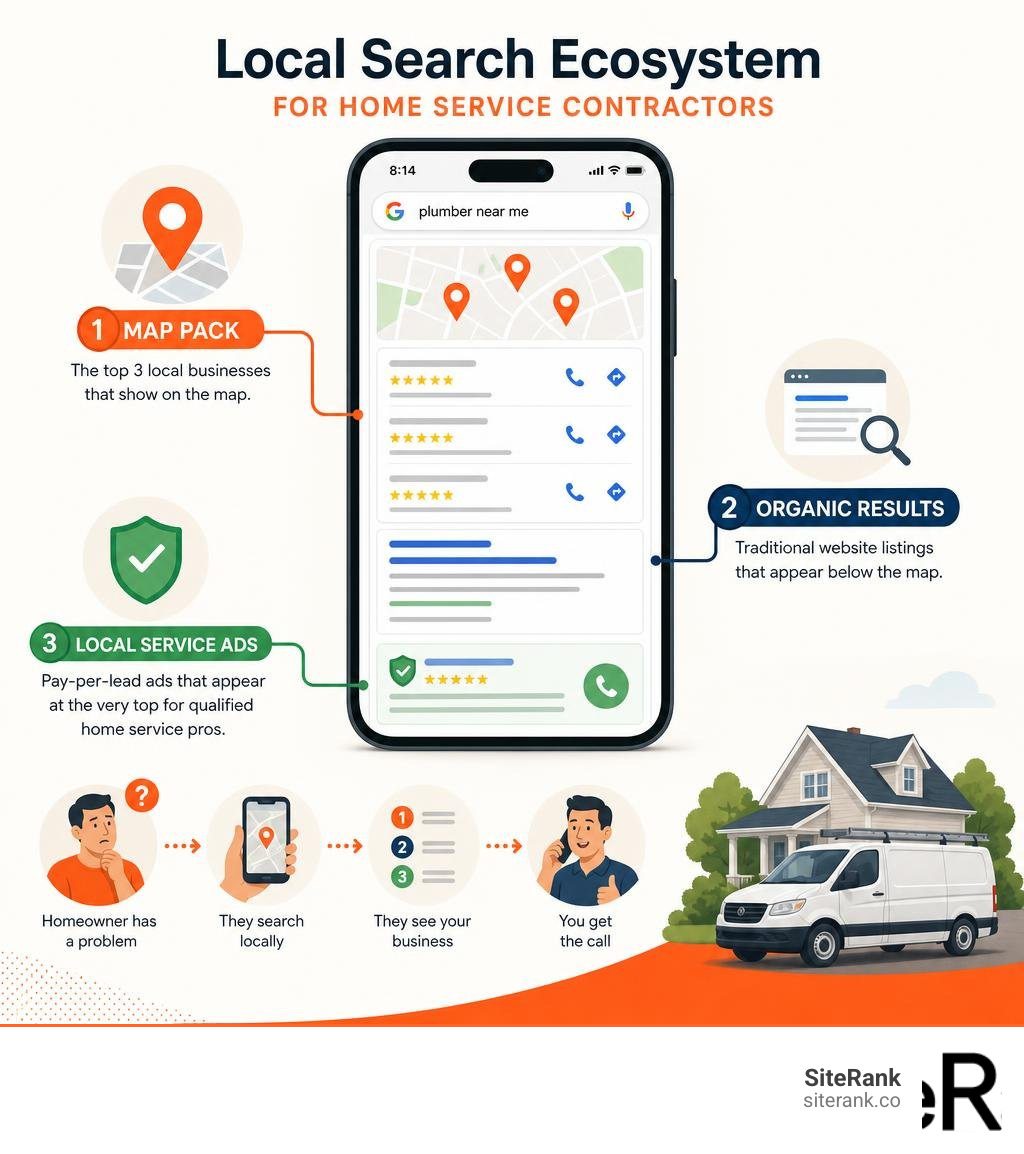
Think about this: it’s 8:14 p.m. and a homeowner’s heat goes out. They don’t read blogs. They don’t compare ten companies. They tap Google Maps, skim three reviews, and call whoever shows up first.
That’s the reality of home service search. Nearly 46% of all Google searches have local intent, and 97% of consumers go online to find local services. The businesses that built the right pages before that moment of need happened — those are the ones getting the call.
The problem is that most home service websites are built backward. They have one generic “Services” page, maybe a contact form, and little else. No location targeting. No service-specific pages. No structure that tells Google who you serve, what you do, and where you do it.
This guide will show you exactly how to map out your home service page strategy — without the confusion.
I’m Craig Flickinger, founder of SiteRank and a digital marketing specialist with over 15 years of SEO experience, including deep work building and optimizing home service SEO pages for businesses in highly competitive local markets. I’ll walk you through a clear, practical framework you can actually use.
Relevant articles related to home service SEO pages:
What Are Home Service SEO Pages and Why Do They Matter?
When we talk about home service SEO pages, we are referring to the intentional architecture of your website designed to capture local search intent. Unlike standard informational websites, a home service business relies on high-urgency, geographically bound traffic. If you are an HVAC contractor in Dallas, you do not care about traffic from Seattle. You need to dominate the search results in your specific neighborhoods, and that requires a highly specialized local search engine optimization strategy.
Local SEO is the practice of optimizing your online presence to attract business from local searches on Google and other search engines. For home service businesses, this is the difference between a fully booked schedule and empty service trucks. With 93% of all online experiences beginning with a search engine, your digital footprint is your most valuable asset.
The primary engine behind local discovery is the Google Map Pack (the top three local map listings), which is flanked by paid Local Service Ads (LSAs) at the very top and standard organic search results directly below. To capture all possible leads, your website must be structured with dedicated, high-intent pages that satisfy both search engine algorithms and anxious homeowners.
By building localized Home Service Seo pages, you create targeted entry points for different types of search queries. A homeowner experiencing an immediate crisis will search for “emergency plumber near me,” while someone planning a renovation will search for “bathroom remodeling costs in [City].” If your site only has a single, generic “Services” page, Google cannot accurately determine your relevance for these highly distinct search intents.
The Anatomy of High-Performing Home Service SEO Pages
An effective home service page must strike a delicate balance between technical optimization and conversion-focused design. If your page ranks number one but fails to convert visitors into phone calls, your SEO investment is wasted. Conversely, a beautiful page that does not rank is useless.
To achieve both high rankings and strong conversion rates, every page must be built with a mobile-first approach. Since over 60% of general home service queries and upwards of 80% of emergency searches occur on smartphones, mobile optimization is not optional.
Website speed plays an enormous role here. Over half of mobile users will abandon a site if it takes more than three seconds to load. Research shows that pages loading in under two seconds keep about 70% more visitors, and even a minor one-second delay can cut your overall conversion rates by 20%.
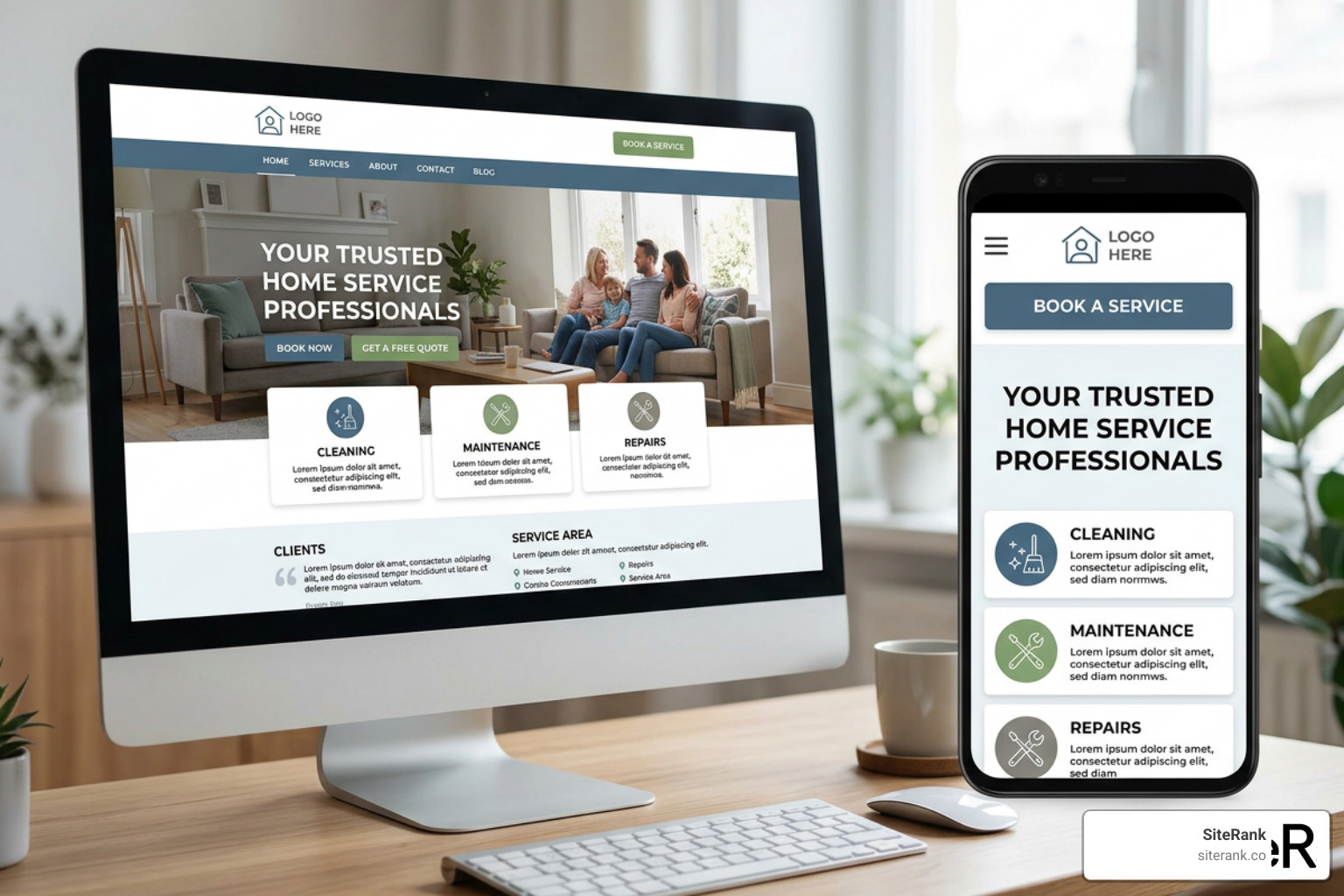
To guarantee your pages perform, we recommend building them around these core on-page elements:
- SEO-Friendly URLs: Keep them short and descriptive (e.g.,
yourdomain.com/services/ac-repair-dallas). - Localized Header Tags (H1, H2, H3): Include your primary keyword and target city in the main H1 tag, and use H2s for specific service descriptions.
- Prominent Click-to-Call Buttons: Place a sticky, easy-to-tap phone number at the top of the mobile screen so users don’t have to scroll to find it.
- Real Media Over Stock Photos: Use authentic photos of your branded trucks, uniform-clad technicians, and real completed projects to build trust.
- Clear Call to Action (CTA): Provide an obvious path to book an appointment, whether through a direct phone call or a simple online scheduling form.
- Localized Reviews and Testimonials: Feature reviews from customers living in the specific city or neighborhood targeted by that page.
For a deeper dive into maximizing these elements, explore our specialized services for On Page Seo.
Organic SEO vs. Google Map Pack vs. Local Service Ads
To build a winning search strategy, you must understand the three distinct competitive battlegrounds on a Google search results page. Each plays a unique role in your lead generation efforts:
- Local Service Ads (LSAs): These pay-per-lead ads sit at the very top of the page, showcasing a “Google Screened” or “Google Guaranteed” badge. They are highly effective for capturing immediate, high-urgency emergency leads. However, they can be incredibly expensive, with cost-per-click rates or cost-per-lead rates sometimes climbing to $150 or more depending on your market.
- Google Map Pack: Positioned directly below the ads, the Map Pack captures approximately 75% of local clicks. Rankings here are heavily influenced by your Google Business Profile (GBP) signals, proximity to the searcher, and your review profile.
- Organic Search Results: These are the traditional blue links that appear below the Map Pack. While they sit lower on the page, they are critical for capturing long-tail, educational, and research-focused queries (e.g., “how much does a new roof cost”). Organic rankings are heavily driven by your website’s structural authority, on-page content, and backlink profile.
For a comprehensive approach to balancing these channels, check out our guide on Digital Marketing For Home Services.
Mapping Your Location Strategy: Physical vs. Service Area Pages
One of the most common challenges home service contractors face is ranking in surrounding suburbs where they do not have a physical office. If your main office is in the center of a major metropolitan area, but you serve a 30-mile radius containing dozens of smaller cities, how do you show Google you are relevant in those suburbs?
The answer lies in understanding the structural differences between physical location pages and service area pages (SAPs).
A physical location page is designed for a brick-and-mortar office where customers can physically visit. A service area page, on the other hand, is built specifically for mobile service-area businesses that travel to their customers’ homes.
To help you map out your coverage without violating Google’s guidelines, review our detailed guide on The Ultimate Guide To Local Seo For Home Services.
| Feature | Physical Location Page | Service Area Page (SAP) |
|---|---|---|
| Physical Address Required? | Yes, must be a verifiable physical office | No, targets geographic regions you travel to |
| Google Business Profile Link | Directly links to a specific, verified GBP listing | Links to the nearest physical branch or main office |
| Primary SEO Target | Local Map Pack and local organic results | Local organic results below the Map Pack |
| Content Focus | Office hours, driving directions, local team photos | Regional service offerings, local climate challenges |
| Google Map Integration | Embeds a pin drop of the physical address | Embeds a map highlighting the service boundary |
Optimizing Your Google Business Profile for Maximum Proximity
Your Google Business Profile (GBP) is the absolute command center of your local search presence. According to industry data, GBP signals account for roughly 32% of the total Map Pack ranking weight, making it the single most powerful tool at your disposal.
To maximize your GBP for proximity and search visibility, follow these steps:
- Select the Right Primary Category: This is a make-or-break decision. If you are an HVAC contractor, ensure your primary category is “HVAC Contractor” rather than a narrower category like “Heating Contractor.” Changing this category to match local search volume can double your visibility in less than a month.
- Configure Your Service Area Correctly: If you operate out of your home or a private office where customers are not served on-site, hide your physical address on your profile. Instead, define your service area by adding up to 20 cities, counties, or zip codes that you actually serve.
- Upload Real Photos Consistently: Google’s internal data shows that profiles with more than 100 photos receive 520% more calls than those with fewer images. Avoid stock photography. Regularly upload high-resolution, compressed photos of your wrapped trucks, branded uniforms, and completed jobs.
- Leverage Google Business Posts: Use the posting feature to share seasonal promotions, maintenance tips, and recent project showcases. This signals to Google that your business is highly active.
To learn more about optimizing your local presence, explore our dedicated Local Business Seo Services.
Structuring Service Area Pages Without Triggering Doorway Penalties
A major trap many agencies and DIY contractors fall into is creating hundreds of thin, templated service area pages where they simply swap out the city name. For example, creating identical pages for “Plumbing in City A,” “Plumbing in City B,” and “Plumbing in City C” with no unique text.
Google’s quality algorithms easily identify these as “doorway pages” and will filter them out of search results entirely. To build high-performing service area pages that actually rank and convert, you must make each page uniquely valuable.
First, write unique, localized copy for every page. Instead of copying and pasting, discuss specific local details. Mention the architectural styles common to that suburb (e.g., “historic homes with older galvanized pipes”), local building codes, or climate-specific challenges (e.g., “how the local soil conditions affect foundation repair”).
Second, integrate local business schema markup. Using LocalBusiness, Service, and FAQPage schema in your site’s code provides structured clarity directly to search engines, helping them understand your geographic reach.
For professional assistance in implementing these advanced technical strategies, look into our Technical Seo options.
Building Local Authority and Trust Signals
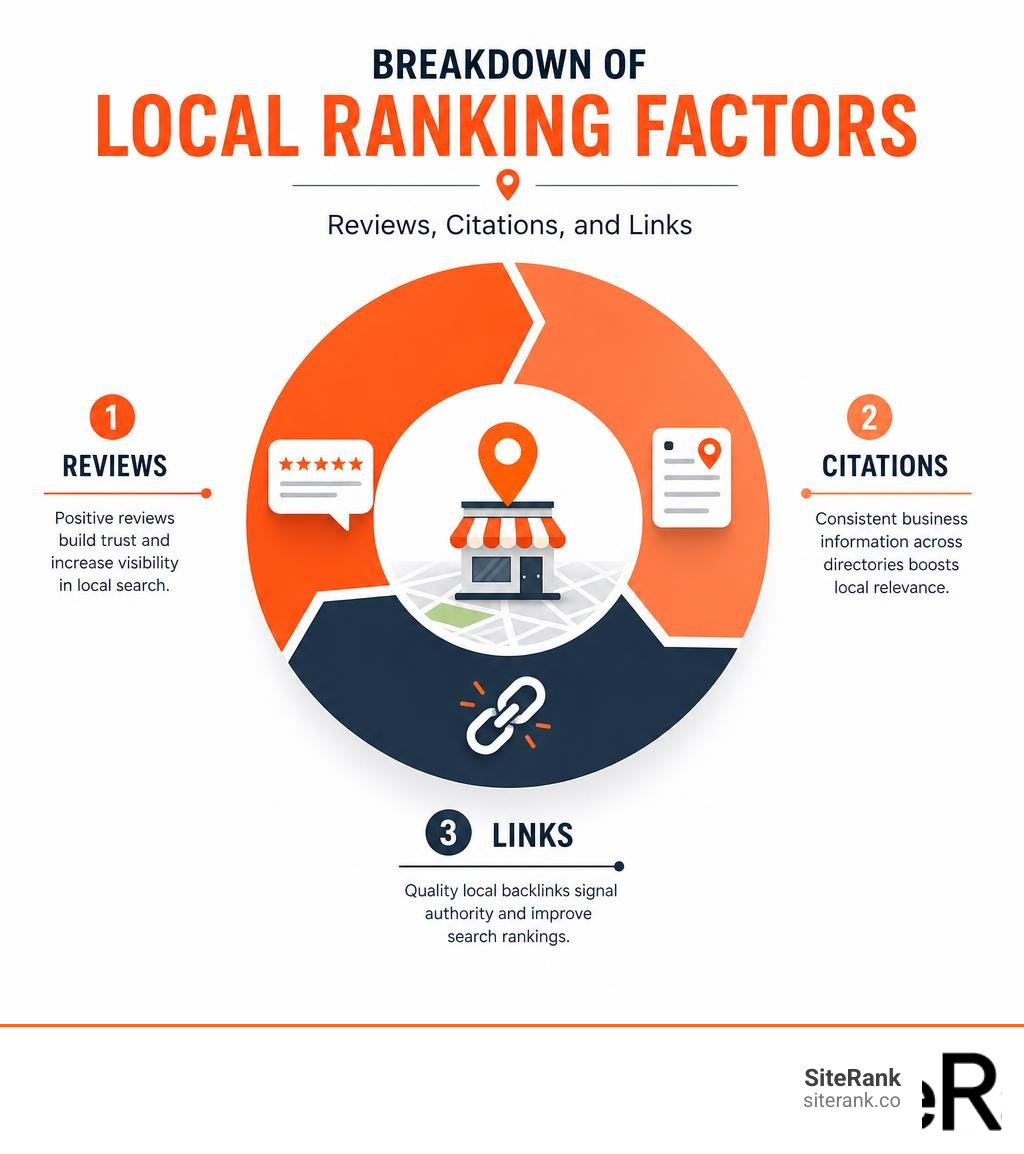
Ranking highly on organic search results below the Map Pack relies heavily on your website’s overall “local authority.” In Google’s eyes, local authority is built through a combination of consistent business data, positive consumer sentiment, and high-quality backlinks from relevant local websites.
To learn more about building this off-page authority, explore our Off Page Seo strategies.
Finding and Targeting the Right Local Keywords
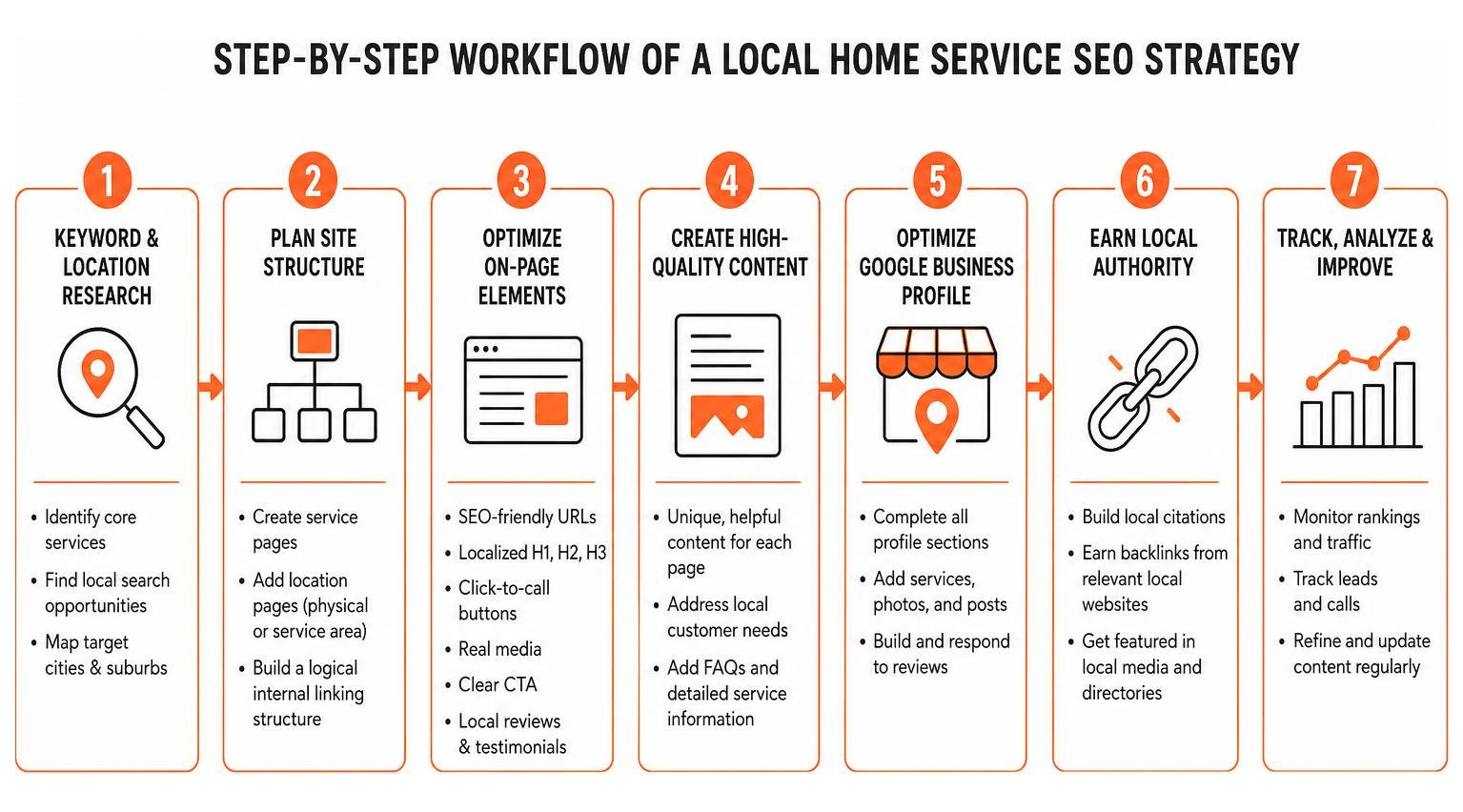
Before you write a single word for your home service SEO pages, you must perform exhaustive keyword research to identify exactly how your local customers search for your services.
We recommend dividing your keyword strategy into three distinct search intents:
- Transactional Keywords: These are high-intent terms used by customers who are ready to book a service immediately (e.g., “AC repair near me” or “emergency electrician in [City]”). These terms have incredibly high conversion rates.
- Commercial Keywords: These are used by customers researching options before making a final decision (e.g., “best roofing contractors in [City]” or “tankless water heater installation cost”).
- Informational Keywords: These are educational queries (e.g., “why is my drain gurgling” or “how to prepare pipes for winter”). While these users are not ready to hire someone today, publishing helpful blog posts targeting these terms builds brand trust and captures early-stage leads.
To uncover these terms, use tools like Google Autocomplete, “People Also Ask” boxes, and dedicated keyword research platforms to analyze local search volume and keyword difficulty. For a structured approach to finding these high-value terms, check out our Keyword Research services.
Common Mistakes to Avoid on Your Home Service SEO Pages
Even the most well-intentioned home service businesses make critical errors that quietly drain their online visibility and revenue. To ensure your website remains highly competitive, avoid these common pitfalls:
- Keyword Stuffing: Repeating your target city and service dozens of times in a desperate attempt to rank looks unprofessional and triggers search engine penalties. Write naturally for human readers first, and search engines second.
- Inconsistent NAP Data: Your business Name, Address, and Phone number (NAP) must be identical across every directory, social media platform, and website. Even minor variations (like “Avenue” vs. “Ave”) can confuse search algorithms and lower your local trust score.
- Buried Contact Information: If a homeowner has to search through three different pages just to find your phone number, they will leave your site and call a competitor. Keep your phone number highly visible above the fold on every single page.
- Ignoring Review Velocity: Many businesses get 50 reviews and then stop actively asking for more. Google’s algorithm heavily rewards review velocity — the consistent, weekly acquisition of new reviews — over a static, historical count.
For a comprehensive review of your website’s performance and to identify hidden roadblocks, read our guide on Why Your Home Service Business Needs A Local Seo Overhaul.
Frequently Asked Questions About Home Service SEO
How long does it take to see results from local SEO?
The timeline for local SEO results depends heavily on your market’s competitive density and your website’s starting authority. Generally, you can expect to see initial movement in the Local Map Pack within 60 to 90 days of optimizing your Google Business Profile and cleaning up local citations.
However, achieving dominant organic rankings for highly competitive keywords (like “plumber” or “roof repair” in a major metropolitan area) typically takes six months to a year of consistent on-page optimization, content creation, and local Link Building. Local SEO is a compounding investment; the work you do today will continue to generate low-cost leads for years to come.
What is the difference between franchise SEO and independent local SEO?
Franchise SEO involves managing search visibility for a large, multi-location brand with strict corporate guidelines. This requires scaling location pages across multiple subdomains or subfolders while maintaining brand standards and avoiding duplicate content penalties.
Independent local SEO, conversely, is highly agile. Independent operators can build highly customized, hyper-local content that addresses specific community events, local landmarks, and neighborhood-specific challenges. Because Google’s algorithm heavily weights proximity and local relevance, a well-optimized independent business can easily outrank a massive national franchise. For help creating localized, high-impact content for your site, look into our Content Writing solutions.
How do you track and measure the success of a local SEO campaign?
Success should never be measured by keyword rankings alone; it must be measured by actual business revenue. To track the true ROI of your campaign, we recommend implementing:
- Call Tracking Software: Use unique tracking numbers to identify exactly which pages and search channels are driving phone calls.
- Conversion Tracking in Google Analytics 4 (GA4): Track online form submissions, click-to-call actions, and live chat engagements.
- Google Search Console (GSC): Monitor your organic impressions, click-through rates, and the exact search queries homeowners use to find your site.
To see real-world examples of how we track and deliver these results for our clients, explore our detailed Case Studies.
Conclusion
Building a dominant local search presence does not require a massive corporate budget or complex, confusing work. By mapping out a clear page strategy, optimizing your Google Business Profile, and publishing genuinely helpful, localized content, you can build a compounding marketing asset that keeps your service trucks fully booked.
At SiteRank, we specialize in cutting through the noise to deliver customized, AI-powered SEO strategies tailored specifically to your home service business. We focus strictly on the pages, keywords, and optimizations that drive actual phone calls and booked jobs — without charging you for unnecessary extras.
Ready to outrank your competitors and dominate your local market? Explore our professional Home Services Seo solutions or request your Free Seo Audit today to see exactly how we can help your business grow.