

Why Your On-Page SEO Activities List Makes or Breaks Your Rankings
Your on page seo activities list is the foundation that determines whether your website ranks on page one or gets buried in search results. On-page SEO refers to all the optimizations you make directly on your website pages to help search engines understand your content and rank it higher for relevant searches.
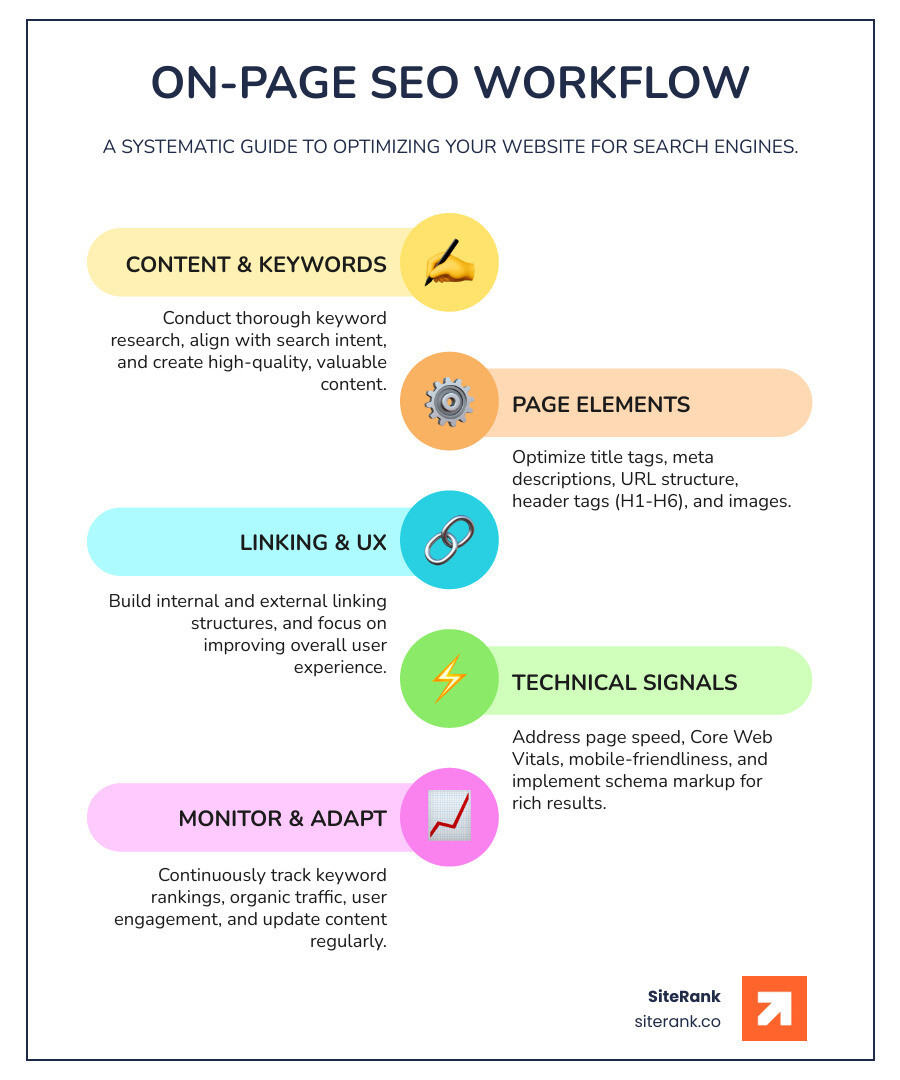
Here’s your essential on-page SEO activities checklist:
Content & Keywords:
- Conduct keyword research and match search intent
- Create high-quality, original content that provides value
- Place target keywords naturally in title, first 100 words, and headings
Page Elements:
- Optimize title tags (50-60 characters) and meta descriptions (155 characters)
- Structure content with proper header tags (H1, H2, H3)
- Create short, descriptive URLs with target keywords
- Optimize images with descriptive filenames and alt text
Technical & UX:
- Build internal and external linking structure
- Improve page speed and Core Web Vitals
- Ensure mobile-friendliness and responsive design
- Implement schema markup for rich results
Monitoring:
- Track keyword rankings and organic traffic
- Monitor user engagement signals (bounce rate, time on page)
- Regularly update content and fix technical issues
On-page SEO differs from off-page SEO in one key way: on-page activities happen on your website (content, titles, images), while off-page activities happen off your site (backlinks, social media). Since on-page SEO is entirely within your control, it’s the best place to start improving your rankings.
Most clicks go to page-one results, so clear, crawlable on-page optimization matters.
I’m Craig Flickinger. With 15 years of SEO experience, I’ve helped hundreds of businesses improve their rankings with systematic on-page strategies. At SiteRank, our AI-driven tools streamline these activities for measurable results.
Terms related to on page seo activities list:
Foundational On-Page SEO: Content and Keywords
An effective on page seo activities list starts with the fundamentals: exceptional content and smart keyword strategy. Like a house’s foundation, this pairing is essential. Your content provides value to visitors, while keywords connect their searches to your offerings. Get this balance right, and search engines will reward you with better rankings and qualified traffic.

Master Keyword Research and User Intent
Every successful on page seo activities list begins with understanding what your audience actually wants. Keyword research isn’t just about finding popular search terms—it’s about uncovering the why behind those searches.
For example, someone searching “chocolate cake recipe” has a specific need: to bake. This is search intent, the secret to creating pages that rank.
Search volume tells you how many people are looking for a particular term each month. Higher volume means more potential visitors, but it also usually means tougher competition. Keyword difficulty helps you understand how challenging it’ll be to rank for that term, so you can prioritize your efforts wisely.
Long-tail keywords are your best friend. These longer phrases, like “easy chocolate cake recipe for beginners,” have lower search volume but attract a highly specific audience. Users searching with long-tail keywords know what they want and are more likely to engage.
Understanding the different types of search intent helps you create content that hits the mark every time. Informational intent covers people seeking knowledge—they want to learn something new. Commercial intent involves research before making a purchase decision. Transactional intent means they’re ready to buy or take action right now.
Matching your content to search intent means you stop guessing and start giving people exactly what they’re looking for. Our Keyword Research service can help you identify the most valuable opportunities for your business.
Create High-Quality, People-First Content
Once you understand what people are searching for, it’s time to create content that genuinely helps them. Google has made it crystal clear: they want people-first content that provides real value, not content created solely to manipulate search rankings.
Content quality starts with originality. Your pages need to offer something unique—whether that’s a fresh perspective, original research, or simply a clearer explanation of complex topics. Copying content from other sources (or even duplicating your own content across multiple pages) will hurt your rankings.
Content depth matters more than you might think. While there’s no magic word count, comprehensive content often performs better. The top-ranking pages frequently contain around 2,000 words, but that’s because they thoroughly cover their topics, not because they’re stuffed with filler.
Readability is crucial for engagement. Use short paragraphs, headings, and a conversational tone. If content is hard to read, users will leave, sending negative signals to search engines.
Trustworthiness comes from demonstrating expertise and backing up your claims. This aligns with Google’s E-E-A-T guidelines (Experience, Expertise, Authoritativeness, Trustworthiness). Share your credentials, cite reliable sources, and be transparent about your knowledge and limitations.
The goal is avoiding what Google defines as thin content—pages that provide little to no value to users. Instead, focus on creating content that makes people think, “This is exactly what I was looking for!”
For more insights on creating content that both users and search engines love, explore our guide on Mastering Content for SEO: A Quick Guide. Our Content Writing service can help you develop a content strategy that drives real results.
A Guide to Your On-Page SEO Activities List for Keywords
Now comes the art of keyword placement—integrating your target keywords naturally throughout your content without falling into the trap of keyword stuffing. Google’s algorithms are sophisticated enough to detect when you’re trying to game the system, so authenticity is key.
Your title tag is prime real estate for your main keyword. Placing it near the beginning of your title sends a strong signal about your page’s focus. But remember, your title also needs to be compelling enough to make people want to click.
The first 100 words of your content are particularly important. This is where search engines look for confirmation that your page is truly about what your title promises. Work your target keyword into this opening section naturally—it should feel like a logical part of your introduction.
Header tags (H1, H2, H3, and so on) provide structure for both readers and search engines. Including your target keyword and related terms in these headings helps clarify your content’s organization and topical focus. Your H1 should typically include your main keyword, while H2s and H3s can incorporate variations and semantic keywords.
Throughout your content, focus on natural language rather than forced keyword repetition. Modern search engines understand synonyms and related concepts, so you can use terms like “running shoes,” “athletic footwear,” and “jogging sneakers” interchangeably. This approach, called using semantic keywords, makes your content more readable while improving its topical relevance.
When you focus on creating helpful, comprehensive content, keywords tend to appear naturally because they are relevant to the topic.
Your on page seo activities list should always prioritize user experience first. When your content genuinely helps people solve problems or find information, the SEO benefits follow naturally.
The Ultimate On-Page SEO Activities List for Page Elements
Your content might be brilliant, but if search engines can’t understand it properly, you’re fighting an uphill battle. The technical elements of your pages are like road signs that guide both users and search engines to exactly what they’re looking for. These elements form a crucial part of your on page seo activities list and often make the difference between ranking on page one or getting lost in the digital wilderness.
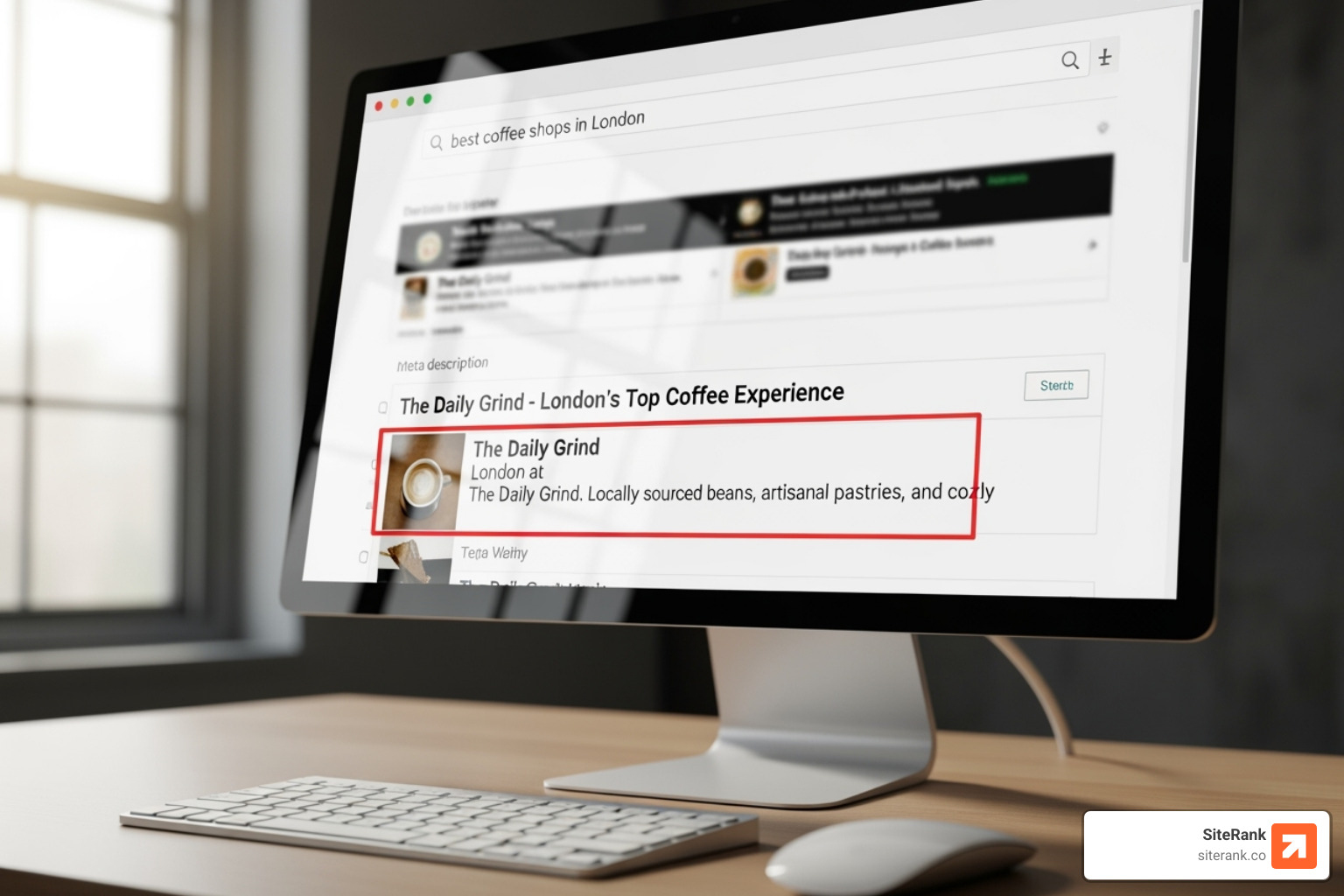
Think of these page elements as your content’s first impression. When someone searches for information, your title tag and meta description are often the first things they see.
Optimize Title Tags and Meta Descriptions
Your title tag is the clickable headline in search and a key ranking signal. Aim for about 60 characters, putting the primary keyword near the start while keeping it readable and compelling.
Meta descriptions influence clicks. Keep them under 155 characters (about 120 on mobile), include the core benefit and a subtle call to action, and mirror searcher language so bolded terms catch the eye.
Make both elements clear, concise, and irresistible to click.
Structure Content with Header Tags (H1-H6)
Use headers to create logical structure for readers and crawlers. Include one H1 with your main topic, then H2s for key sections and H3-H6 for supporting details. This improves scannability and helps search engines understand topical relationships. For more foundational knowledge, explore our SEO Fundamentals section.
Craft SEO-Friendly URLs
Use short, descriptive slugs with hyphens and, when natural, your target keyword: /on-page-seo-activities-list. Clean URLs aid understanding, trust, and shareability.
A Complete On-Page SEO Activities List for Images
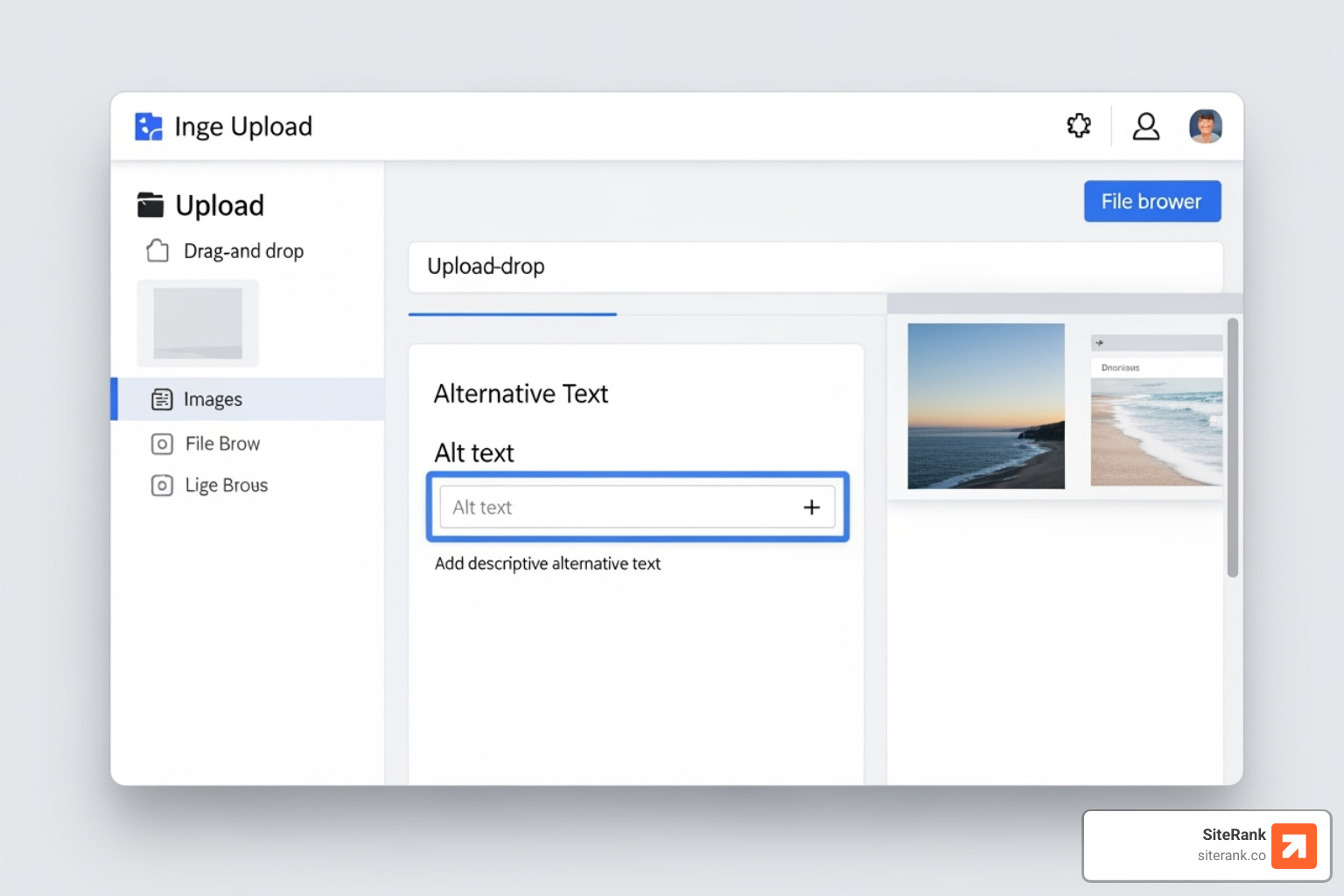
Images boost comprehension but can slow pages if unoptimized.
- Use file compression to cut size without visible loss.
- Rename to descriptive filenames (e.g.,
on-page-seo-checklist-infographic.jpg). - Write concise, accurate alt text that fits context; avoid stuffing.
- Pick the right format: JPEG for photos, PNG for graphics; WebP where supported.
Linking, User Experience, and Technical Signals
Your on page seo activities list goes beyond just content and keywords. Think of your website as a neighborhood: you need good roads connecting pages, satisfied visitors who explore, and solid infrastructure running smoothly. This is where linking, user experience, and technical health come together.
This is also where on-page SEO overlaps with Technical SEO. What happens behind the scenes directly affects what users see and experience.
Build a Strong Internal and External Linking Structure
Internal links distribute context and authority while guiding visitors to related content. Use descriptive anchor text that sets clear expectations and reflects the destination page’s topic.
External links to reputable sources add credibility and context for readers. Cite authoritative studies, standards, or publications when they deepen understanding. For deeper insights into advanced linking strategies, check out our guide on On-Page SEO Optimization Techniques.
Improve User Experience (UX) and Engagement
Google increasingly evaluates whether users find your content helpful. Improve layout and readability with clear headings, short paragraphs, bullet points, and supportive visuals. Keep intrusive elements minimal.
Prioritize mobile-friendliness. With mobile-first indexing, your mobile experience largely determines rankings.
Address Key Technical On-Page Factors
Page speed is a ranking and UX factor. Focus on Core Web Vitals: LCP (loading), INP (interactivity), and CLS (visual stability). Use Google PageSpeed Insights to diagnose and fix bottlenecks like oversized images, render-blocking resources, and inefficient scripts.
Schema markup clarifies content types and can open up rich results (e.g., FAQs, reviews), improving visibility and click-through.
Finally, monitor coverage in Google Search Console so your important pages are findable and indexable—basic, but essential.
Frequently Asked Questions about On-Page SEO
What is the difference between on-page, off-page, and technical SEO?
This is one of the most common questions we hear, and understanding these distinctions is crucial for building a successful SEO strategy. Think of SEO as a three-legged stool – each component supports the others.
On-Page SEO focuses on everything you can control directly on your website pages. This includes optimizing your content quality, placing keywords naturally in titles and headings, writing compelling meta descriptions, and ensuring your images have proper alt text. It’s essentially making your content as relevant and appealing as possible to both users and search engines. Your on page seo activities list falls entirely within this category.
Off-Page SEO happens outside your website and focuses on building your site’s authority and reputation. This involves earning high-quality backlinks from other reputable websites, managing your social media presence, and building brand mentions across the web. While you can influence off-page factors, you can’t directly control them like you can with on-page elements.
Technical SEO deals with the behind-the-scenes aspects that help search engines crawl, understand, and index your website effectively. This includes optimizing site speed, ensuring mobile-friendliness, creating XML sitemaps, implementing schema markup, and maintaining proper site architecture.
Here’s a simple comparison to illustrate the differences:
| Category | Where it Happens | Focus | Examples |
|---|---|---|---|
| On-Page SEO | Directly on your website | Content relevance and user experience | Title tags, meta descriptions, keyword placement, content quality, internal linking, image optimization |
| Off-Page SEO | Outside your website | Authority and reputation building | Backlinks from other sites, social media marketing, brand mentions, local citations |
| Technical SEO | Website infrastructure | Crawlability and performance | Site speed, mobile-friendliness, XML sitemaps, robots.txt, schema markup, HTTPS security |
The beauty of on-page SEO is that it’s completely under your control. You don’t need to wait for other websites to link to you or rely on external factors – you can start improving your rankings immediately by implementing the right on-page strategies.
How often should I update my content for on-page SEO?
Content freshness plays a significant role in search rankings, but the update frequency depends on your content type and industry. Google uses something called Query Deserves Freshness (QDF) to determine when fresh content is more valuable for specific searches.
Evergreen content – like comprehensive guides or foundational tutorials – doesn’t need frequent updates unless the information becomes outdated. However, you should review this content every 6-12 months to ensure accuracy and add new insights.
Time-sensitive content requires more frequent attention. If you’re writing about industry trends, statistics, or news-related topics, aim to update these pieces quarterly or whenever significant changes occur in your field.
Regular content maintenance should include updating statistics with current data, fixing broken links that may have appeared over time, and adding new sections that address emerging questions or concerns your audience might have.
The key is monitoring your content’s performance. If you notice a page’s rankings declining or traffic dropping, it might be time for a refresh. Our Blog Content Marketing Strategy guide provides more detailed insights on maintaining content that continues to drive results.
Updating content isn’t just about appeasing search engines – it’s about providing the most current, valuable information to your visitors. Fresh, accurate content builds trust and encourages users to return to your site.
What are the best tools to check my on-page SEO?
Having the right tools makes managing your on page seo activities list much more efficient and effective. The good news is that some of the most powerful tools are completely free.
Google Search Console should be your starting point. This free tool shows exactly how Google sees your website, reveals which keywords you’re ranking for, and identifies technical issues that might be hurting your performance. It’s like getting direct feedback from Google about your SEO efforts.
Google PageSpeed Insights helps you understand how fast your pages load and provides specific recommendations for improvement. Since page speed directly impacts both user experience and search rankings, this tool is essential for any serious SEO strategy.
For content management systems like WordPress, SEO plugins can streamline your on-page optimization process. These tools help you optimize title tags, meta descriptions, and content structure without needing technical expertise.
Website graders and auditing tools provide comprehensive analysis of your on-page SEO performance. They scan your pages for common issues like missing meta descriptions, broken links, or poorly optimized images, giving you a clear roadmap for improvements.
At SiteRank, we use advanced AI-powered auditing tools that go beyond basic analysis to provide personalized recommendations based on your specific industry and competition. These tools help us identify opportunities that generic SEO tools might miss, ensuring our clients get targeted strategies that drive real results.
The most important thing is choosing tools that match your technical skill level and budget. Start with the free options, master those insights, and then consider investing in more advanced tools as your SEO knowledge grows.