

Why SaaS SEO Marketing is Your Ultimate Growth Lever
SaaS SEO marketing is the process of optimizing your software-as-a-service website to rank higher in search engines, attract qualified organic traffic, and convert visitors into customers—without the ongoing cost of paid ads. It’s a powerful growth lever because it delivers:
- Sustainable Growth: Organic traffic compounds over time, unlike paid ads that stop when you stop paying.
- Lower Customer Acquisition Costs (CAC): SEO provides consistent leads without ongoing ad spend.
- Long-Term ROI: Content you create today can drive traffic and conversions for years.
- Higher Trust & Authority: High rankings position your SaaS company as an industry leader.
The Core Pillars of SaaS SEO:
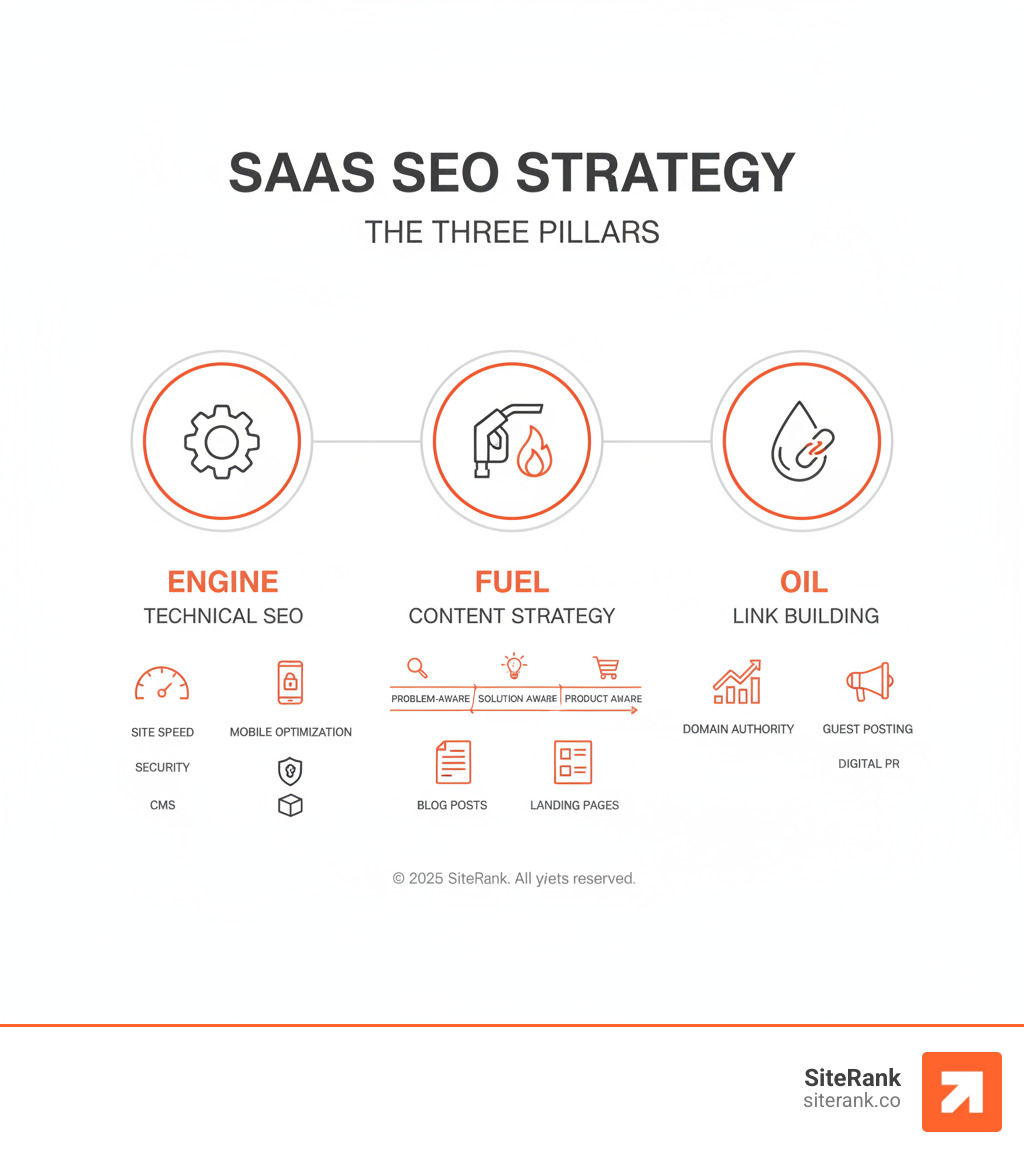
- The Engine: Your site’s technical foundation (speed, mobile optimization, security).
- The Fuel: A content strategy aligned with your buyer’s journey.
- The Oil: High-quality backlinks from relevant, authoritative sites.
The SaaS market is booming, and competition is fierce. With the rise of AI Overviews potentially reducing organic clicks, ranking in the top positions is more critical than ever. This isn’t about gaming Google; it’s about creating genuinely helpful content that solves real problems for your target audience. The proof is in the numbers: leading B2B SaaS companies see up to 702% ROI from SEO, hitting breakeven in just seven months on average.
However, many SaaS companies make costly mistakes, like targeting overly competitive keywords or expecting immediate conversions from top-of-funnel content. At SiteRank, we’ve spent years helping SaaS companies build sustainable organic growth engines through strategic SaaS SEO marketing that prioritizes long-term results.
The Three Pillars of a Winning SaaS SEO Strategy
Think of your SaaS SEO marketing strategy like a high-performance racecar. To win, you need a powerful engine, the right fuel, and quality oil working in harmony. When your technical foundation is solid, your content performs better. Great content makes earning backlinks easier, and authoritative backlinks amplify your other efforts.

The Engine: Your Website’s Technical Foundation
A robust technical foundation is paramount for your SaaS website. For a complex product with numerous features and a large knowledge base, technical SEO is critical.
- Website Builder & CMS: Your site’s platform matters. While most modern CMSs are SEO-friendly, a flexible system like WordPress gives you the control needed for technical optimization.
- Site Speed: Slow websites frustrate users and hurt rankings. Google prioritizes fast-loading pages. Simple fixes like compressing images and using a CDN can make a dramatic difference.
- Mobile-First Indexing: Google operates on mobile-first indexing, meaning it primarily evaluates your mobile site for ranking. A seamless mobile experience is non-negotiable.
- Security (HTTPS): An SSL certificate is a trust signal for users and a ranking signal for Google. It’s table stakes for any modern website.
A solid technical foundation ensures your site is crawlable, indexable, and provides an excellent user experience, paving the way for your content and backlinks to deliver maximum impact. For more, check our insights on SEO Fundamentals.
The Fuel: High-Octane Content Strategy
With a strong technical foundation, it’s time for the fuel: your content strategy. This isn’t just about churning out blog posts; it’s about creating strategic content that guides your audience through their entire search journey.
We map content to the user search journey:
- Problem Aware: The user knows they have a problem but hasn’t identified a solution. Content here educates them on their pain points (e.g., “5 Common Challenges in Project Management”).
- Solution Aware: The user is researching potential approaches. Content here explores different methodologies or software types (e.g., “Agile vs. Waterfall: Which is Right for You?”).
- Product Aware: The user is comparing specific options. This is where your product takes center stage with feature comparisons, case studies, and landing pages.
SEO-optimized content attracts, educates, and converts users at every stage. A well-executed content strategy can grow non-branded search traffic exponentially while increasing sign-ups and paid conversions. To learn more, read our guide on Mastering Content for SEO: A Quick Guide.
The Oil: High-Quality Backlinks for Authority
Backlinks—links from other websites to yours—are a critical signal of your site’s authority and trustworthiness. Links are among the top three ranking factors Google uses.
Domain authority is the SEO equivalent of street cred; Google uses it to gauge how trustworthy your site is. An Ahrefs study on search traffic shows that the number of websites linking to a page directly affects its ranking. However, quality always trumps quantity. We once saw a SaaS company’s rankings drop despite building 30-60 links per month because over 90% were toxic.
The best links are earned naturally from sites that are topically relevant to your industry. For a SaaS company, valuable links come from other high-quality SaaS sites, industry publications, or authoritative media outlets.
Effective link building includes guest posting, digital PR, and creating link-worthy content. The more authoritative sites that link to you, the more Google sees you as a brand worth ranking. When all three pillars—technical SEO, content, and backlinks—work together, your SaaS SEO marketing engine becomes unstoppable.
Fueling Your Growth: A Deep Dive into SaaS SEO Content
Once your technical foundation is solid, the real magic happens with your content. This is where you connect with your audience, educate them, and guide them toward your solution. Content is the fuel that powers your entire SaaS SEO marketing engine.
Developing Your Quarterly Content Plan: The ATK Framework
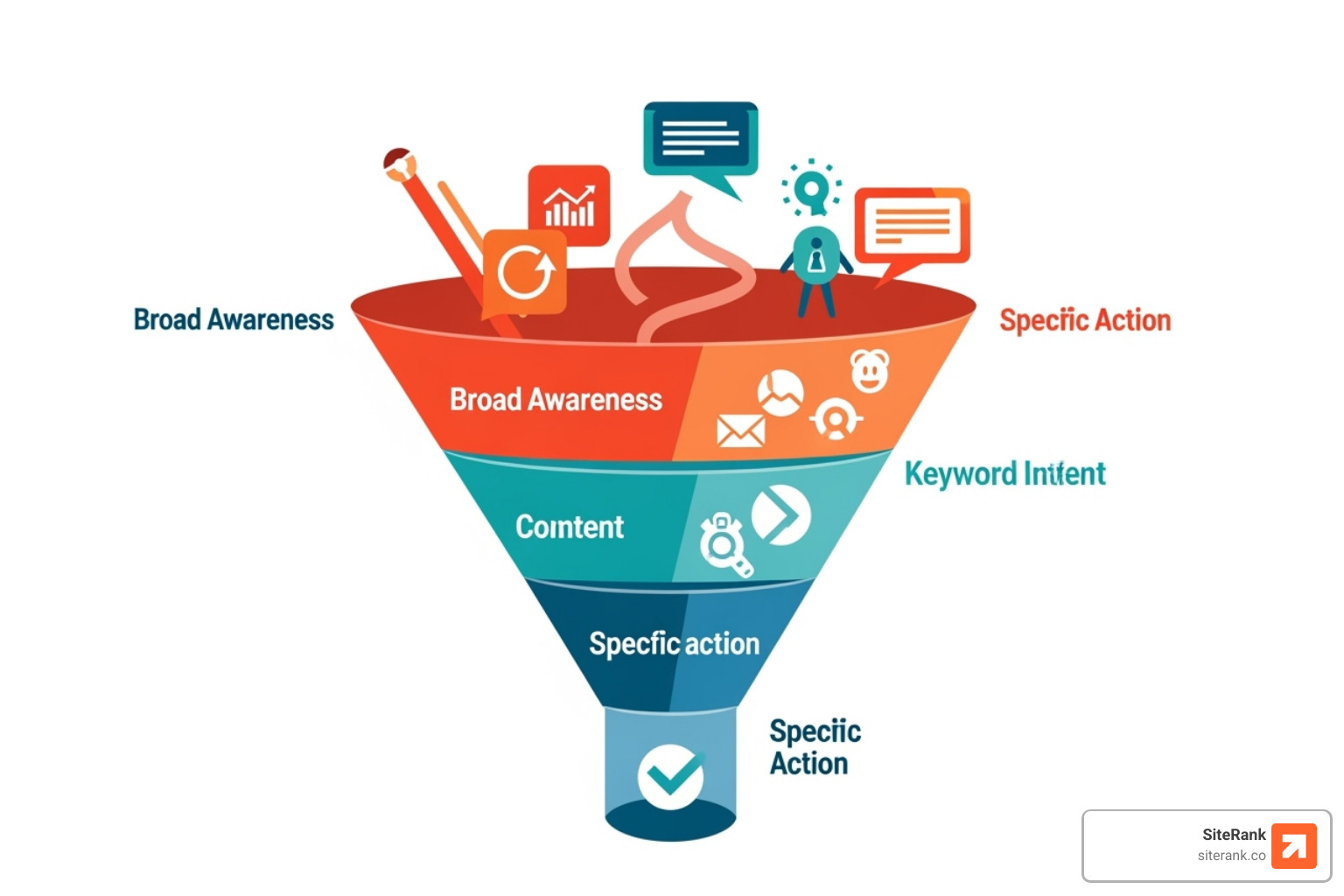
An effective content strategy doesn’t start with a keyword tool. Keywords are the last part of the process, after you’ve done the foundational work. We use the ATK framework: Audience, Topics, and Keywords, in that order.
- Audience: First, define your buyer personas. Understand their pain points, goals, and where they are in their journey (problem-aware, solution-aware, or product-aware). This ensures your content resonates.
- Topics: Based on your audience’s needs, identify broad subjects to cover. We build topical authority by creating comprehensive pillar pages supported by topic clusters of more specific articles. This helps Google see you as an expert.
- Keywords: Finally, research the specific keywords and long-tail keywords your audience uses. For newer sites, focusing on long-tail keywords with less competition is a smart play. We analyze user intent by searching for keywords to see what types of content Google already ranks, then create content that matches that format.
This structured approach ensures your content is valuable to your audience and optimized for search. For a detailed look, explore our guide on Keyword Research for Blog Posts.
Creating SEO-Optimized Content That Ranks
With your ATK framework in place, it’s time to create human-first content that is engaging and educational. Every piece starts with a detailed content brief outlining the target audience, search intent, keywords, and key questions to answer. We then create a logical outline using proper header tags (H1, H2, H3) to improve readability and help search engines understand the content hierarchy.
Writing for humans first is non-negotiable. Google prioritizes pages that directly answer the user’s query. While AI can assist with outlines and research, human oversight is crucial for accuracy and E-E-A-T (Experience, Expertise, Authoritativeness, and Trustworthiness). Human content rooted in experience has the highest chance of success and provides a shield against algorithm updates.
We also use content optimization tools like Clearscope or SurferSEO to ensure our content is comprehensive. These tools provide guidance on word count and related keywords to help our content outrank the competition, but they are guides, not crutches. The heart of the content must remain human. Learn more in our More on Content Creation section.
Best Practices for Publishing and On-Page SEO
Once your content is written, on-page SEO is crucial for ensuring search engines understand and value it.
- Meta Title & Description: Your meta title should be under 60 characters, include the primary keyword, and describe the page. Your meta description (under 160 characters) should be a compelling summary that includes relevant keywords.
- URL Slugs: Use short, descriptive, keyword-rich URLs (e.g.,
yoursite.com/blog/saas-seo-guide). - Image Optimization: Use descriptive ALT tags for accessibility and SEO. Compress images (ideally under 100 KB) and use relevant keywords in file names.
- Internal Linking: Link new articles from 3-5 relevant existing pages to distribute authority and prevent “orphan pages.”
- Schema Markup: Use structured data to tell Google exactly what your content is about (e.g., “Article” schema for blog posts). This can help you earn featured snippets.
These on-page elements are vital for maximizing visibility. Learn more with our On-Page SEO Activities List and our guide on On-Page Optimization Strategy.
Advanced SaaS SEO Marketing: Technical SEO & Link Building
Once you’ve mastered the fundamentals, advanced SaaS SEO marketing techniques can separate you from the competition. These are the fine-tuning adjustments that lead to massive gains in visibility and traffic.
Essential Technical SEO Best Practices for SaaS
For SaaS companies with complex site architectures, getting technical details right is mission-critical.
- XML Sitemap: Your sitemap is a roadmap for search engines, listing all important pages so they can be crawled and indexed efficiently. Submit it to Google Search Console to ensure it’s working correctly.
- Canonical Tags: These tags prevent duplicate content issues by telling Google which version of a page is the original one to rank.
- 301 Redirects: When you move or delete a page, 301 redirects permanently guide users and search engines to the new location, preserving valuable link equity.
- Page Speed Optimization: Go beyond image compression by implementing browser caching, minifying CSS/JavaScript, and optimizing server response times. Users expect pages to load in under three seconds.
- Structured Data (Schema): Give Google a cheat sheet about your content. Implementing schema for products, FAQs, and reviews can earn you eye-catching rich snippets (like star ratings and pricing) in search results. You can use Google’s Rich Results Test to verify your markup. For more guidance, see our On-Page Optimization Strategy.
Effective Strategies for Building Quality Backlinks
Building quality backlinks is where many SaaS companies strike gold or waste money. The best links are naturally earned when other sites link to your content because it adds value. These editorial links carry the most weight with Google.
- Broken Link Building: This white-hat strategy involves finding broken links on other sites, identifying your relevant content as a replacement, and reaching out to the webmaster. It’s a win-win: they fix a broken link, and you earn a backlink.
- Brand Mentions: Monitor the web for unlinked mentions of your brand. A polite outreach email can often turn these mentions into valuable links.
We strictly avoid low-quality link schemes like private blog networks (PBNs) or link farms, which are a fast track to Google penalties. Instead, we focus on acquiring links from high-quality, relevant industry sites that improve your authority.
Link building is a long-term investment. According to Ahrefs’ research on search traffic, the number of linking websites correlates with ranking position, but quality always trumps quantity. Great content and quality backlinks work together in a virtuous cycle: great content attracts links, and those links give your content the authority to rank higher and attract even more links.
Measuring Success & Avoiding Common Pitfalls
Even the best SaaS SEO marketing strategies need continuous monitoring and adjustment. You can’t just set it and forget it; you need to watch the data and make constant micro-adjustments to stay on course.
How to Monitor Your SaaS SEO Marketing Performance
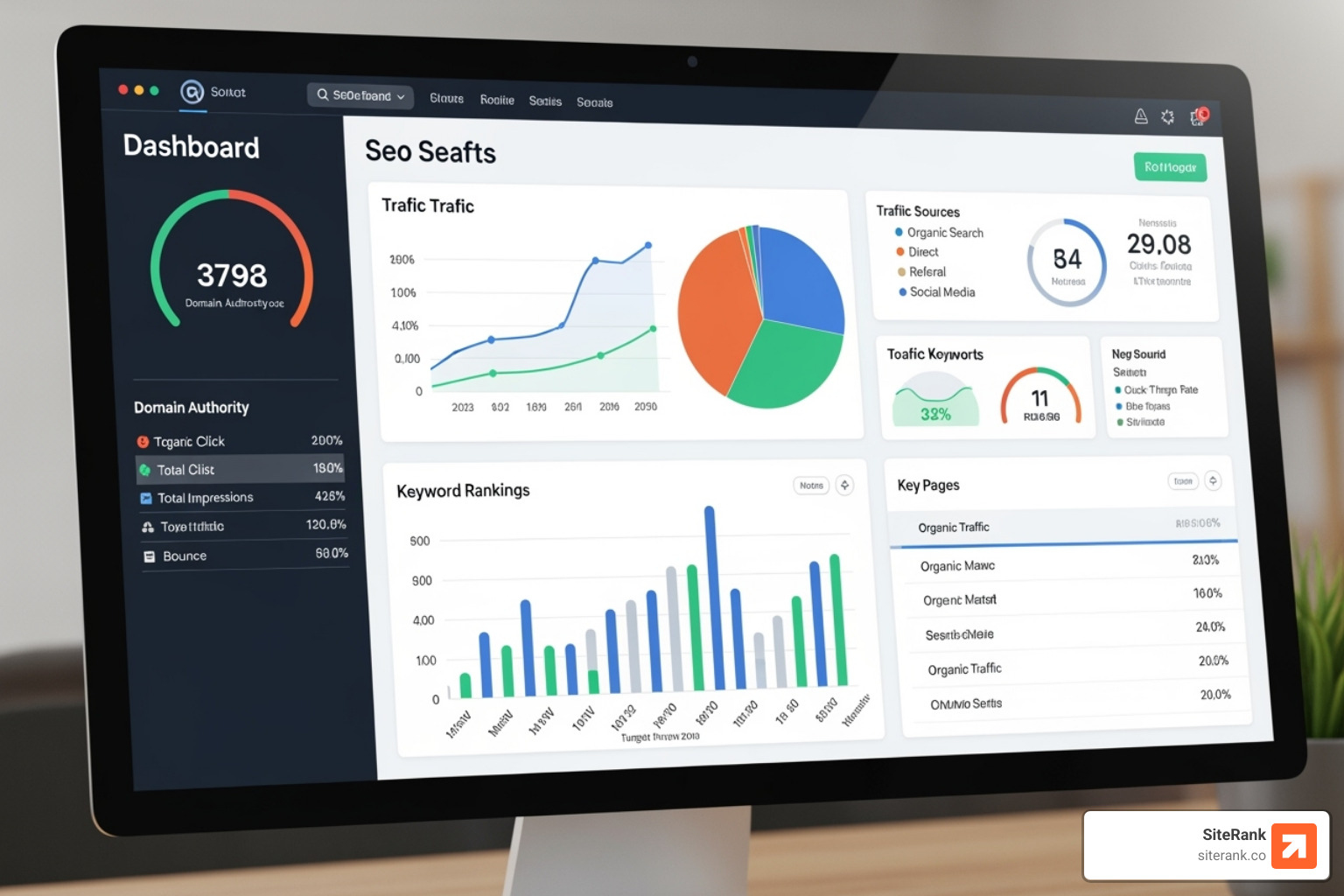
If you can’t measure it, you can’t improve it. We use a combination of tools and metrics to provide a clear picture of your SEO performance.
- Google Analytics: Your window into user behavior. It shows which pages are popular, how long visitors stay, and where they come from.
- Google Search Console: A free tool from Google that monitors crawling, indexing, and search performance, including clicks, impressions, CTR, and average ranking position.
Beyond these, we focus on conversion tracking—monitoring sign-ups, demo requests, and paid customer conversions from organic traffic. Traffic is a vanity metric if it doesn’t turn into revenue.
Key metrics we track include:
- Organic traffic (sessions and users)
- Keyword rankings
- Organic conversion rate
- Customer Acquisition Cost (CAC) from organic
- Customer Lifetime Value (CLTV) from organic
- Bounce rate and average time on page
- Impressions and click-through rate (CTR)
Regular monitoring allows for smart, data-driven adjustments to your strategy. At SiteRank, we believe in transparent reporting that shows you exactly what returns your investment is generating.
Common SEO Mistakes SaaS Companies Make (And How to Avoid Them)
After 15 years in SEO, I’ve seen every avoidable—and expensive—mistake.
- Targeting overly competitive keywords: A startup trying to rank for “project management software” is unlikely to succeed. Instead, focus on long-tail, niche keywords where you have a fighting chance.
- Expecting direct conversions from top-of-funnel (TOFU) content: A blog post on “what is CRM?” is for users who are months away from buying. Content must be mapped to the buyer’s journey, with different goals for each stage.
- Relying on programmatic SEO as a quick fix: Automating thousands of templated pages without careful human oversight and high-quality data often creates low-value content that Google may penalize.
- Skimping on SEO talent: Hiring an inexperienced SEO or treating it as an intern’s side project is a costly mistake. Expert SEO slashes your CAC and makes your growth model sustainable.
- Focusing on search engines over users: Google’s algorithm is designed to reward content that serves users best. When you create genuinely helpful content that solves real problems, the rankings tend to follow. Write for humans first, algorithms second.
Frequently Asked Questions about SaaS SEO
Let’s tackle some of the questions we hear most often from SaaS marketers.
How long does it take for SaaS SEO to show results?
SaaS SEO marketing is a marathon, not a sprint. If an agency promises page-one rankings in 30 days, run. SEO takes time for search engines to crawl, index, and trust your site.
- 1-3 Months: You may see early wins from technical fixes and on-page optimizations.
- 3-6 Months: Tangible results like meaningful traffic increases and improved keyword rankings usually materialize.
- 6-12 Months: Significant revenue impact, such as new MRR and a profitable CAC payback, typically arrives. Leading B2B SaaS companies hit breakeven on their SEO investment in just seven months on average.
Consistency is key. The compounding effect of SEO means that steady, strategic effort over time yields exponential growth.
Should I use AI to write my SaaS content?
AI can be a useful tool, but it’s not a magic wand that replaces human expertise. AI excels at generating outlines, performing keyword research, and drafting initial content. These capabilities can significantly speed up content production.
However, human oversight is crucial. AI doesn’t have real-world experience, understand customer nuances, or bring the genuine expertise that Google’s E-E-A-T guidelines prioritize. AI-generated content often lacks personality and can be factually incorrect.
Google doesn’t penalize AI content, but it prioritizes quality and helpfulness. Human-written content rooted in experience has the highest chance of success and provides a shield against algorithm updates. Use AI as a powerful co-pilot, not an autonomous driver.
What is more important: content or backlinks?
This is like asking if a car needs an engine or wheels more. The answer is: both are critical and work together.
Great content without backlinks is like throwing a party that nobody knows about. It might be amazing, but without the authority signal from links, it will struggle to rank. Conversely, backlinks pointing to low-quality content is like inviting people to an empty house; they’ll leave disappointed.
The Ahrefs’ study on search traffic shows a strong correlation between links and rankings, but those links need something valuable to point to. The truth is, great content earns backlinks naturally. When you create helpful, insightful content, other sites want to reference it. Those backlinks then give your content the authority boost it needs to climb the rankings. It’s not an either/or question; it’s a both/and answer.
Conclusion: Partnering for Scalable Organic Growth
The SaaS industry is competitive. To build sustainable organic growth, you need more than a blog; you need a strategic partner who understands the unique challenges of SaaS SEO marketing.
Too often, SaaS companies have a junior marketer handle SEO or hire a generic agency. Neither approach works for ranking competitive B2B keywords, which requires specialized expertise in complex buyer journeys and technical architectures.
At SiteRank, we work exclusively with software and SaaS companies. We understand your complex product, multiple use cases, and long sales cycles because we have the experience and results to prove it.
When evaluating SEO partners, look for:
- Proven experience with B2B SaaS companies.
- Case studies showing real business impact (leads, revenue), not just vanity metrics.
- Transparent reporting on KPIs and performance.
Your SEO partner should align their strategy with your business goals, focusing on measurable impact like reducing CAC and increasing MRR from organic channels. We pride ourselves on delivering custom SEO strategies without unnecessary fluff—just high-impact work that turns your website into a lead-generating machine.
Think of us as an extension of your team. We bring the expertise, you bring the product knowledge, and together we build an organic growth engine that compounds year after year.
Ready to stop watching your competitors dominate the search results? Let’s talk.