

Why Your Blog Needs a Keyword Strategy
Keyword research for blog posts is the process of identifying and analyzing search terms that your target audience uses to find content like yours. Here’s what you need to know:
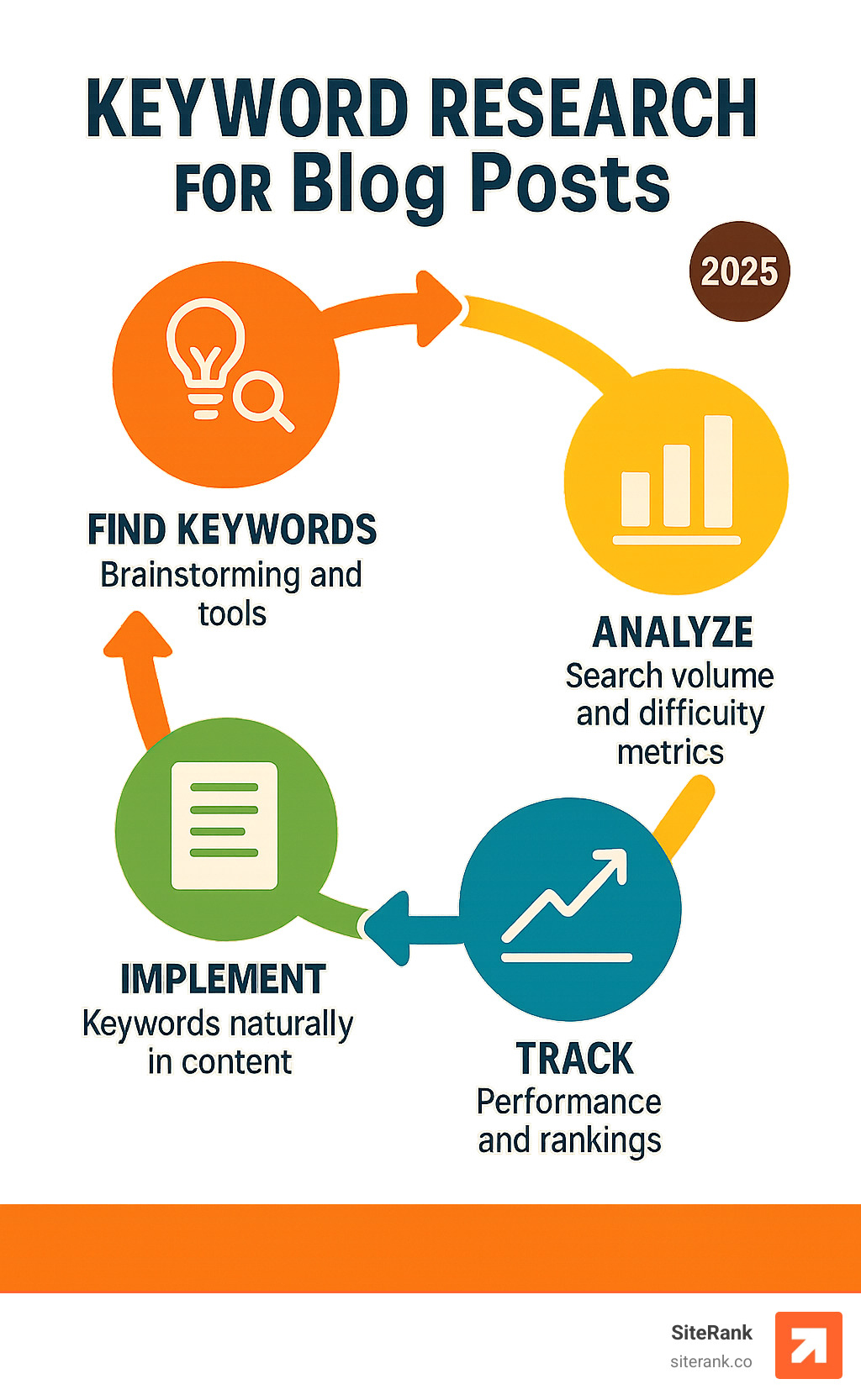
Essential Steps for Blog Keyword Research:
- Find seed keywords – Start with basic terms related to your topic
- Analyze search intent – Understand what users really want (information, products, or navigation)
- Check metrics – Look at search volume, keyword difficulty, and competition
- Prioritize keywords – Focus on terms you can realistically rank for
- Create content – Write naturally while incorporating your target keywords
- Track performance – Monitor rankings and adjust your strategy
Whether you’re a fresh or professional blogger, everyone understands that getting long-term organic traffic to your blog is a difficult task. As one successful food blogger shared, “When I started doing it for Easy Peasy Foodie, it took 3 months before I began to see any real results, and about 6 months before my traffic started soaring.”
The good news? Keyword research doesn’t have to be overwhelming. With the right approach, you can find keywords that bring qualified traffic – people who actually want what you’re offering.
Most bloggers either write great content no one finds or stuff posts with misaligned keywords—both waste effort. The solution is simple: understand what your audience is searching for, then create content that answers their questions better than anyone else.
I’m Craig Flickinger, founder of SiteRank.co. After 15+ years in SEO and web development, I’ve seen how proper keyword research for blog posts turns struggling sites into traffic-driving machines. Here’s how to do it without the complexity or confusion.
The Foundation: Understanding Keywords and Search Intent
Think of keyword research for blog posts as learning your audience’s language. The questions people type into Google are keywords—your roadmap to creating content that gets found.
Here’s the reality: 95% of searchers never look past Google’s first page. If your blog post isn’t on page one, it’s practically invisible. When you understand what readers are searching for and create content that matches their needs, you start attracting qualified traffic—people who genuinely want what you’re offering.
This isn’t just about getting more visitors; it’s about building the foundation for long-term blog growth through solid SEO Fundamentals.
Decoding Search Intent: What Your Audience Really Wants
Modern keyword research for blog posts goes beyond finding popular terms. The real game-changer is understanding search intent—the deeper reason behind every search.
Google’s AI, like RankBrain (a key ranking factor since 2015), focuses on understanding what searchers truly want, not just matching exact keywords.
When someone searches for something, they fall into one of four categories:
Informational intent drives most blog traffic. Searchers want to learn something, like “how to make sourdough bread” or “what is keyword research?” This is perfect for how-to guides and educational posts.
Commercial intent signals research mode. People are comparing options before buying, searching for “best running shoes 2024” or “laptop reviews.” These are goldmines for comparison posts and product breakdowns.
Navigational intent means they’re looking for a specific website, like “Facebook login.” While these won’t bring new traffic, they matter for brand building.
Transactional intent shows purchase readiness. Searches like “buy organic coffee beans” indicate someone is ready to buy. Even blog posts can capture this intent with strong calls-to-action.
Here’s why this matters: if someone searches “how to make coffee” (informational) and lands on a coffee maker sales page (transactional), they’ll leave immediately. Google notices these mismatches and can penalize your rankings. Getting intent right is crucial for any successful Content Marketing Strategy.
Types of Keywords Every Blogger Should Know
Understanding different keyword types is like having the right tools for different jobs. Each serves a unique purpose in your content strategy.
Short-tail keywords are broad, 1-2 word terms like “coffee” or “SEO.” They have massive search volumes but are brutally competitive and nearly impossible for smaller blogs to rank for.
Long-tail keywords are your secret weapon. These 3+ word phrases, like “how to make pour over coffee at home,” have smaller search volumes but much lower competition and clearer intent. They often drive the majority of a successful blog’s organic traffic because they’re easier to rank for and attract highly engaged readers.
Question keywords are a type of long-tail keyword phrased as a question, like “how does keyword research work?” These directly match how people search, making them perfect for blog posts.
You might hear about “LSI keywords”—supposedly synonyms that help Google understand your content. This concept is outdated. Google’s algorithms are sophisticated enough to understand context without you cramming in synonyms. Focus on writing naturally about your topic.
Branded keywords include your site name (“SiteRank blog”), while unbranded keywords don’t. As bloggers, we primarily target unbranded terms to reach new audiences.
Key Metrics That Matter: Volume vs. Difficulty
Once you have keyword ideas, you need to separate the good from the bad. Several key metrics help you make smart choices.
Search Volume shows how many people search for a keyword monthly. High volume usually means fierce competition. What counts as “high” varies by niche—500 monthly searches might be low for tech but excellent for a smaller hobby.
Keyword Difficulty (scored 0-100) estimates how hard ranking will be. It considers the authority of websites already ranking. For newer blogs, targeting keywords with low difficulty (under 30) gives you the best shot at page-one rankings.
Cost-Per-Click from paid advertising reveals commercial value. High CPC keywords often indicate strong buyer intent, making them valuable topics even for organic content.
Traffic Potential goes beyond single-keyword volume. One well-optimized post can rank for hundreds of related terms. For example, the top result for “submit website to search engines” ranks for over 400 different keywords, multiplying its traffic.
Your goal is finding the sweet spot: keywords with decent search volume, manageable competition, and high relevance to your audience. This balance attracts meaningful traffic.
A Step-by-Step Guide to Keyword Research for Blog Posts
Now that we understand the fundamentals, let’s dive into the practical steps for conducting effective keyword research for blog posts. This process helps us identify opportunities and craft content that truly resonates with your audience. Think of it as detective work – we’re uncovering the exact words and phrases your readers use when they’re searching for solutions you can provide.

The beauty of this approach is that it connects directly to your broader Content Creation strategy, ensuring every piece of content you create has a purpose and an audience waiting for it.
Step 1: Brainstorming Seed Keywords and Topics
Before we touch any fancy tools, we need to get inside our readers’ heads. This brainstorming phase is where the magic begins – it’s all about thinking like your customer. What keeps them up at night? What problems are they desperately trying to solve? What questions do they ask when they think no one’s listening?
Start by imagining yourself as your ideal reader. If you needed information or a solution related to your blog’s niche, what would you actually type into Google? The language you use in casual conversation is often very different from what you think people search for – and usually, the casual conversation wins.
Niche forums and communities like Reddit are absolute goldmines for this kind of insight. People share their real problems and use their natural language when they think they’re just chatting with peers. A food blogger might find that people aren’t searching for “culinary ingredient alternatives” – they’re asking “what can I use instead of eggs in cookies?” The difference is huge for your content strategy.
Social media trends reveal what’s currently on people’s minds, while industry analysis gives you that bird’s-eye view of what topics consistently matter in your space. If you already have an audience, pay attention to the questions they ask you directly – this feedback is pure gold.
Here are the most effective brainstorming methods to get your creative juices flowing: mind maps help you visualize connections between topics, customer questions from emails or comments reveal real pain points, social media trends show what’s hot right now, and those “People Also Ask” boxes on Google are like having a direct line to your audience’s curiosity.
Step 2: Finding Keyword Opportunities with the Right Tools
Once you have your seed keywords, it’s time to expand that list using both free and specialized tools. The good news? You can accomplish a lot without spending a dime, though premium tools do offer deeper insights.
Google’s free tools are your starting point and they’re surprisingly powerful. The Google Keyword Planner gives you keyword ideas and search volume data, though keep in mind its “competition” metric relates to paid ads, not organic SEO difficulty. Google Trends is fantastic for spotting seasonal patterns and emerging topics – perfect for planning your content calendar around what’s gaining momentum.
Don’t overlook the simple stuff that’s right in front of you. Google’s autocomplete features are basically Google telling you what people search for most often. When you start typing a query, those suggestions are popular searches happening right now. The “Searches related to…” section at the bottom of search results pages offers even more expansion opportunities.
Those “People Also Ask” boxes that appear in search results are like having a focus group with your audience. They show you the exact questions people want answered, which can become headings in your blog posts or entire articles themselves.
Google Search Console is particularly valuable if you already have a website. It shows you which keywords you’re already ranking for and reveals opportunities where you have high impressions but low clicks – these are perfect candidates for content optimization.
Using AI chatbots for ideation can jumpstart your brainstorming, but remember they’re better for generating initial ideas than providing precise SEO data. Think of them as creative partners, not research tools.
Step 3: Analyzing and Prioritizing Your Keyword List
Now comes the strategic part – turning that big list of keywords into an actionable plan. This involves both macro and micro research approaches that work together to build your content strategy.
Macro research is your big-picture planning. You’re identifying the broader topics and themes your audience cares about, which helps you plan your content calendar months ahead. Micro research happens before you write each individual post, where you spend about 5 minutes finding the specific keywords that post should target.
Creating a keyword map keeps everything organized and prevents you from accidentally competing against yourself. This means assigning one primary focus keyword to each blog post or page on your site. Avoiding keyword cannibalization is crucial – when multiple pages target the same keyword, you confuse search engines and dilute your own SEO efforts.
Prioritizing based on business potential and relevance requires balancing several factors. For newer blogs, targeting keywords with lower difficulty scores often works better than chasing high-volume, highly competitive terms. Even keywords showing “zero volume” in tools can collectively drive significant traffic, especially in specialized niches.
Relevance trumps everything else. A keyword might have amazing volume and low difficulty, but if it doesn’t truly serve your audience or align with your expertise, it’s not worth your time. Consider both the immediate ranking potential and how each keyword fits into your long-term authority-building strategy.
The sweet spot is finding keywords that are relevant to your audience, achievable for your current domain authority, and have genuine business potential – meaning they can naturally lead to conversions or deeper engagement with your brand.
From Research to Ranking: Implementing Your Keywords
Finding the right keywords is only half the battle. The real magic happens when we effectively incorporate them into our content. Think of it like having all the ingredients for a perfect recipe – now we need to combine them skillfully to create something delicious that people actually want to consume.

How to Naturally Weave Keywords into Your Content
The secret to successful keyword research for blog posts implementation is making everything feel natural. Google’s sophisticated AI can easily spot when you’re trying to game the system with awkward keyword stuffing. Instead, focus on creating comprehensive, helpful content that genuinely answers your readers’ questions.
Your focus keyword is the star of the show – the primary term you want your blog post to rank for. This keyword needs strategic placement in several key locations. Start with your title tag, which is what people see first in search results. Make it compelling and include your focus keyword early, but don’t sacrifice readability for SEO.
Your meta description acts like a mini-advertisement for your post. While it doesn’t directly impact rankings, a well-crafted description with your keyword can significantly boost click-through rates. Think of it as your chance to convince searchers that your content is exactly what they need.
Headings create the backbone of your content structure. Your H1 should naturally include your focus keyword, while your H2 and H3 subheadings offer perfect opportunities to weave in secondary keywords. This approach helps both readers and search engines understand your content’s organization and focus.
Don’t overlook your URL structure. Clean, keyword-rich URLs like yourblog.com/keyword-research-for-blog-posts are easier for everyone to understand and remember. Keep them short and descriptive.
Within your content body, integrate your focus keyword and related terms naturally throughout the text, especially in that crucial first paragraph. Aim for around 1-2% keyword density, but never sacrifice readability for the sake of hitting a number. If it sounds robotic, your readers will notice – and so will Google.
Image alt text serves double duty by making your content accessible to visually impaired readers while helping search engines understand your images. Describe your images accurately using relevant keywords when appropriate.
Secondary keywords are your supporting cast. These related terms and variations help Google understand the full scope of your content, allowing you to rank for a broader range of search queries. The key is incorporating them so naturally that readers don’t even notice you’re doing SEO. This thoughtful approach aligns perfectly with proven On-Page SEO Optimization Techniques.
Optimizing and Updating Existing Blog Posts
Here’s something many bloggers miss: keyword research for blog posts doesn’t end when you hit publish. In fact, some of your biggest SEO wins will come from optimizing content that’s already live. Google loves fresh, updated content, and your existing posts are goldmines waiting to be polished.
Google Search Console becomes your best detective tool after publication. It reveals which keywords are bringing people to your site and, more importantly, which opportunities you’re missing. Look for keywords with high impressions but low click-through rates – these represent content that’s showing up in search results but not compelling people to click.
Even more exciting are the keywords where you’re ranking on page 2 or 3. These are low-hanging fruit that often need just a small push to reach that coveted first page. Sometimes a simple title tweak, an updated statistic, or an additional paragraph can make all the difference.
Refreshing your content keeps it relevant and valuable. Update outdated statistics, add new insights you’ve gained, and incorporate fresh keyword clusters you’ve finded through ongoing research. As your expertise grows and your industry evolves, your content should evolve too.
Internal linking creates a web of connections throughout your blog, helping readers find more of your content while showing search engines the relationships between your posts. When you publish new content, look for opportunities to link back to relevant older posts, and vice versa.
Sometimes the best approach is simply expanding what you’ve already written. If an older post is performing well but feels thin compared to your current standards, beef it up with more examples, detailed explanations, or additional sections. This comprehensive approach to content optimization is detailed further in our 10 Content Optimization Tips for SEO.
Common Mistakes in Keyword Research for Blog Posts and How to Avoid Them
Even well-intentioned bloggers can stumble when implementing their keyword research for blog posts. Let’s explore the most common pitfalls so you can sidestep them entirely.
Keyword stuffing is the ghost of SEO past that still haunts some content creators. This outdated practice involves cramming your target keyword into every possible sentence, creating content that reads like a robot wrote it. Google actively penalizes this behavior, and readers will bounce faster than you can say “search engine optimization.” The fix is simple: write for humans first, search engines second.
Ignoring search intent is like showing up to a formal dinner in swimming gear – technically you’re there, but you’re completely missing the point. If someone searches for “how to tie a tie” (informational intent) and you show them a page selling ties (transactional intent), both Google and the searcher will be disappointed. Always match your content type to what the searcher actually wants.
Targeting overly competitive keywords as a new blogger is like trying to compete in the Olympics before you’ve learned to walk. Those broad, high-volume keywords with massive difficulty scores? They’re dominated by established sites with years of authority. Start with long-tail, low-competition keywords where you can actually win, then gradually build your way up.
Expecting overnight results leads to frustration and abandoned strategies. SEO is more like planting a garden than flipping a light switch. It takes time for search engines to find, understand, and trust your content. Most successful bloggers report seeing initial results after 3-6 months of consistent effort.
Not tracking performance is like driving with your eyes closed. Without monitoring your keyword rankings and traffic through tools like Google Search Console, you’re flying blind. How will you know what’s working, what needs improvement, or when to celebrate your wins?
The biggest mistake might be dismissing keyword research entirely. Some bloggers think it’s too mechanical or artificial, preferring to write purely from inspiration. While passion is crucial, ignoring what your audience is actually searching for is like opening a restaurant without checking what food people want to eat. Keyword research for blog posts isn’t about stifling creativity – it’s about ensuring your creative efforts reach the people who need them most.
Frequently Asked Questions about Keyword Research
Let’s tackle the questions I hear most often from bloggers who are just getting started with keyword research for blog posts. These are the real concerns that keep people up at night, wondering if they’re on the right track.
How long does it take to see results from keyword research?
It varies by niche and competition, but you can typically expect to see initial results within 3-6 months as search engines index your content and recognize its authority. Think compounding gains, not overnight spikes. Consistency and patience win.
What are the best tools for keyword research for blog posts?
A mix of free and specialized tools is ideal. Start with Google Keyword Planner for ideas and volume ranges, Google Trends for seasonality, and Google Search Console to see what already brings impressions. For deeper analysis and prioritization, SiteRank’s keyword research solutions add competitive insights and more accurate difficulty metrics.
Are “LSI Keywords” still relevant for SEO?
The term “LSI Keywords” is outdated and largely irrelevant in modern SEO. What matters is topical relevance and semantic coverage. Focus on writing comprehensive, high-quality content that naturally covers your topic in depth. John Mueller of Google has confirmed this, emphasizing value and natural language over forced synonym stuffing.
Conclusion: Turn Your Research into a Traffic-Driving Machine
Keyword research for blog posts isn’t just another SEO task to check off your list – it’s the foundation that transforms your brilliant ideas into content that actually gets found. Think of it as building a bridge between what you love writing about and what your audience desperately wants to read.
We’ve walked through everything together: understanding why people search the way they do, spotting the different types of keywords that can work for your blog, and mastering those crucial metrics that separate winners from time-wasters. More importantly, we’ve given you a practical roadmap you can follow every time you sit down to write.
Here’s the thing about SEO success – it’s not a one-time achievement. It’s more like tending a garden. The digital world keeps changing, new trends emerge, and your audience’s needs evolve. The bloggers who thrive are the ones who accept this as an ongoing process. They regularly check their performance, refresh their older posts, and stay curious about what their readers are searching for.
I get it – managing all of this while creating amazing content can feel overwhelming. That’s exactly why we built SiteRank the way we did. Our AI-powered approach takes the guesswork out of keyword research and SEO strategy. We focus on what actually moves the needle for your blog, without drowning you in unnecessary reports or busy work.
The best part? You don’t have to figure this out alone. We’ve helped countless bloggers transform their traffic from a trickle to a steady stream of engaged readers. Our approach is simple: we find the right keywords, help you implement them naturally, and track what’s working so you can keep growing.
Ready to boost your blog’s growth? Stop wrestling with spreadsheets full of keywords and wondering if you’re targeting the right terms. Let us handle the technical side while you focus on what you do best – creating incredible content that connects with your audience. Explore our expert Keyword Research Services and find how much easier SEO can be when you have the right team in your corner.