

Introduction: Why Your Next Patient is Searching on Google
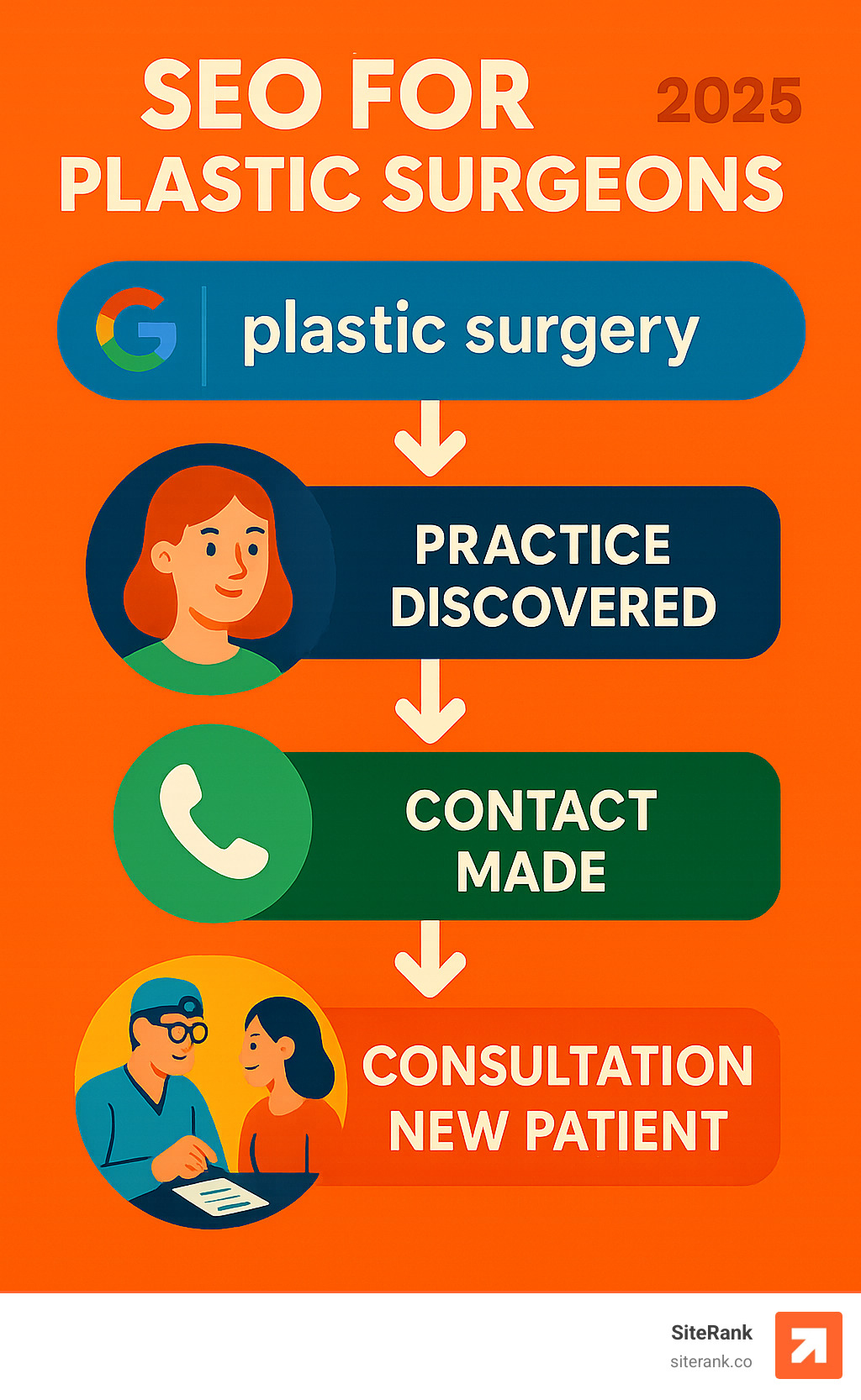
SEO for plastic surgeons optimizes your website to rank higher in search results, ensuring your practice appears prominently when potential patients search for your services. It helps attract qualified leads, build trust, and increase visibility in a competitive market.
Most patients start their search for a healthcare provider online. In fact, 83% of patients use search engines to find one. This means your next patient is likely on Google, searching for services you offer.
Without a strong online presence, your practice is invisible to these potential patients. SEO helps you stand out, turning your website into a powerful tool for attracting new clients.
With over 15 years of experience, I specialize in SEO for plastic surgeons, using AI-driven tools to boost client engagement and campaign performance.
Crafting Content That Converts: On-Page SEO and Keyword Strategy
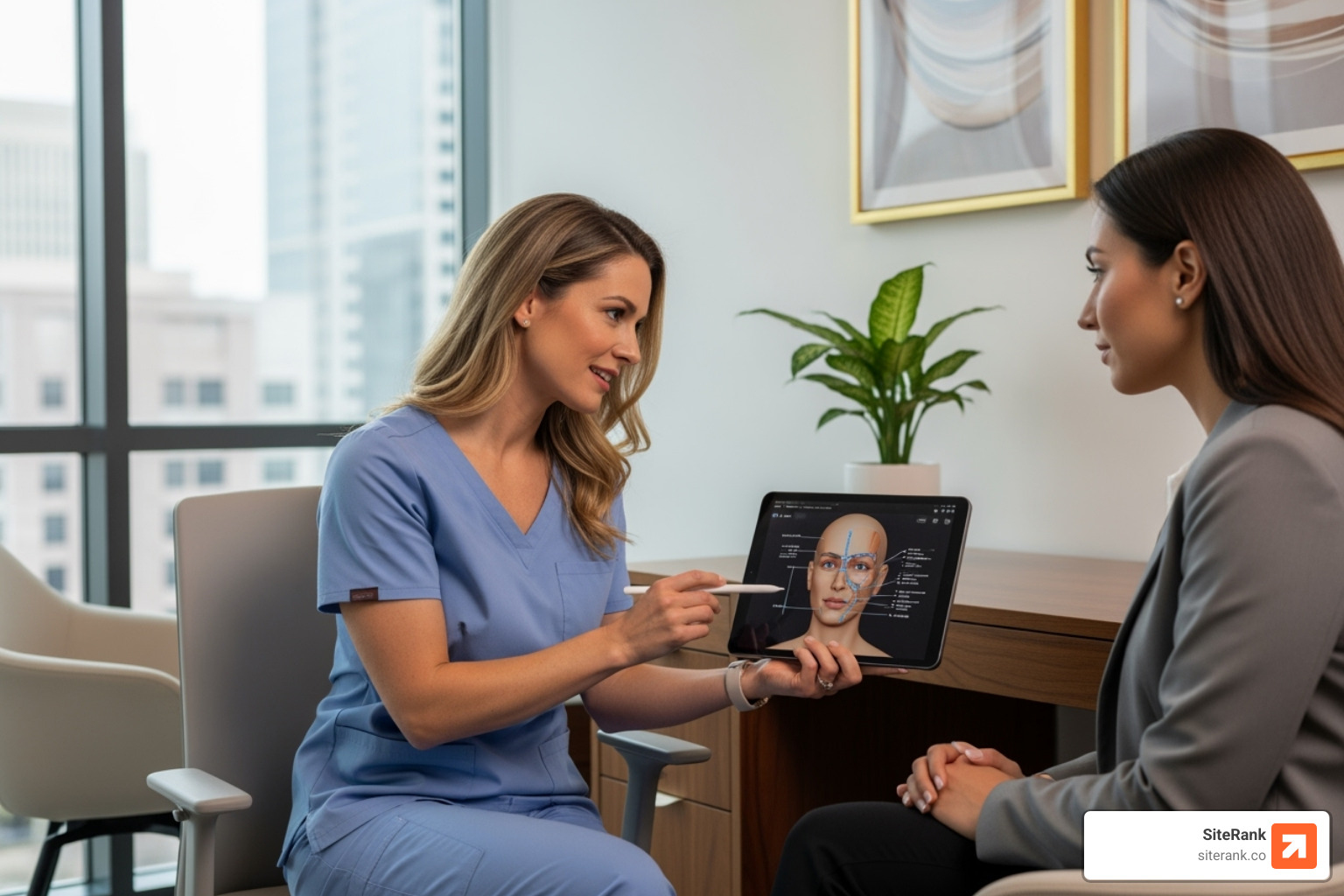
Content that converts visitors into patients is where SEO for plastic surgeons shines. Your website is a 24/7 consultation room that must educate, reassure, and inspire confidence in prospective patients.
Your content strategy needs more than procedure pages. It requires comprehensive blog posts answering patient questions, detailed patient education resources, and curated before-and-after galleries. HIPAA compliance is non-negotiable for patient photos; we help you create compelling visuals while protecting patient privacy.
Video content is increasingly powerful. Patients want to see you speak and understand your approach. Explaining a procedure or sharing success stories helps build that crucial emotional connection.
Your content guides patients from their first Google search to booking a consultation. Our on-page SEO services help ensure this content not only engages your audience but also ranks well.
Developing a Content Strategy with SEO for Plastic Surgeons
Keyword research reveals what potential patients are searching for and what stage of their journey they’re in.
Informational keywords like “rhinoplasty recovery time” capture patients in the research phase, making them perfect candidates for your educational blog content.
Transactional keywords like “rhinoplasty cost” or “plastic surgeon near me” indicate someone is closer to making a decision and ready to take action.
Long-tail keywords are your secret weapon. Specific phrases like “non-surgical facelift options in downtown Miami” attract highly qualified leads with less competition. When someone searches for procedure-specific terms like “how much does breast augmentation cost,” they’re often close to calling your office.
Patients consume an average of 13 pieces of content before deciding on plastic surgery. Your blog is a key tool for building trust and addressing concerns long before the first consultation. For detailed guidance, check out our keyword research for blog posts guide.
Consider blog topics that address patient concerns: “Recovery Tips for a Tummy Tuck,” “Choosing the Right Breast Implant Size,” “Understanding the Differences Between Dermal Fillers and Botox,” “Is a ‘Mommy Makeover’ Right for You?” “How to Prepare for Your Rhinoplasty Consultation,” and “Patient Testimonials: Real Stories, Real Results.”
Optimizing Your Website’s Procedure and Service Pages
Each procedure you offer needs its own page with unique content. This helps search engines understand your services and match you with the right patient searches.
Title tags act as headlines in search results, grabbing attention with target keywords and your location, like “Eyelid Surgery in Miami – [Your Practice Name]”.
Meta descriptions are your elevator pitch in search results. A compelling description improves click-through rates by convincing users to choose your listing.
Header tags (H1, H2, H3) create a clear hierarchy for users and search engines. Use your primary keyword in the H1 and related keywords in H2s and H3s. This structure makes your content scannable, which is crucial as most users skim.
Image alt text helps search engines understand your visuals and improves accessibility. Use descriptive text like “breast augmentation before and after photos showing natural results” instead of “image1.jpg.”
Internal linking connects related content, like linking a tummy tuck page to your mommy makeover page. This keeps visitors engaged and signals page importance to search engines.
The goal is a website that is informative for patients and easily understood by search engines. Our content writing services help you strike this balance, creating content that educates, converts, and ranks.
Building a Foundation of Trust: Technical SEO and Website Performance
Even with compelling content, a shaky technical foundation will undermine your website’s performance. The results won’t meet expectations.
SEO for plastic surgeons isn’t just about content. Your website’s technical backbone is crucial for how search engines find, understand, and rank your pages.
Google’s algorithms evolve constantly, with major updates prioritizing user experience and technical quality. The “Medic” update, for example, emphasized technical excellence for healthcare websites, making it vital for medical practices.
From a patient’s perspective, your site must load quickly, work on mobile, and feel secure. If it fails on these basics, they’ll click the back button and choose a competitor.
Core Web Vitals are essential metrics Google uses to measure site performance, including load speed, interactivity, and visual stability. A website that scores poorly on these metrics will struggle to rank well.
Your website’s architecture also matters. Search engines need to easily crawl and index your content, which requires a logical site structure. For a comprehensive look at how we address these foundational elements, visit our More info about Technical SEO services.
The Role of Technical SEO for Plastic Surgeons
Technical SEO ensures your website runs smoothly, creating a perfect environment for patients and search engines.
Website speed is critical. Potential patients want information quickly, and a slow site sends them to competitors. We optimize performance by compressing images and streamlining code for fast load times.
Mobile-friendliness is essential. Most users search on mobile, and Google’s mobile-first indexing means it prioritizes your mobile site for rankings. Your site must offer an exceptional experience on all devices.
HTTPS security is crucial for medical websites. The padlock icon shows patient data is encrypted and protected. It’s a Google ranking factor and builds patient trust.
Structured data (schema markup) helps search engines understand your content, which can lead to rich snippets in search results. These improved listings show reviews or business hours, improving click-through rates. Learn more about Using schema markup.
XML sitemaps act as a roadmap for search engines, helping them efficiently find and index your important pages. We ensure your sitemap is clean and up-to-date.
Fixing broken links improves user experience and signals to search engines that your site is well-maintained. We regularly audit and fix broken links to keep your site running smoothly.
Is Your Website Mobile-Ready?
Imagine a potential patient browsing on their phone. If your site has tiny text, difficult buttons, and slow-loading images, they’ll leave for a competitor with a mobile-friendly site.
Most web browsing now happens on mobile devices, and Google’s mobile-first indexing means your mobile experience directly impacts your search rankings.
Responsive design ensures your site adjusts to any screen size for an optimal viewing experience. This involves reorganizing layouts and prioritizing key information for mobile users.
Click-to-call buttons are a game-changer. A prominent button makes it easy for ready-to-book patients to call, which can be the difference between gaining or losing a new patient.
Easy navigation is critical on mobile. We design intuitive menus and digestible content for smaller screens, ensuring important information is easily accessible.
To see how your website currently performs, you can Test your site with Google PageSpeed Insights. This free tool provides valuable insights and recommendations for improvement. We use these insights to ensure your website provides an exceptional experience for every visitor.

Mastering Local & Off-Page SEO for Plastic Surgeons
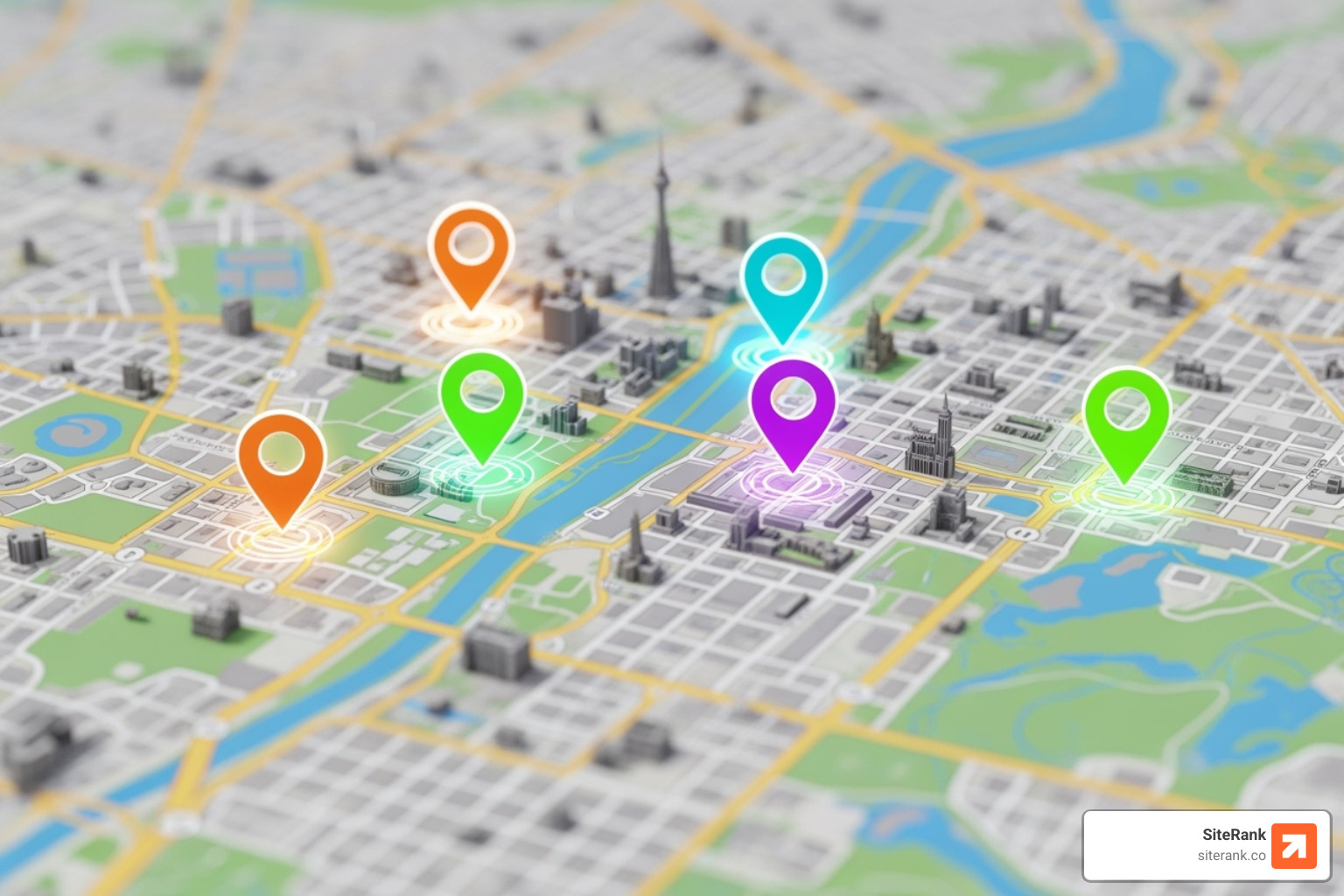
When someone searches for a “plastic surgeon near me,” they’re ready to decide. This is the power of local search, where SEO for plastic surgeons shines. Nearly half of all Google searches are local, and 78% of them convert into appointments.
Plastic surgery is personal. Patients want a local surgeon they can meet and trust, not someone states away. This is where building your online reputation and authority becomes crucial.
Google uses E-E-A-T (Experience, Expertise, Authoritativeness, Trustworthiness) to evaluate medical websites. For plastic surgeons, this means showcasing your credentials, patient success stories, and professional standing.
Local SEO often converts faster. A search for “rhinoplasty surgeon in [Your City]” indicates a user is ready to choose a provider. Our Local Business SEO Services help you capture these high-intent local searches.
Dominating the “Map Pack” with Google Business Profile
The Map Pack shows the top three local businesses in Google search results. Landing here is like a free billboard targeting people actively looking for your services.
Your Google Business Profile is the foundation. Think of it as your digital storefront.
Claiming your profile is step one. We also ensure NAP consistency (Name, Address, Phone number) is identical everywhere online. Inconsistencies confuse Google.
Service categories help Google understand what you do. We select specific categories like “cosmetic surgeon” and “medical spa” to capture your full range of services.
Posting updates keeps your profile fresh. We help you share photos (with consent), office news, and educational content to show you’re an active practice.
Responding to reviews is crucial. Every review is an opportunity to show your professionalism. We help craft responses that demonstrate your commitment to patient satisfaction.
You can Manage your Google Business Profile to ensure every detail is perfect.
Building Authority with Citations and Backlinks
Beyond your Google profile, authority is built through citations and backlinks—other websites vouching for your credibility.
Local directory listings on platforms like Yelp and Healthgrades act as digital references. Maintaining NAP consistency is key.
Healthcare-specific directories like RealSelf carry extra weight, connecting you directly with patients researching procedures.
Guest posting on sites like a local health magazine’s website lets you share expertise and earn valuable backlinks, positioning you as a local expert.
Social media profiles support your overall authority and contribute to your digital footprint.
Backlinks are when other reputable sites link to yours. Quality trumps quantity. One link from a respected medical journal is worth more than dozens from random blogs. We focus on earning meaningful backlinks that signal trust to Google. Learn more about Why Backlinks Are Important for SEO.
Measuring Success and Maximizing Your ROI
After investing in SEO for plastic surgeons, it’s time to measure its success. SEO analytics are like monitoring a patient’s recovery; clear markers show you’re moving in the right direction.
Digital marketing is measurable. We track Key Performance Indicators (KPIs) that impact growth, not vanity metrics that don’t fill your appointment book.
We track website traffic from organic search and keyword rankings. Most importantly, we track conversion rates—the percentage of visitors who take action.
Phone calls and form submissions are golden metrics, representing real, interested patients. We also monitor patient engagement, as high engagement signals serious interest. Positive patient reviews and ratings are conversion magnets.
We use tools like Using Google Analytics and Google Search Console to track these metrics, providing clear reports that show how your investment is paying off.
SEO vs. PPC: What’s the Right Mix for Your Practice?
A common question is: “Should I focus on SEO or paid ads?” The answer is finding the right balance for your practice’s goals and budget.
| Feature | SEO (Search Engine Optimization) | PPC (Pay-Per-Click Advertising) |
|---|---|---|
| Results Timeline | Long-term (9-12 months for significant results) | Short-term (immediate visibility) |
| Cost | Organic, no direct cost per click (investment in strategy) | Paid per click (budget dependent) |
| Credibility | Perceived as more trustworthy and authoritative by users | Clearly marked as an ad |
| Longevity | Sustained results once ranked, compounding benefits | Stops delivering results when budget runs out |
| Traffic Quality | Often higher intent, organic traffic | Can attract less qualified traffic if not optimized well |
| Target Audience | Broad reach based on search queries | Highly targeted based on keywords, demographics, location |
SEO builds your reputation. It takes time, but it establishes trust. Ranking naturally for “rhinoplasty specialist” positions you as an expert, not just an advertiser.
PPC is like a billboard—it offers immediate visibility but stops when you stop paying. It’s effective for new practices or promoting specific procedures.
We believe SEO for plastic surgeons should be your foundation, with PPC as a strategic complement.
How Much Does SEO for a Plastic Surgery Practice Cost?
Let’s talk numbers. SEO for plastic surgeons typically ranges from $3,000 to $10,000 per month, depending on market competitiveness and your goals. A practice in Beverly Hills will need a more aggressive strategy than one in a smaller city.
Local SEO usually runs between $500 and $3,000 per month and is a great starting point for many practices.
SEO results take 9-12 months to fully materialize, with early wins around 4-6 months. It’s not a quick fix; it’s building a digital asset that compounds over time.
The return on investment (ROI) can be substantial. One qualified consultation can cover a month’s SEO investment. Unlike paid ads, SEO works 24/7.
Think of it this way: would you rather pay for each patient individually, or invest in a system that brings qualified patients to you consistently? That’s the power of strategic SEO.
Frequently Asked Questions about Plastic Surgery SEO
SEO for plastic surgeons can feel overwhelming. We’ve answered the most common questions we hear from surgeons like you.
How long does it take to see results from SEO?
This is the most common question. SEO is a long-term strategy, not a quick fix.
You’ll typically see initial improvements around the 4-6 month mark, but significant impact usually shows up around 9-12 months.
Just as a patient’s surgical results take time, so does SEO. Your website needs time to strengthen and show its best results.
Several factors influence your timeline: Competition in your market, your budget, your website’s starting point (e.g., technical issues or poor content), and consistency of effort.
How can I build trust and credibility with SEO?
Trust is everything in plastic surgery. SEO helps you demonstrate Google’s E-E-A-T principles: Experience, Expertise, Authoritativeness, and Trustworthiness.
High-quality content is your foundation. Publishing detailed, accurate information about procedures and recovery positions you as a knowledgeable and honest expert.
Patient testimonials and positive reviews are pure gold. Patients trust other patients’ experiences, and Google loves businesses with strong review profiles.
A professional website design is key. A modern, secure, easy-to-steer site signals trustworthiness. An outdated site does the opposite.
Featuring your credentials prominently is essential. Board certifications, training, and awards show patients your qualifications.
Backlinks from authoritative sources like medical journals or respected health websites tell Google that other experts recognize your expertise.
What are the most common SEO mistakes plastic surgeons make?
Even skilled surgeons make these common, avoidable SEO mistakes.
Neglecting local SEO is a huge missed opportunity. Most patients want a surgeon nearby, so if your Google Business Profile isn’t optimized, you’re invisible to them.
Using duplicate content from other websites or even your own pages can hurt your rankings. Every page needs unique, valuable content.
Slow website speed kills the patient experience. If your site loads slowly, potential patients will leave.
Ignoring mobile users is a critical error. Most people search for healthcare on their phones, so your site must work perfectly on mobile.
Keyword stuffing makes content sound robotic and hurts your rankings. Google wants natural, helpful content.
Inconsistent NAP information (Name, Address, Phone) confuses Google and patients. If listings differ, search engines don’t know which to trust.
With the right SEO for plastic surgeons strategy, you can avoid these pitfalls and build a strong online presence.
Conclusion: Your Blueprint for Digital Growth
Mastering SEO for plastic surgeons is like mapping a complex surgical plan: intricate but rewarding. This guide covered the essentials: crafting patient-focused content, building a robust technical foundation, and dominating local search.
SEO isn’t a one-time fix. It’s a continuous process of adapting to search engine updates and improving the online experience for your potential patients, ensuring they find you easily and trust you implicitly.
At SiteRank, we understand the medical field’s unique challenges. Our AI-powered methodology delivers custom SEO for plastic surgeons without unnecessary fluff, ensuring every effort increases clicks and patient engagement. We focus on what moves the needle to help you attract qualified patients, build trust, and achieve sustainable growth.
Are you ready to transform your website into a consistent, powerful lead-generation machine? Let’s take the next step together.