

How SEO Transforms Your Chiropractic Practice
If you’re searching for seo for chiropractors, here’s what you need to know:
- Claim your Google Business Profile – This is critical for local visibility
- Optimize for local keywords – Include your city and services in content
- Create condition-specific pages – Target searches for back pain, neck pain, etc.
- Build quality backlinks – Get listed in healthcare directories
- Encourage patient reviews – 91% of consumers trust them as much as personal recommendations
- Ensure mobile-friendly website – Most patients search on phones
- Track performance – Use Google Analytics to measure results
SEO for chiropractors is more than just ranking higher on Google—it’s about connecting with patients actively searching for the exact services you provide. When potential patients experience back pain or neck discomfort, they don’t flip through the Yellow Pages anymore. They grab their phones and search “chiropractor near me” or “back pain relief in [your city].”
With over 70,000 chiropractors in the United States and only a handful of spots on Google’s first page, the competition is fierce. Yet the rewards are substantial—53% of website traffic comes from organic search, and 75% of users never scroll past the first page of results.
I’m Craig Flickinger, founder of SiteRank.co, and I’ve spent over 15 years helping healthcare providers, including chiropractors, climb search rankings and attract patients through SEO for chiropractors strategies that deliver measurable results in competitive markets.
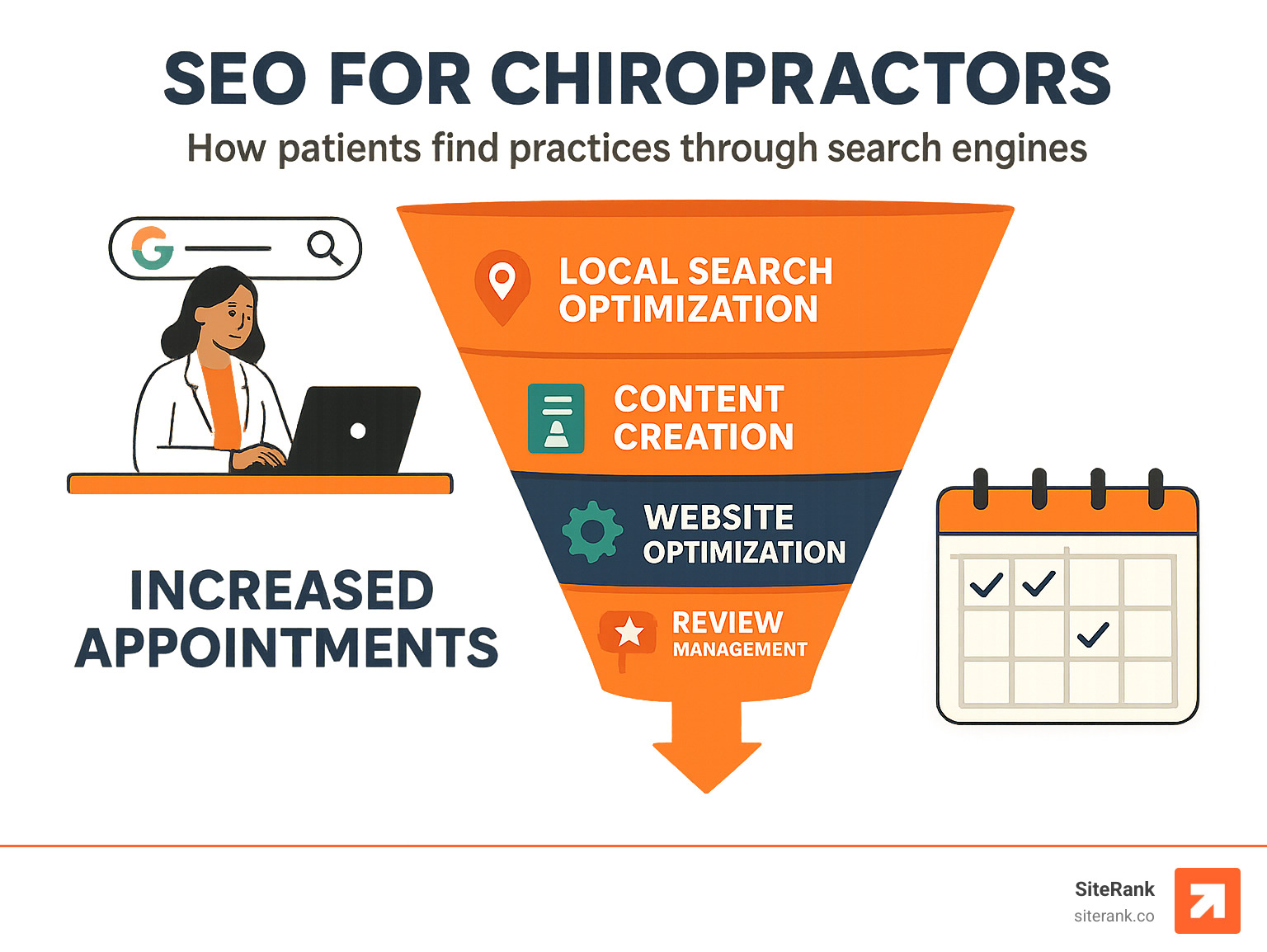
Why SEO for Chiropractors Works
Picture this: A person wakes up with shooting back pain. They reach for their phone and type “chiropractor near me who treats sciatica.” Will they find your practice? This is where SEO for chiropractors makes all the difference.
The numbers tell a compelling story. According to BrightEdge research, SEO drives about 53% of website traffic to chiropractic websites. When you pair that with the fact that 75% of people never venture past Google’s first page, being visible in those top spots becomes crucial for practice growth.
For healthcare providers specifically, this visibility matters even more. Research shows 80% of potential patients search online for health information before booking appointments. They’re actively looking for solutions to their pain – and if your practice appears with helpful, authoritative content, you’ve already begun building trust before they walk through your door.
What makes SEO for chiropractors so powerful is its alignment with patient behavior. Unlike a billboard or radio ad that interrupts someone’s day, SEO puts you exactly where patients are already looking. They’re raising their hands saying, “I need help with my neck pain” – and your practice can be the answer they find.
Google has raised the bar for healthcare content through its E-E-A-T standards (Experience, Expertise, Authoritativeness, and Trustworthiness). For chiropractors, this is actually good news. By showcasing your credentials, professional associations, patient success stories, and educational content, you signal to Google that you’re a trustworthy source – and your rankings benefit accordingly.
Search Engines vs. Traditional Ads
“My website brings in more new patients than all my other marketing combined – and costs less,” a chiropractor told us after implementing proper SEO. This experience isn’t unusual, and here’s why:
Traditional advertising disappears when your budget runs out, but SEO for chiropractors builds lasting assets. That helpful article about sciatica exercises you published last year? It’s still bringing in patients today. Your website becomes a 24/7 patient education and acquisition tool that works while you sleep.
The targeting precision with SEO simply can’t be matched by traditional methods. Someone searching “pregnancy-safe chiropractic adjustment” has a specific need and high intent – they’re much closer to booking than someone who happens to hear your radio ad while commuting.
Perhaps most importantly, appearing in organic search results carries an implicit trust factor. People inherently trust Google’s algorithm to show them quality options. When your practice appears at the top for “best chiropractor in [city],” that positioning itself creates credibility.
The lifetime value of patients acquired through search tends to be higher too. They’ve found you through research, not a discount offer, which often leads to better patient retention and more referrals over time.
And unlike that billboard you drove past (did anyone call from it?), every aspect of your SEO performance can be precisely measured. You’ll know exactly which pages bring in patients and which keywords drive appointments – allowing for continuous improvement.
In a field where trust is everything, SEO for chiropractors doesn’t just bring more visitors to your website – it brings the right visitors who are actively seeking the exact solutions you provide.
Keyword & Content Strategy Spine
Think of your keyword strategy as the backbone of effective SEO for chiropractors. Just like a healthy spine supports the entire body, the right keywords support your entire online presence. But this isn’t about cramming your website with the same terms over and over—it’s about understanding what your patients are actually typing into Google when their backs hurt or their necks are stiff.
Master Keyword Research for SEO for Chiropractors
When I sit down with chiropractors to develop their keyword strategy, I often start by asking: “What questions do your patients ask during their first visit?” Those questions are gold mines for SEO.
The tools that make this process easier include Google Keyword Planner, which shows you exactly how many people search for terms like “back pain relief” each month. Google Search Console is another favorite—it reveals which search terms are already bringing visitors to your site (sometimes surprising ones!).
I’m particularly fond of AnswerThePublic for chiropractic clients because it visualizes all the questions people ask about back pain, adjustments, and treatments. Try typing “chiropractor for…” into Google and watching the autocomplete suggestions—that’s real patient language you should be using.
Look at your competitors too—tools like Ahrefs can show you which keywords other chiropractors in your area are ranking for, revealing opportunities they might be missing.
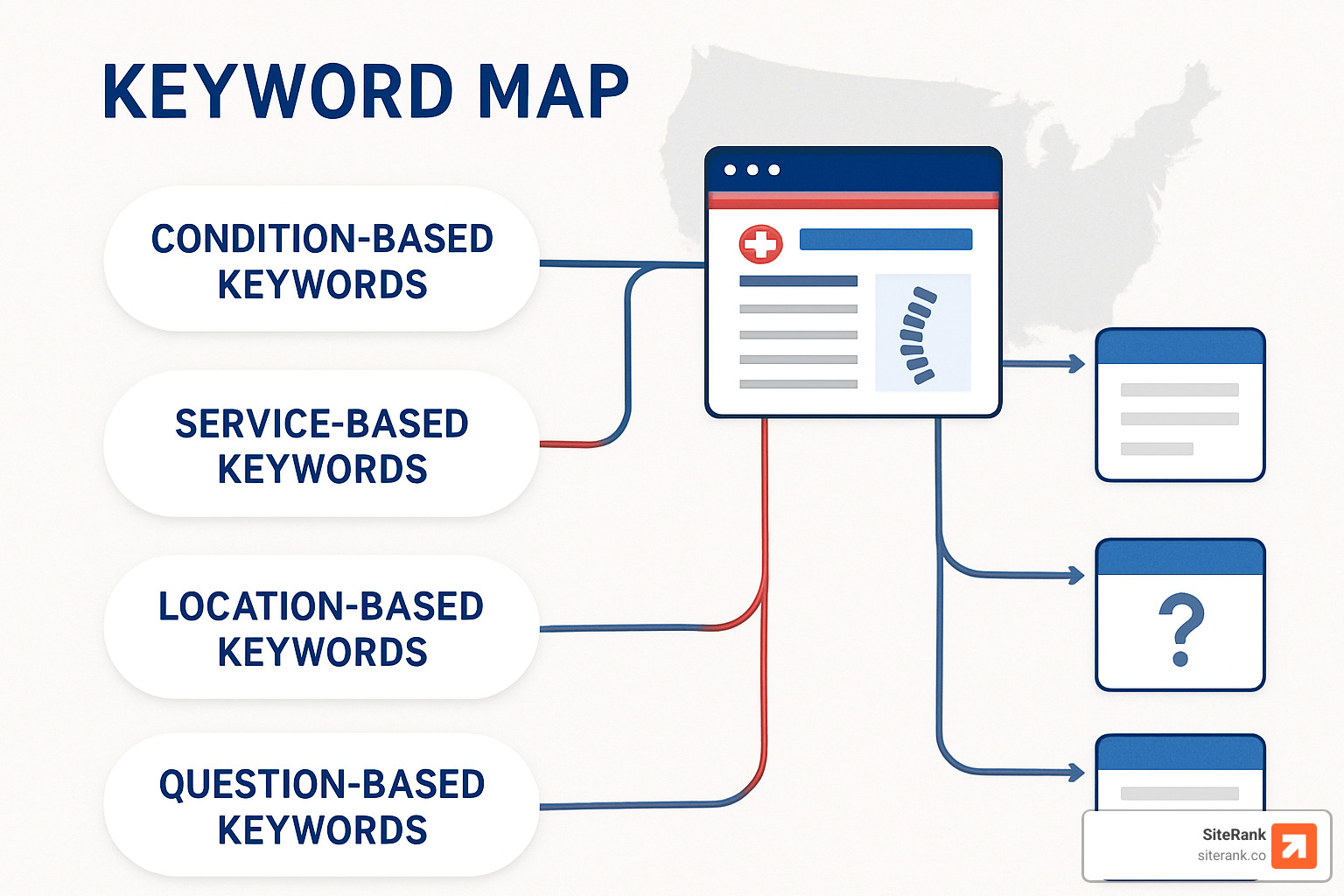
Focus your research on these key areas:
Condition-based keywords connect with patients in pain: “lower back pain relief,” “sciatica treatment,” “headache chiropractor”
Service-based keywords highlight your specialties: “spinal adjustment,” “chiropractic massage,” “sports injury chiropractor”
Location-based keywords bring in local patients: “chiropractor in [city],” “back pain specialist near [neighborhood]”
Question-based keywords address patient concerns: “how can a chiropractor help with whiplash,” “what to expect at first chiropractic visit”
Search volume isn’t everything. I’ve seen keywords with just 50 searches per month bring in more actual patients than terms with 1,000 searches, simply because the intent was stronger. A pregnant woman searching for “prenatal chiropractor near me” is much closer to booking than someone casually researching “back pain.”
Content That Cracks the Code
Once you’ve identified your target keywords, it’s time to create content that speaks to both Google and your potential patients. According to HubSpot, practices with active blogs see 55% more website visitors—that’s a lot of potential new patients!
The content that performs best for chiropractors typically includes:
Educational blog posts that explain conditions and treatments in plain English. Think “5 Exercises to Relieve Lower Back Pain at Home” or “How Chiropractic Care Can Help Manage Migraines.” These posts position you as an expert while targeting keywords patients actually search for.
Detailed service pages for each treatment you offer give Google clear signals about your specialties. Your “Sports Injury Rehabilitation” page can rank for those specific searches while your “Prenatal Chiropractic Care” page captures expectant mothers looking for relief.
FAQ pages are perfect for capturing those question-based searches. When someone asks Google “How often should I see a chiropractor?” or “What to expect during your first adjustment,” your FAQ page can provide the answer—and introduce them to your practice.
Patient success stories (with permission, of course) connect emotionally while demonstrating real results. A story about “How Regular Adjustments Helped Sarah Return to Marathon Running” is both compelling content and great SEO.
Video content performs exceptionally well for chiropractors. Short clips explaining adjustments or demonstrating simple exercises can rank in both Google and YouTube searches.
When creating this content, structure matters as much as substance. Use clear headers to organize your content logically. Include your primary keyword in the title, meta description, URL, and first paragraph—but always write for humans first, search engines second.
I recommend organizing content in topic clusters, with comprehensive pillar pages on broad topics like “Back Pain Treatment” linking to more specific content like “Sciatica Relief” or “Posture Correction.” This approach helps Google understand the relationship between your content pieces and positions your site as an authority.
Want to learn more about maximizing your on-page optimization? Check out our detailed guide to On-Page SEO optimization techniques for additional strategies to implement on your chiropractic website.
Local SEO Power Moves
Let’s talk about local search—the heartbeat of chiropractic marketing. When someone’s back is killing them after moving furniture, they’re not scrolling through page 10 of Google results. They want help now, and local SEO puts your practice directly in their path.
With 46% of all Google searches having local intent, mastering the “near me” game isn’t just smart—it’s essential for filling your appointment book. For chiropractors, local visibility is where patient journeys begin.
The cornerstone of your local presence? Your Google Business Profile (formerly Google My Business). This free listing is arguably your most powerful local marketing tool, appearing in Google Maps and local search results exactly when patients need you most.
Optimize & Engage Your Google Profile
Think of your Google profile as your practice’s digital front door. Here’s how to make it irresistibly welcoming:
First, claim and verify your listing if you haven’t already—it’s surprising how many chiropractors miss this crucial step. Then, complete every section of your profile with meticulous attention to detail. Your business name should match your signage exactly. Select “Chiropractor” as your primary category, but don’t forget relevant secondary categories like “Sports Medicine Clinic” if applicable.
Your address formatting should be consistent everywhere online—down to whether you spell out “Street” or abbreviate it as “St.” Include accurate phone numbers, website links, and detailed hours (with holiday updates). The services list is your chance to showcase your specialties, from prenatal care to sports injury rehabilitation.
High-quality photos dramatically increase engagement. Patients want to see where they’ll be treated before they arrive. Include exterior shots (how will they recognize your building?), welcoming interior images, friendly staff photos, and equipment pictures. If patients permit it, before/after posture photos make powerful visual testimonials.
Keep your profile fresh with regular posts about health tips, special offers, or staff introductions. These updates signal to Google that your practice is active and engaged. Consider it your mini-blog for local visibility.
The Q&A section often gets overlooked, but proactive chiropractors answer questions before they’re asked. Common questions about insurance, first-visit procedures, or treatment techniques are perfect to address here.
Don’t forget to embed Google Maps on your website’s contact page—this creates a seamless connection between your online presence and physical location.
Beyond Google, ensure your NAP (Name, Address, Phone) information is absolutely consistent across all online directories. This consistency sends powerful trust signals to search engines. Learn more about building these crucial citations through our Local Citation Building Services.

Review Rocket Fuel
The numbers don’t lie: 91% of younger consumers trust online reviews as much as personal recommendations, and 93% of people say reviews influence their healthcare decisions. For chiropractors, positive reviews aren’t just nice to have—they’re practice builders.
Make asking for reviews part of your patient care routine. The best time? When someone stands straighter or moves with less pain after treatment—that’s when they’re most likely to share their positive experience. Send follow-up texts with direct review links (patients prefer texting’s simplicity), and train your staff to recognize opportunities to request feedback from satisfied patients.
Always respond thoughtfully to every review—yes, even the negative ones. Thank patients for positive feedback, and address concerns professionally when reviews aren’t glowing. Your responses demonstrate your communication style and care philosophy to prospective patients.
HIPAA compliance is non-negotiable here. Never confirm someone is your patient in public responses unless they’ve explicitly identified themselves first. A simple “Thank you for your feedback” works for positive reviews, while “We’d like to understand your concerns better, please call our office” handles negative ones appropriately.
Beyond reviews and your Google profile, powerful local SEO for chiropractors includes creating location-specific pages for multiple offices, implementing LocalBusiness schema markup (technical code that helps search engines understand your business information), and participating in community events that generate local press coverage.
Consider sponsoring local sports teams or health fairs—these activities not only build community goodwill but often generate valuable backlinks to your website from local organizations. These authentic local connections signal to Google that you’re an established part of the community, not just another business trying to game the system.
Technical, Authority & ROI Tracking
While content and local optimization are visible aspects of SEO for chiropractors, technical SEO provides the foundation that ensures search engines can properly crawl, index, and understand your website.
Technical SEO Essentials
Google’s Core Web Vitals have become crucial ranking factors, especially for healthcare websites. These metrics measure loading performance, interactivity, and visual stability:
- Page Speed: 53% of mobile users will abandon sites that take over 3 seconds to load. Use Google’s PageSpeed Insights to identify and fix speed issues:
- Compress images
- Enable browser caching
- Minimize HTTP requests
Use a content delivery network (CDN)
Mobile-First Design: With most patients searching on mobile devices, your site must be fully responsive:
- Test your site on multiple devices
- Ensure buttons and links are easily tappable
- Make phone numbers clickable for easy calling
Simplify forms for mobile completion
Technical Structure:
- Implement HTTPS security (crucial for healthcare sites)
- Create a logical site architecture
- Use descriptive, keyword-rich URLs
- Include an XML sitemap
Set up proper redirects for changed content
Internal Linking: Connect related content to help both users and search engines steer your site:
- Link from blog posts to relevant service pages
- Create hub pages for main topics
- Use descriptive anchor text
Building Backlink Authority
Backlinks—links from other websites to yours—remain one of Google’s top ranking factors. For chiropractors, quality matters far more than quantity. Focus on these strategies:
- Healthcare Directories: Get listed in relevant directories like:
- American Chiropractic Association
- WebMD Provider Directory
- Healthgrades
Local chamber of commerce
Guest Posting: Write articles for:
- Local news websites
- Health and wellness blogs
- Industry publications
Partner businesses (like fitness centers or physical therapy practices)
Broken Link Building: Find broken links on health websites and offer your content as a replacement.
Local Sponsorships: Support community events and earn links from their websites.
Create Link-Worthy Content: Develop unique resources that naturally attract links:
- Original research or surveys
- Comprehensive guides
- Infographics about posture or spine health
- Free downloadable resources
Common Mistakes in SEO for Chiropractors
Avoid these common pitfalls that can hurt your rankings:
Keyword Stuffing: Repeating keywords unnaturally damages readability and can trigger penalties.
Duplicate Content: Using the same content across multiple pages confuses search engines.
Neglecting Mobile Users: Not optimizing for smartphones alienates the majority of searchers.
Ignoring Local SEO: Failing to claim and optimize your Google Business Profile leaves easy visibility on the table.
Poor-Quality Backlinks: Links from spammy sites can harm rather than help your rankings.
Inconsistent NAP Information: Different addresses or phone numbers across listings creates confusion.
Slow Page Speed: Patients won’t wait for slow-loading pages.
Missing Analytics: Without proper tracking, you can’t measure success or identify improvement areas.
Measure, Refine, Repeat
The final piece of successful SEO for chiropractors is measurement and refinement. Set up these essential tracking tools:
- Google Analytics: Track website visitors, behavior, and conversions:
- Set up goal tracking for appointment requests
- Monitor which pages attract and retain visitors
- Identify traffic sources
Analyze user behavior
Google Search Console: Understand how Google sees your site:
- Monitor impressions and clicks for specific keywords
- Identify technical issues
- Submit sitemaps
Check mobile usability
Call Tracking: Implement dynamic phone numbers to attribute calls to specific marketing channels.
Rank Tracking: Monitor your position for target keywords over time.
Key performance indicators (KPIs) to track include:
- Organic traffic growth
- Keyword rankings
- Conversion rate (visitors to appointment requests)
- Bounce rate
- Average time on site
- New patient acquisitions from organic search
We recommend quarterly SEO audits to identify opportunities and address emerging issues. SEO isn’t a “set it and forget it” strategy—it requires ongoing attention and refinement.
| Metric | Before Optimization | After 6 Months | Improvement |
|---|---|---|---|
| Monthly Organic Traffic | 850 visitors | 2,125 visitors | +150% |
| “Chiropractor [City]” Ranking | Position #8 | Position #2 | +6 positions |
| Online Appointment Requests | 15/month | 42/month | +180% |
| Google Reviews | 12 (4.2 stars) | 48 (4.8 stars) | +300% |
| First-Page Keywords | 18 | 47 | +161% |
Conclusion
Let’s face it—your chiropractic skills are exceptional, but if patients can’t find you online, those skills remain hidden from the people who need them most. Effective SEO for chiropractors bridges this gap, connecting your healing hands with searching patients.
Think of SEO as the spinal adjustment your practice needs—aligning your online presence with patient searches and creating a healthier flow of new appointments. When implemented correctly, it becomes your most reliable patient acquisition channel, working around the clock even when your office is closed.
The beauty of a well-executed SEO strategy is that it compounds over time. Unlike paid ads that stop the moment you stop funding them, your SEO investments continue delivering returns months and years later. One chiropractor we worked with saw their organic traffic continue to grow for 18 months after their initial optimization—without additional investment.
What makes the difference between mediocre and magnificent results? It comes down to these core elements:
Build your strategy on solid keyword research that captures real patient search behavior. They’re searching for solutions to their pain, not technical chiropractic terminology.
Create valuable content that educates potential patients and establishes your expertise. Those condition-specific blogs and videos aren’t just SEO assets—they’re building trust before patients ever walk through your door.
Optimize your local presence, especially your Google Business Profile, which often serves as your digital front door. Those photos, reviews, and accurate business information make the difference between a phone call to you or your competitor.
Cultivate positive reviews by making them part of your patient experience. Respond thoughtfully to all feedback, showing potential patients how much you care about every person you treat.
Ensure technical excellence with fast, mobile-friendly pages that don’t frustrate visitors. 3-second rule—if your site takes longer to load, potential patients will likely leave.
Build authority through quality backlinks from relevant healthcare and community sources. Each link is like a vote of confidence in your practice.
Measure everything and continuously refine your approach. The data tells a story—are you listening to what it’s saying about your online presence?
SEO isn’t about overnight changes. It’s about consistent, strategic effort that builds momentum over time. The practices that commit to this journey find themselves with a sustainable competitive advantage that becomes increasingly difficult for competitors to overcome.
At SiteRank, we’ve seen how targeted SEO strategies transform chiropractic practices—from struggling to maintain a steady flow of new patients to having waiting lists and expanding their teams. Whether you implement these strategies yourself or partner with professionals, the important thing is to start today, because every day you wait is another day potential patients are finding your competitors instead.
Ready to straighten out your online presence? Begin with a thorough audit of your current digital footprint, identify your highest-impact opportunities, and develop a systematic plan to improve your visibility to the patients who need your care most.
Your path to SEO success—like proper spinal health—starts with that first adjustment.