

The Power of Local Link Building for Small Businesses
When I talk to small business owners about SEO, many feel overwhelmed by the prospect of competing with national brands. That’s why I always recommend starting with local link building strategies – they’re your secret weapon for standing out in your community’s digital landscape.
The beauty of local link building is its achievable scale. Instead of fighting for attention in an ocean of national competitors, you’re making waves in a much smaller pond where even a handful of quality links can dramatically improve your visibility.
The most effective local link building strategies for small businesses focus on community connection and relevance. Getting your business listed in Google Business Profile and local directories establishes your digital foundation. When you analyze and thoughtfully replicate your competitors’ best local backlinks, you’re learning from what already works in your specific market.
Community sponsorships aren’t just good karma – they’re link-building gold. Supporting that local 5K run or little league team often comes with a link from their .org website, which search engines view as particularly trustworthy. And don’t overlook those existing brand mentions! Many local publications might already be talking about your business without linking to you – a friendly email can turn those mentions into valuable backlinks.
Creating locally-focused content like neighborhood guides or event calendars serves double duty: it attracts links naturally while positioning you as a community resource. Your expertise about your town or neighborhood becomes a magnet for both links and customers.
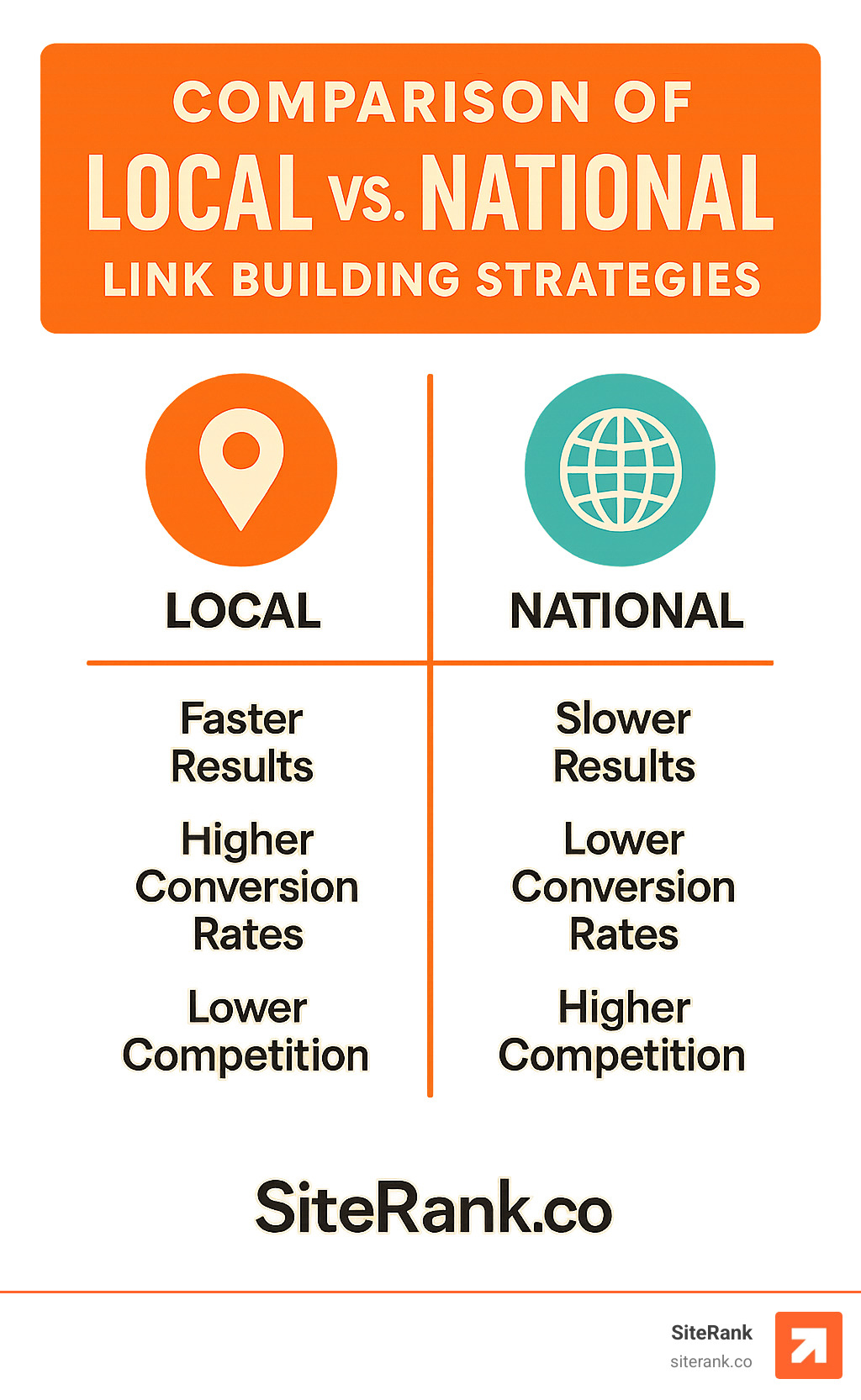
What makes local link building strategies so powerful is their efficiency. While national SEO campaigns might keep you waiting a year or more for significant results, local campaigns can deliver meaningful improvements in just 3-6 months. This faster timeline happens because you’re typically competing against only 5-10 serious local competitors rather than hundreds of national ones.
I’ve seen how this combination of SEO principles and community relationship building creates a powerful growth engine. The links you earn don’t just improve your search rankings – they often send actual paying customers through your door.
Why Learn Local Link Building First?
If you’re new to backlinks, starting locally gives you the perfect training ground. According to Moz’s Local Search Ranking Factors survey, link signals remain one of the most influential factors in both organic local results and Google’s Map Pack rankings.
The advantages of focusing on local link building are striking. First, there’s the lower competition factor. David Mihm’s research shows that most local businesses have fewer than 4 legitimate, non-directory links. This means even a small handful of quality links can put you ahead of your competitors.
Then there’s the higher conversion rate that local searches deliver. ThinkWithGoogle found that 76% of people who search on their smartphones for something nearby visit a business within a day, and 28% of those searches result in a purchase. These aren’t just ranking improvements – they translate directly to foot traffic and sales.
Perhaps most appealing is the faster timeline for seeing results. While national SEO campaigns might have you waiting 1-3 years for significant movement, local campaigns can show meaningful improvements in just 3-6 months. For small businesses with limited marketing budgets, this quicker return on investment makes all the difference.
Ready to see how these principles work in practice? Let’s explore the six most effective local link building strategies that will help your business become the go-to choice in your community’s search results.
Strategy 1 — Claim Your Core Citations
The foundation of any successful local link building campaign begins right at home—with your business information. Think of citations as your digital business cards scattered across the web. These listings contain your NAP (Name, Address, Phone number) details and often include that valuable link back to your website.
Citations do double duty for your business. First, they help search engines confirm that you’re a legitimate operation in a specific location. Second, many citation sites provide those precious backlinks to your website that boost your local search visibility.
As expert Torbjørn Flensted puts it, “NAP consistency is critical for local businesses. It builds trust and credibility and helps customers find you easily.”
Getting your citations in order isn’t complicated, but it does require attention to detail. Start by claiming your Google Business Profile (formerly Google My Business)—this is non-negotiable for local businesses. Next, submit your information to major data aggregators like Data Axle, Localeze, and Foursquare. These services distribute your information to hundreds of smaller directories, saving you tons of manual work.
Don’t forget about industry-specific directories that cater to your particular business type. A restaurant should be on Yelp and TripAdvisor, while a doctor needs profiles on Healthgrades and WebMD.
The devil’s in the details when it comes to NAP consistency. Even small differences like abbreviating “Street” to “St.” or formatting phone numbers differently can confuse both search engines and potential customers. Think of each inconsistency as a small crack in your foundation—one might not matter, but several can compromise your structure.
Want to dive deeper into citation building? Check out our More info about Local Citation Building Services guide.
Fast Wins for Local Link Building Strategies
For those looking to make quick progress with local link building strategies, I’ve developed a simple tier-based approach that works wonders for our clients at SiteRank:
Tier 1 platforms should be your immediate focus—Google Business Profile, Bing Places, Apple Maps, Facebook, and Yelp. These heavy hitters influence most local searches.
Tier 2 directories like Yellow Pages, Superpages, Manta, and Better Business Bureau have strong domain authority and often provide followed links.
Tier 3 focuses on industry relevance—directories specific to your business type that signal expertise to search engines.
Tier 4 brings in local relevance through chambers of commerce, community websites, and neighborhood associations.
According to the Moz Local Search Ranking Factors Survey, most small businesses should aim for 50-80 general citations, along with 5-20 industry-specific ones and 2-8 that are city-specific. That might sound like a lot, but remember—quality trumps quantity every time.
One local SEO expert I respect noted in a Whiteboard Friday presentation that “Citations alone are overrated without topical/local context.” This means your citations need to make sense for both your location and industry to have maximum impact.
Here’s a pro tip from my years of experience: Don’t chase every possible citation opportunity. I’ve seen businesses waste countless hours pursuing listings on irrelevant or poorly maintained directories. Instead, focus your energy on quality platforms that are well-maintained and actually matter to your customers.
When done right, these foundation citations provide the perfect launching pad for the more advanced local link building strategies we’ll cover next. They’re not the most exciting part of SEO, but they’re essential—like making sure your car has gas before a road trip.
Strategy 2 — Leverage Competitor Backlink Gaps
One of the smartest local link building strategies is simply looking at what’s already working for your competitors. This approach, often called “gap analysis,” helps you find valuable link opportunities hiding in plain sight.
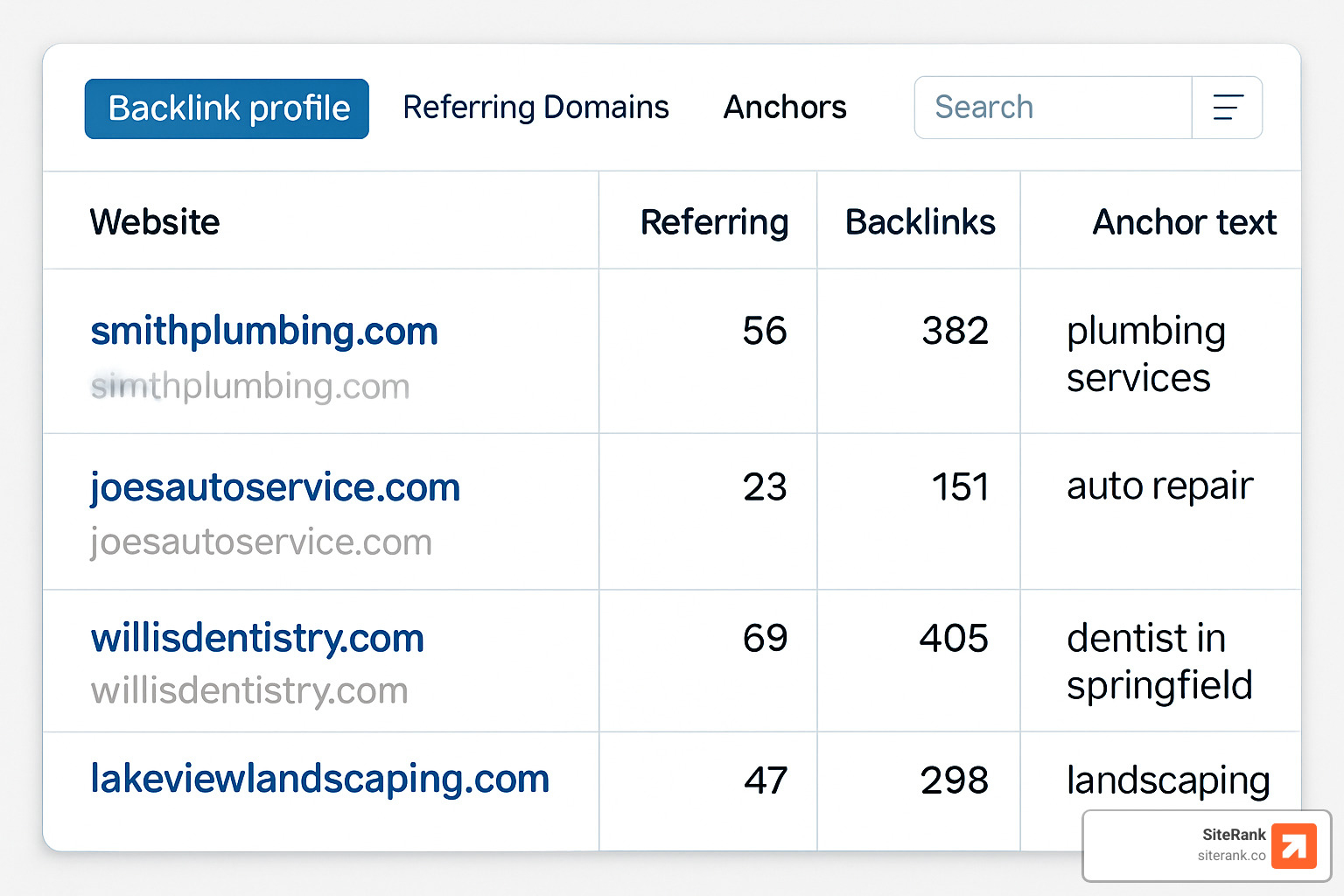
Think of it as a treasure map your competitors have already drawn for you. Start by identifying your top 3-5 local competitors who consistently outrank you for your target keywords. Then use tools like Ahrefs, Semrush, or Ubersuggest (even the free versions can work for local businesses) to peek behind the curtain at their backlink profiles.
Here’s the simple process I use with my clients:
- Enter your competitors’ domains into your preferred SEO tool
- Export their backlink profiles to a spreadsheet
- Look for patterns among their link sources (local news sites? industry blogs? community pages?)
- Highlight the high-quality, relevant links you’re missing
- Create a prioritized outreach list based on how valuable and attainable each link seems
The good news? As one SEO expert I follow puts it, “Most local businesses don’t need more than 150 referring domains to rank on the first page for local queries.” You don’t need thousands of backlinks—just the right ones from your community.
Want to learn more about creating effective backlinks? Check out our guide on Creating Backlinks for SEO.
Reverse-Engineer Their Local Link Building Strategies
Now comes the fun detective work. Don’t just look at where your competitors are getting links—understand how they’re earning them.
Is that plumbing company sponsoring the local Little League team? Is the dentist down the street writing monthly health columns for the neighborhood newsletter? Are they creating specific types of content that naturally attract links?
Pay special attention to the anchor text patterns in their backlinks. If they’re getting lots of links with location-specific anchor text (like “Portland plumber” rather than just “plumber”), that’s a strategy worth mimicking.
For example, I recently helped a local florist who finded their competitor had links from several wedding venues. Digging deeper, we found they were offering free consultation sessions to venue owners. We created our own version with a unique twist, and within three months had secured similar valuable links.
When you’re ready to reach out, personalization is key. Here’s a template that’s worked well for my clients:
Subject: Quick question about [Their Business]
Hi [Name],
I noticed you featured [Competitor] on your website. We're also a [type of business] in [location] that [unique value proposition].
We recently [interesting news about your business] that might interest your readers. Would you consider featuring us as well?
Thank you for your time,
[Your Name]
Remember though, this is just a starting point. The more you can personalize each outreach email and focus on the genuine value you can provide to the website and its audience, the better your results will be.
The beauty of this approach is that you’re not reinventing the wheel—you’re just making your own wheel a bit rounder and smoother than what’s already rolling around your local market.
Strategy 3 — Earn Links Through Local Sponsorships & Events
There’s something magical about connecting with your community face-to-face while also boosting your SEO. Local sponsorships and events offer exactly that perfect blend – they’re not just link-building opportunities, they’re relationship builders that strengthen your local presence in both the digital and physical worlds.

I’ve seen how community involvement translates to powerful backlinks. One of our clients at SiteRank literally saw a 100% success rate in link acquisition just by donating services to local nonprofits. Think about that – every single outreach effort resulted in a quality backlink!
When you sponsor a Little League team, you’re not just getting your logo on some jerseys. Those proud parents and organizers are putting your business on their website, often with a nice dofollow link. The same goes for adult recreational leagues and high school sports programs – they’re all looking for community support and happy to acknowledge sponsors online.
Local charities are particularly valuable link sources. Not only do they typically have trustworthy .org domains (which search engines love), but supporting them genuinely helps your community. Whether you’re donating money, products, or services, most charitable organizations maintain a sponsors page where your business can shine.
Community events represent another golden opportunity. From farmers markets to street fairs, these gatherings need sponsors and typically promote them across their online channels. According to ThinkWithGoogle, 76% of people who search for something nearby on their smartphones visit a related business within a day – and community events put you directly in front of these local searchers.
One of my favorite local link building strategies involves creating small scholarships. Even a modest $500 scholarship can earn you links from high schools and colleges in your area – and these .edu domains carry serious SEO weight. Plus, you’re genuinely helping students in your community pursue their dreams.
As one of our SEO specialists at SiteRank jokingly puts it, “Sometimes great backlinks cost nothing more than buying pizza once a month. Mmmm, pizza.” He’s referring to Meetup groups, which often need venues or refreshments for their gatherings and will happily link to sponsors in return.
Maximize ROI of Local Link Building Strategies in Sponsorships
To get the most bang for your sponsorship buck, I recommend creating a simple budget tier system. Maybe you allocate $500 for major community events, $250 for sports team sponsorships, and $100 for smaller Meetup sponsorships. This helps you track which investments deliver the best return in terms of link equity and business referrals.
Always prioritize opportunities that will earn you links from .edu and .org domains. These high-authority domains typically pass more significant link equity than commercial sites, giving your SEO a more substantial boost.
Don’t be shy about requesting specific link placement when negotiating sponsorships. A link buried in the footer of a page carries less weight than one prominently displayed in the main content area. Make sure your sponsorship agreement clearly outlines where your link will appear, what anchor text will be used, and how long it will remain active.
I love sharing this real-world example: A local bike shop we worked with sponsored a cycling club’s Meetup.com group for just $50 monthly (basically covering post-ride snacks). They received a prominent link on the group’s page, mentions in all event descriptions, and – perhaps most valuable – direct business from group members who needed gear and repairs. The ROI was phenomenal.
Remember what makes these local link building strategies so powerful: “Events build far more than SEO value; relationships forged at events can outlast the links they produce.” That’s the beauty of community-based link building – you’re not just improving your search rankings; you’re building genuine connections that can sustain your business for years to come.
Strategy 4 — Turn Unlinked Brand Mentions into Backlinks
Finding gold in your own backyard – that’s what converting unlinked mentions into backlinks is all about. It’s one of the most overlooked local link building strategies, yet it’s sitting right under many business owners’ noses.
Would you believe that 91% of brand mentions across the web don’t include a hyperlink? That’s a treasure trove of missed opportunities! People are already talking about your business – they’re just not giving you the SEO credit you deserve.
Think of it this way: if someone mentions your local bakery in a “Best Desserts in Portland” article but doesn’t link to your website, that’s like getting a verbal recommendation without a proper introduction. The praise is nice, but wouldn’t it be better if they also handed over your business card?
Setting up brand monitoring is surprisingly simple. Free tools like Google Alerts can notify you whenever your business name appears online. For more robust tracking, platforms like BrandMentions or Mention offer deeper insights into who’s talking about you and where.
To find existing mentions, try this Google search trick: type "your business name" -site:yourdomain.com into the search bar. This shows pages mentioning your business while filtering out your own website. It’s like eavesdropping on conversations about you – but completely ethical!
As local SEO expert Greg Gifford puts it: “Unlinked brand mentions via search operators and Google Alerts [are great] for quick link reclamation.” I couldn’t agree more – it’s low-hanging fruit that many businesses completely miss.
From Mention to Link: 3-Step Playbook
Turning those mentions into valuable backlinks isn’t complicated, but it does require a thoughtful approach. Here’s how to make it happen:
Step 1: Prospecting
Not all mentions are created equal. Focus your efforts on mentions from relevant, authoritative websites where adding a link makes sense. A positive mention in a local blog about weekend activities will be more valuable than a passing reference in an unrelated forum.
Quality beats quantity every time – five links from respected local websites will do more for your rankings than twenty from irrelevant or low-quality sites.
Step 2: Personalized Pitch
The secret sauce here is genuine appreciation. When reaching out, start by sincerely thanking the person for mentioning your business. Show that you actually read their content by referencing specific details.
Your email should feel like a friendly note, not a demanding link request. Here’s a template that strikes the right balance:
Subject: Thanks for mentioning [Your Business]!
Hi [Name],
I just wanted to say thank you for mentioning [Your Business] in your recent article about [topic]. We really appreciate the shout-out!
Would you consider adding a link to our website where you mention us? This would make it easier for your readers to learn more about us if they're interested.
Either way, I've shared your article on our social media channels to help get it in front of more people.
Thanks again,
[Your Name]
Notice how this offers value (social sharing) regardless of whether they add the link? That’s building goodwill, not just asking for favors.
Step 3: Follow-Up Cadence
People are busy, and your first email might get lost in a crowded inbox. A gentle reminder after 7-10 days can increase your response rate by up to 40%. Keep your follow-up brief and friendly – nobody likes feeling pestered.
You’re building relationships, not just collecting links. As research shows, “43% of people are more likely to link back when personally notified.” The human connection matters as much as the SEO benefit.
At SiteRank, we’ve seen clients transform their local search visibility just by reclaiming links from existing mentions. One local hardware store finded 17 unlinked mentions in community blogs and local news sites – converting just 11 of those into proper backlinks boosted their local pack visibility for five key search terms.
Want to learn more about building quality backlinks for your business? Check out our guide on Quality Link Building Services for a deeper dive into effective strategies.
Strategy 5 — Publish Hyper-Local Content Assets
Creating high-quality, locally-focused content is one of the most sustainable local link building strategies. When you publish valuable resources about your community, you naturally attract links from other local websites while building genuine connections with your audience.
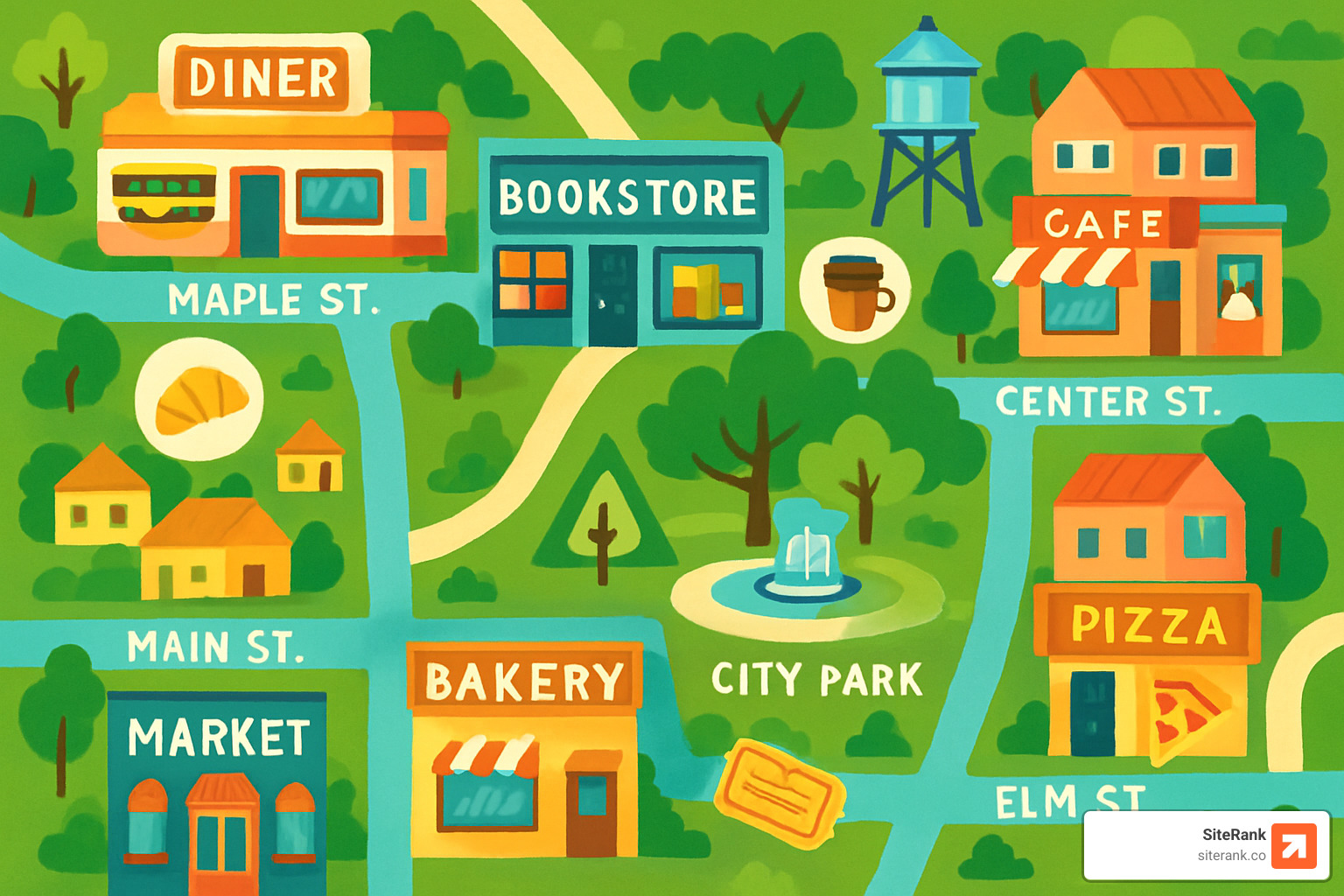
I’ve seen how powerful locally-focused content can be. According to HubSpot, companies that blog consistently receive 97% more links than those that don’t. But here’s the interesting part for local businesses – content with a geographic focus performs even better for link acquisition because it fills a specific community need.
The secret sauce is creating content that genuinely serves as a resource for your community. Think about what locals and visitors might be searching for. Neighborhood guides can showcase different areas in your city, highlighting those hidden gems that only locals know about. Local event calendars keep everyone informed about upcoming festivals and activities that matter to your community.
People absolutely love “Best of” local lists – I’ve seen these attract links like magnets when they’re thoughtfully curated. Local data studies with original research about your community tend to get picked up by news outlets, especially when they reveal interesting trends about housing, business growth, or demographics. And don’t underestimate the appeal of historical pieces about your city’s past, especially when paired with vintage photographs.
As one SEO expert candidly noted, “Locally relevant content rarely attracts links naturally and often requires email outreach to succeed.” This is important to remember – don’t just publish and hope. You’ll need to actively promote your content to local websites, blogs, and community organizations to maximize its link-earning potential.
Content Ideas for Local Link Building Strategies
Let me share some content ideas that have consistently attracted local links for our clients:
When creating “Best of” lists, focus on topics with genuine search interest. The best hiking trails in Portland, top family-friendly restaurants in the Castro District, or most Instagram-worthy spots in Charleston all solve real problems for searchers while giving you a perfect outreach opportunity to every business mentioned.
Local data visualizations are link gold when done right. Housing price trends by neighborhood, crime rate comparisons, or business growth maps showing new openings all make for compelling, shareable content. The visual component makes these especially attractive to local news sites looking for ready-made stories.
One approach that’s worked wonders is leveraging Freedom-of-Information datasets. School performance data, local government spending analysis, or building permit activity by neighborhood can all be transformed into newsworthy content that no one else has.
My favorite technique is what some SEO pros call “The Tabloid Technique.” As our research bluntly puts it: “Local newspapers will link to anything. Seriously.” This involves creating hyper-local data stories and pitching them to local media outlets who are constantly hungry for content.
A perfect example: a mortgage broker client created a “Life of Tax” visualization showing lifetime tax paid per US state, earning a whopping 188 backlinks. Another business mapped illegal vape sale locations using Freedom of Information data, securing 72 referring domains with minimal effort.
According to Backlinko CTR research, the top organic result in Google has a click-through rate of 31.7%. With compelling local content, you’re not just earning links – you’re driving significant traffic that actually converts because it’s perfectly matched to your local audience’s needs.
The best local link building strategies are the ones that provide genuine value to your community while naturally attracting links. Start with one great piece of local content, promote it effectively, and build from there.
Strategy 6 — Strengthen Authority with Smart Internal Linking
While external links are crucial, don’t overlook the power of strategic internal linking as part of your local link building strategies. Internal links help distribute link equity throughout your site and establish topical authority for your local content.
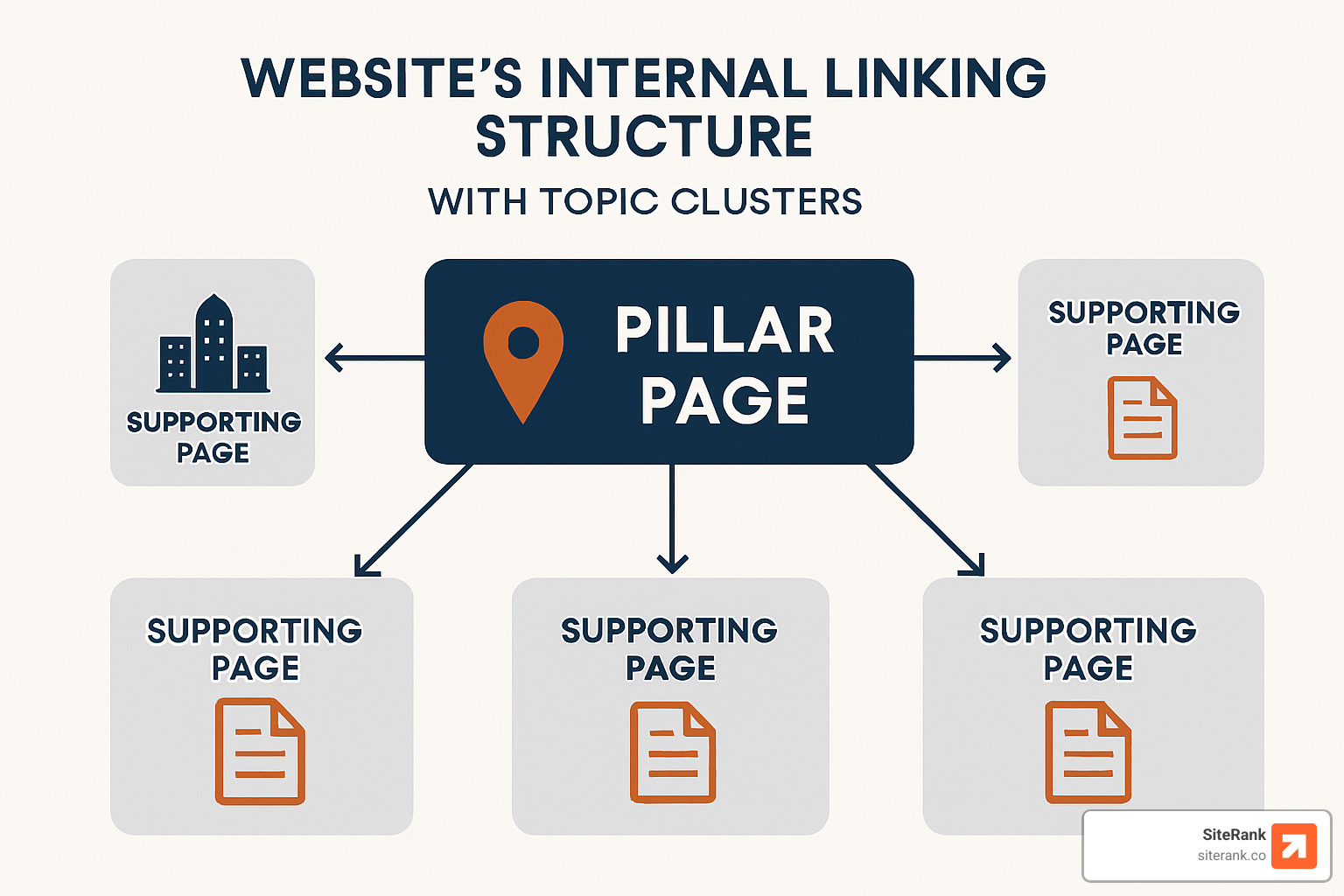
The beauty of internal linking is that it’s completely within your control—no outreach emails or relationship building required! You can implement changes today that might significantly impact how search engines understand and rank your local content. As SEO expert Amanda Jordan puts it, “Internal links contribute to a local SEO strategy by reinforcing topical relevance.”
Think of your website as a small town with roads connecting important locations. Your internal links are those roads, guiding both visitors and search engines to your most valuable destinations. When done right, they create a clear map of your local expertise.
Start by creating topic clusters around your services and locations. For example, if you’re a dentist in Portland, you might have a main “Portland Dentistry” pillar page with supporting content about specific services like teeth whitening, cleanings, and root canals—all linking back to your main page.
When adding these internal links, don’t just use generic “click here” text. Instead, use descriptive anchor text that includes your location and service keywords. This helps search engines better understand what the linked page is about. “Emergency dentist in Portland” tells Google much more than “read more.”
Building silo pages is another powerful approach. This simply means organizing your content into logical categories based on services and locations, with clear linking patterns between related pages. It creates a tidy neighborhood of content that’s easy for both humans and search engines to steer.
Remember to pass link equity from your strongest pages to those you want to rank better. Your homepage typically has the most authority, so use it wisely to boost important service and location pages. As Search Engine Journal notes, internal links “help search engines understand the structure and hierarchy of your website, establish the relationship between pages and spread link equity.”
Don’t forget to revisit your older content regularly. That blog post from two years ago might be the perfect place to link to your newer local service pages. These updates keep your content fresh and ensure link equity flows to your most important pages.
Site-wide Checks for Local Link Building Strategies
To keep your internal linking structure in top shape, I recommend performing regular maintenance checks—think of it as tune-ups for your website’s navigation system.
First, hunt down those orphan pages that exist on your site but have no internal links pointing to them. These lonely pages receive no link equity and are essentially invisible to both users and search engines. Use a crawling tool like Screaming Frog or Sitebulb to find and connect these isolated pages to your main site structure.
Next, take a look at your anchor text variety. Just like with external links, you want a natural mix of exact-match (“Portland dentist”), partial-match (“dentist in the Portland area”), and natural anchor text (“our local dental services”). Over-optimization, even internally, can look manipulative to search engines.
Broken internal links are like potholes in your website’s roads—they waste link equity and frustrate users. Run regular scans to identify and fix these broken connections. Sometimes a simple redirect can solve the problem while preserving the link value.
Finally, make sure you’re prioritizing important pages in your linking strategy. Your most critical local service and location pages should receive the most internal links. This signals to search engines which pages you consider most valuable and worthy of ranking.
One clever approach I’ve seen work well is what some SEOs call “treating location as a topic dimension.” This means creating content clusters around both your services and the specific locations you serve. For example, a plumber might have clusters for “emergency plumbing,” “pipe replacement,” and “drain cleaning,” as well as clusters for each neighborhood they serve, with appropriate internal linking between them all.
By implementing these internal linking best practices, you’ll strengthen your site’s authority and help search engines better understand your local relevance—all without having to send a single outreach email. Now that’s an efficient addition to your local link building strategies!
Want to learn more about the importance of backlinks for your SEO strategy? Check out our guide on Why Backlinks Are Important for SEO.
Frequently Asked Questions about Local Link Building
How many local backlinks do I really need?
This might be the most common question I hear from small business owners, and the answer isn’t as straightforward as you might hope. The truth is, it depends on your competitive landscape.
The good news? Research shows most local businesses don’t need hundreds or thousands of backlinks to succeed. In fact, most local businesses ranking on the first page have fewer than 150 referring domains pointing to their sites. Even more encouraging, David Mihm’s research found that “the over/under on decent, non-spam, non-directory links a typical SMB is likely to have is 3.6.”
Rather than fixating on a specific number, I always recommend analyzing what’s working for your direct competitors. If the top-ranking plumber in your town has 40 quality backlinks, that’s your benchmark. And remember – quality always trumps quantity. A handful of relevant links from respected local websites will outperform dozens of low-quality, irrelevant ones every time.
Are directory links still worth it in 2024?
Yes! But let’s be selective about them. Directory links haven’t lost their value completely – they’ve just become more nuanced.
Links from major platforms like Google Business Profile, Yelp, and industry-specific directories remain valuable pillars of any local link strategy. However, submitting your site to every random directory you can find can actually harm your SEO efforts.
When evaluating directories, look for those that:
- Connect directly to your industry or location
- Have strict submission guidelines (a good sign they maintain quality)
- Provide actual value to users beyond just listing businesses
- Show signs of regular maintenance and updates
As one SEO expert aptly put it, “Business listing sites are a no-brainer for establishing baseline local links despite being mostly nofollow.” Even those nofollow links from quality directories drive referral traffic and strengthen your local visibility. Think of them as your link foundation – not the entire house, but essential nonetheless.
What risks come with spammy local links?
I’ve seen too many small businesses damage their rankings by trying to take shortcuts. The temptation is understandable, but the risks are substantial:
First, algorithm penalties can devastate your visibility. Google’s algorithms, including the December 2022 link update, specifically target suspicious link patterns. When detected, your site can lose rankings overnight.
Second, manual actions from Google’s webspam team are even more severe. These penalties require extensive cleanup work and a formal reconsideration request before recovery is possible.
Beyond search engines, there’s reputation damage to consider. Being associated with spammy websites damages your brand’s credibility with potential customers who might find these connections.
Finally, there’s the wasted resources aspect. Time and money spent chasing low-quality links could be invested in sustainable strategies that build lasting value.
As link building expert Matt Diggity warns, “Bad wholesale link purchases are targeted by recent Google updates and rarely yield results.” Focus instead on earning legitimate links through value-adding activities that make sense for your business and community.
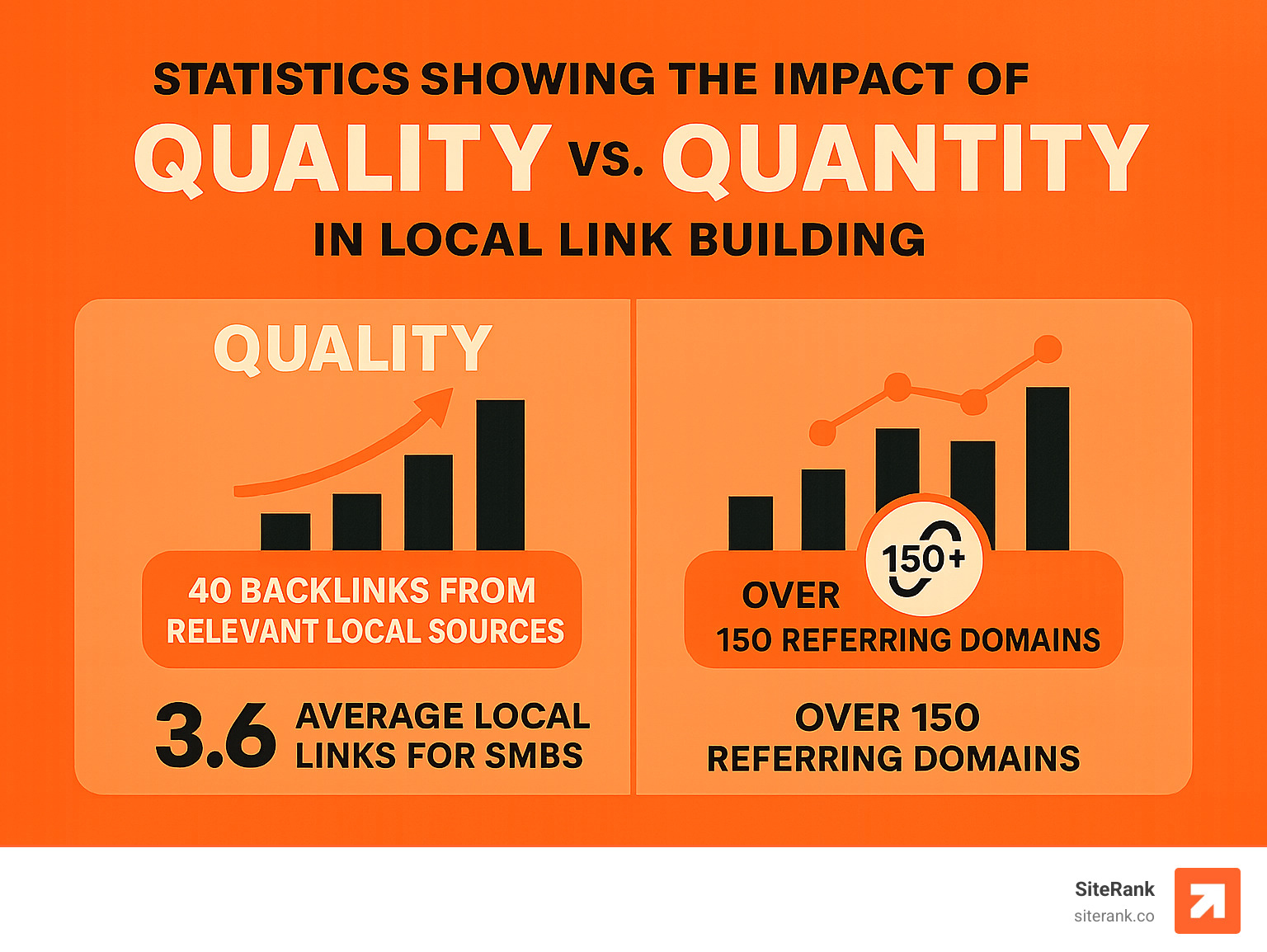
The data doesn’t lie – while it might take more effort to earn those quality links, they deliver substantially better results. A handful of relevant, authoritative local link building strategies will always outperform dozens or even hundreds of low-quality connections.
Conclusion
Let’s be honest—building links for your local business isn’t always easy, but it’s absolutely worth the effort. When you implement these local link building strategies properly, you’re not just climbing search rankings; you’re weaving your business into the digital fabric of your community.
Think of what we’ve covered as your roadmap to local link success:
Start with those essential citations—they’re like making sure your business card information is correct before handing it out. Then, become a bit of a detective by studying what links are already working for your competitors (why reinvent the wheel?). Get involved in your community through sponsorships and events—this creates genuine relationships that naturally lead to links.
Don’t forget about those brand mentions that are already floating around without links! A friendly email can turn them into valuable backlink assets. And when you create truly helpful local content—neighborhood guides, event calendars, or “best of” lists—you’re giving other websites a reason to link to you.
Finally, don’t overlook your own website’s internal linking structure. It’s like making sure all the rooms in your house connect properly so visitors can find everything they need.
At SiteRank, we’ve seen how these strategies transform local businesses. Our AI-powered approach doesn’t just throw generic link building tactics at your business—we analyze your specific market, competitors, and community to identify the link opportunities that will move the needle for you.
What makes our approach different? We customize everything to your location and industry. A link building strategy for a Dallas plumber looks completely different from one for a Boston bakery—and it should! Our data-driven methodology ensures you’re building the right links, not just any links.
The beauty of local link building is that it combines technical SEO with good old-fashioned community relationship building. When you provide genuine value to your local area, both through your business offerings and your online content, the links (and customers) naturally follow.
Ready to see what these local link building strategies can do for your business? Let’s chat about how we can help you implement them effectively. Our comprehensive link building services handle everything from competitor analysis to outreach management, all while tracking the metrics that matter most to your bottom line.
In local SEO, it’s not always about who has the most links—it’s about who has the right ones. Start building those connections today, and watch your local visibility soar tomorrow.