

Why Backlinks Are Essential for SEO Success
Creating backlinks for SEO is one of the most powerful strategies to improve your website’s visibility in search engines. If you’re looking to boost your rankings, here’s a quick overview of effective backlink building methods:
| Backlink Strategy | Effectiveness | Difficulty |
|---|---|---|
| Guest blogging on relevant sites | High | Medium |
| Creating link-worthy content (guides, research) | Very High | High |
| Broken link building | Medium | Low |
| HARO (Help a Reporter Out) | High | Medium |
| Resource page outreach | Medium | Low |
When it comes to building backlinks, quality trumps quantity every time. A single high-quality backlink from an authoritative site in your industry can be worth more than dozens of low-quality links from irrelevant websites.
Why should you care about backlinks? Because Google still considers them one of the top ranking factors. In fact, research shows the number one result in Google has almost 4X more backlinks than positions 2-10. And yet, 94% of all online content gets zero links – creating a massive opportunity for businesses willing to invest in proper link building.
Building a strong backlink profile isn’t something that happens overnight. It requires consistent effort, relationship building, and creating content that people naturally want to link to. But the rewards – higher rankings, increased traffic, and greater authority – make it well worth the investment.
I’m Craig Flickinger, founder of SiteRank.co with over 15 years of experience helping businesses implement effective creating backlinks for SEO strategies that drive measurable results. Throughout my career working with companies ranging from small local businesses to enterprise organizations, I’ve refined techniques that build natural, powerful backlink profiles without risking Google penalties.
Understanding Backlinks and Their Importance
Have you ever thought about what makes some websites show up at the top of Google while others languish on page 10? The answer often comes down to one powerful factor: backlinks.
Backlinks are simply links from other websites that point to your site. Think of them as digital votes of confidence or endorsements. When CNN links to your small business blog, they’re essentially telling their audience (and search engines), “Hey, this content is valuable enough that we’re willing to send our visitors there.”
But here’s the thing – not all backlinks carry the same weight. A single link from The New York Times or Harvard University can boost your site more than dozens of links from obscure blogs. That’s because search engines view these established sites as authorities, and when they link to you, some of that authority rubs off on your website.
Why Backlinks Matter in SEO
The importance of backlinks in your SEO strategy simply can’t be overstated. They’re fundamental to how search engines evaluate your site’s credibility and relevance.
When it comes to building authority, backlinks function like letters of recommendation for your website. Authority transfer happens naturally when reputable sites link to yours – some of their “link juice” flows to your pages, boosting your own site’s perceived expertise in Google’s eyes.
Backlinks also help with content findy. Search engines like Google use links to find and index new content across the web. Without backlinks, your amazing content might remain hidden in the depths of the internet, never reaching its intended audience.
Perhaps most importantly, backlinks serve as a crucial ranking signal. Google has confirmed this repeatedly over the years. In their own words: “If other prominent websites on the subject link to the page, that’s a good sign that the information is of high quality.” The data backs this up – top-ranking pages on Google typically have 3.8 times more backlinks than lower-ranked competitors.
Beyond SEO benefits, quality backlinks drive direct referral traffic to your site. When someone clicks a link to your website from another site, that’s a potential customer or client landing directly on your doorstep.
Finally, being referenced by trusted websites improves your brand credibility. When industry leaders or major publications link to your content, it positions you as an authority worth paying attention to.
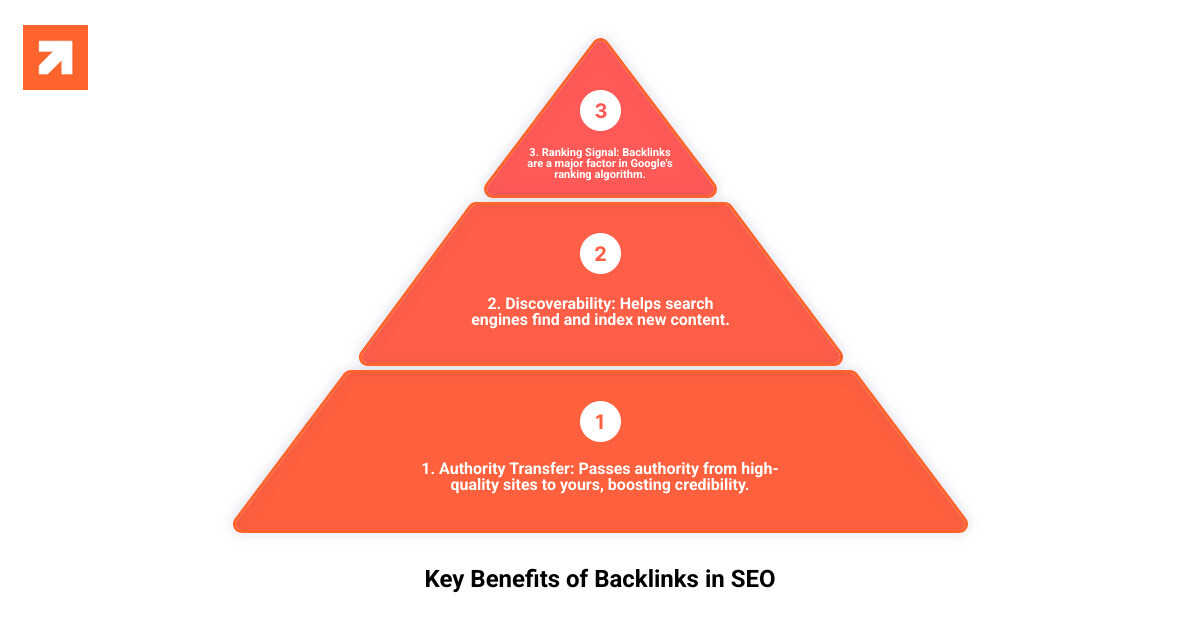
This visual perfectly illustrates how creating backlinks for SEO works – it’s not just about quantity, but about building a pyramid of quality connections that lift your site’s authority and visibility. The most successful websites don’t just have more backlinks; they have better backlinks from relevant, authoritative sources within their industry.
Understanding this fundamental concept sets the stage for developing a backlink strategy that will actually move the needle for your business. Rather than chasing any link you can get, focus on cultivating relationships and creating content worthy of links from sites that matter in your space.
Creating Backlinks for SEO Success
When it comes to creating backlinks for SEO, I like to think of it as making friends in the digital world. Just like in real life, it’s not about how many acquaintances you have, but the quality of those relationships that truly matters.
Quality vs. Quantity in Backlink Building
I can’t stress this enough: one amazing backlink can outshine a thousand mediocre ones. Our research found that “a single-quality backlink can be more powerful than 1,000 low-quality backlinks.” This isn’t just our opinion – Google’s Penguin update specifically targets websites trying to game the system with lots of low-quality links.
What makes a backlink truly valuable? Think of it like choosing friends. You want connections that are relevant to your interests, have a good reputation (authority), place you in a prominent position in their life (not hidden away), talk about you naturally, and genuinely want to introduce you to others (editorial context).
White-hat link building is simply about earning links the honest way. This means creating content so good people naturally want to share it, building genuine relationships with others in your industry, contributing valuable guest posts to respected sites, helping fix broken links, and becoming noteworthy enough to be mentioned in industry discussions.
As Ken Lyons wisely put it, “Building amazing backlinks takes work.” There’s no magic shortcut – just like building real friendships takes time and effort.
The Anatomy of a High-Quality Backlink
Let’s break down what makes a backlink truly valuable:
Relevance is perhaps the most important quality. A link from a website in your industry carries much more weight than random links from unrelated sites. If you run a fitness blog, a link from a nutrition website makes perfect sense to Google, while a link from a car dealership might raise eyebrows.
Authority matters tremendously. When a highly respected website links to you, they’re essentially vouching for your credibility. It’s like getting a recommendation from a well-known expert versus someone nobody has heard of. Metrics like domain authority (DA) or domain rating (DR) help measure this, though Google uses its own internal metrics.
Anchor Text is the clickable text of the link, which gives search engines context about your page. Variety here is crucial – if every link to your page uses identical keyword-heavy text like “best running shoes,” Google will likely see it as manipulation. Natural linking patterns include a mix of branded terms, naked URLs, and varied phrases.
Dofollow vs. Nofollow links serve different purposes. Dofollow links (the default type) pass authority and serve as direct ranking signals. Nofollow links include an attribute telling search engines not to pass authority. However, Google now treats nofollow as a “hint” rather than a strict rule, so these links still provide some value. Links from blog comments, press releases, and advertisements are typically nofollow.
The Role of Backlinks in Google’s Algorithm
Backlinks are literally in Google’s DNA. The company’s original algorithm, PageRank (named after co-founder Larry Page), revolutionized search by using links as votes of confidence. While Google now uses hundreds of ranking factors, backlinks remain one of their top three most important signals.
PageRank works by analyzing not just how many links point to your page, but the quality of those links and the quality of links pointing to those pages. It’s like a giant web of reputation, where endorsements from highly respected sources carry more weight.
The PageRank algorithm assigns numerical weight to each element in a hyperlinked set of documents to measure relative importance. In simpler terms, links from important pages boost your own importance more significantly.
Though Google no longer publicly shows PageRank scores, the principles behind this algorithm still heavily influence how search engines evaluate your website’s authority and determine rankings. It’s a sophisticated system that can’t be easily fooled – which is why authentic, quality backlinks remain so valuable.
Proven Strategies for Creating Backlinks for SEO
Now that we understand the importance of backlinks, let’s explore proven strategies for creating backlinks for SEO that deliver results without risking penalties.
The world of link building can seem overwhelming at first, but I’ve found that focusing on a few well-executed strategies yields better results than trying to do everything at once. Over my years helping businesses improve their SEO, these top backlink strategies have consistently delivered the best returns:
Broken link building turns someone else’s problem into your opportunity. By finding dead links on other websites and offering your content as a replacement, you’re actually helping webmasters while earning a backlink.
Guest posting remains one of the most reliable ways to build quality links when done with authenticity. Despite rumors of its demise, it’s still incredibly effective, especially for newer websites.
Creating linkable assets like comprehensive guides, tools, or original research gives other websites a reason to link to you naturally – the holy grail of backlink creation.
Digital PR efforts can land you mentions in publications your target audience already trusts, creating both powerful backlinks and brand credibility.
HARO (Help a Reporter Out) connects you with journalists looking for expert sources. A thoughtful, timely response can earn you a backlink from major media outlets.
Resource page link building, unlinked brand mentions, the skyscraper technique, testimonials and reviews, and link reclamation round out our top ten strategies that continue to work year after year.
Let’s dive deeper into three approaches that offer the best balance of effort and results.
Technique 1: Broken Link Building for Creating Backlinks for SEO
Broken link building is like being the hero who saves the day. Website owners hate having broken links on their sites – they create a poor user experience and can hurt SEO. When you find these broken links and offer a solution, you’re doing them a favor while earning a valuable backlink.
The beauty of this approach is its win-win nature. Here’s how to make it work:
First, identify resource pages in your industry by searching for terms like “[your keyword] + resources” or “[your keyword] + useful links.” These pages are gold mines because they’re specifically designed to link out to helpful content.
Next, check these pages for broken links using tools like the Check My Links Chrome extension or Ahrefs’ Broken Link Checker. When you find a dead link, take note of what content it was supposed to lead to.
Now comes the creative part – develop content similar to what the broken link was pointing to, but make it better, more current, or more comprehensive. This ensures your replacement suggestion makes sense and provides real value.
Finally, reach out to the website owner with a friendly, helpful email. Here’s a template that has worked well for me:
Subject: Broken link on your page
Hi [Name],
I was reading your excellent resource page on [topic] and noticed that one of the links is no longer working. The link to [describe link] is returning a 404 error.
I recently published a comprehensive guide on [topic] that could serve as a replacement. You can check it out here: [URL]
Either way, I thought you'd want to know about the broken link.
Best regards,
[Your Name]
The secret sauce here is being genuinely helpful rather than just asking for something. Our data shows that for every 10 emails sent in broken backlink outreach, you can expect to get 1-2 links – making this one of the more efficient link building strategies available.
Technique 2: Guest Posting Strategies for Creating Backlinks for SEO
Despite what you might have heard, guest posting is far from dead. In fact, when you’re just starting out with creating backlinks for SEO, guest blogging remains one of the most accessible and effective strategies available.
The key difference between successful guest posting and the spammy tactics Google warns against is quality and relevance. A thoughtful contribution to a website in your niche that genuinely helps their audience will almost always be welcome.
Start by finding relevant sites that accept guest posts. Search for terms like “[your niche] + write for us” or “[your niche] + guest post guidelines.” But don’t stop there – many great opportunities don’t advertise that they accept guest posts, so don’t be afraid to pitch sites that seem like a good fit.
Before pitching, do your homework. Read several articles on the target site to understand their style, audience, and content gaps. Nothing screams “mass outreach” like pitching a topic they’ve already covered extensively.
When crafting your pitch, personalization is non-negotiable. Generic emails are immediately recognized as spam and deleted. Show that you’ve actually engaged with their content by mentioning specific articles and explaining how your proposed topic complements their existing content.
Once accepted, create exceptional content – as good or better than what you publish on your own site. Include natural, contextual links where they genuinely add value. Forced links in guest posts stand out like a sore thumb and can damage both your reputation and chances of future collaborations.
Guest posting builds more than just backlinks. It helps establish you as an authority in your field, introduces your brand to new audiences, and creates relationships with other content creators – all valuable assets for long-term SEO success.
Technique 3: Creating Link-Worthy Content for SEO Backlinks
Creating content so valuable that people naturally want to link to it is the sustainable dream of creating backlinks for SEO. While this approach requires more upfront investment, it can deliver ongoing returns for years with minimal additional effort.
Ultimate guides have become my go-to format for attracting natural backlinks. By covering a topic exhaustively, you create a resource that others naturally reference when discussing that subject. The key is to make it comprehensive enough that it becomes the definitive resource on that topic.
Original research is perhaps the most powerful link magnet. When you conduct surveys or analyze data to produce unique insights, you create something that literally cannot be found elsewhere. Journalists, bloggers, and industry experts need to link to you when citing your findings. Our experience shows that data journalism leveraging unique data sets consistently attracts media attention and creates viral linkable content.
Infographics remain effective link-building tools when they present valuable information in an accessible format. The visual nature of infographics makes complex information digestible at a glance – perfect for our increasingly visual online world.
Statistical roundups solve a common problem for content creators – finding current, reliable statistics to support their points. By compiling the most up-to-date statistics in your industry, you create a resource that writers naturally link to when they need to cite data.
Tools and calculators offer unique utility that articles alone cannot provide. Whether it’s a mortgage calculator, keyword research tool, or calorie counter, interactive resources that solve specific problems are link magnets because they provide genuine value that’s worth sharing.
The secret to creating truly link-worthy content is identifying information gaps in your industry and filling them better than anyone else. Our research consistently shows that long-form content (1,500–3,000 words) generates more backlinks and shares than shorter pieces.
Before investing in creating linkable assets, ask yourself: Would someone reference this to support a point? Does it solve a problem better than existing resources? Is this information unavailable elsewhere? Would industry publications consider this newsworthy?
And remember – even the best content needs promotion. Don’t just publish and hope for links to roll in. Actively share your content with people who might find it valuable and potentially link to it. Great content combined with strategic outreach is the most powerful combination for building a strong backlink profile.
Tools and Resources for Efficient Backlink Creation
Let’s be honest – building backlinks can be time-consuming. The good news? Having the right tools in your arsenal can make the process much more manageable. Think of these tools as your trusty sidekicks in the quest for creating backlinks for SEO success.
Here’s a comparison of some backlink tools that have saved me countless hours over the years:
| Tool | Best For | Key Features | Price Range |
|---|---|---|---|
| Ahrefs | Comprehensive backlink analysis | Backlink checker, competitor analysis, broken link finder | $99-$999/month |
| SEMrush | All-in-one SEO toolkit | Backlink analytics, link building tool, domain comparison | $119-$449/month |
| Moz | Domain authority metrics | Link explorer, spam score, domain authority | $99-$599/month |
| Pitchbox | Outreach campaigns | Email automation, relationship management, reporting | Custom pricing |
| BuzzStream | Relationship-based link building | Contact research, outreach, campaign management | $24-$999/month |
| Hunter.io | Finding email addresses | Email finder, email verifier, domain search | $49-$399/month |
| Majestic | Link quality analysis | Trust Flow, Citation Flow, topical trust flow | $49.99-$399.99/month |
Essential Backlink Analysis Tools
Ahrefs is like the Swiss Army knife of backlink analysis. It’s no surprise that 55.5% of link builders consider it their go-to tool. I’ve personally found its competitor analysis feature incredibly valuable – seeing who links to your competitors gives you a roadmap of exactly who might link to you too.
What makes Ahrefs stand out is how intuitive it is. Even if you’re new to SEO, you can quickly identify link opportunities through their Content Explorer, analyze your backlink profile, and find those golden broken link opportunities that are often easy wins.
SEMrush shines when you want to see the bigger SEO picture. Beyond just backlinks, it helps you understand how your link building fits into your overall strategy. Their Backlink Audit tool is particularly helpful for identifying potentially harmful links before they cause problems – kind of like having a security guard for your backlink profile.
One thing I love about SEMrush is how it visually presents data. When you’re trying to explain link building progress to clients or team members who aren’t SEO experts, these visualizations make it much easier to communicate value.
Moz pioneered the Domain Authority metric that many of us rely on when evaluating link prospects. Their Link Explorer tool provides a straightforward way to assess link quality. I’ve found their Spam Score particularly useful as a quick check before pursuing a link – why waste time on sites that might hurt rather than help?
Moz’s interface is probably the most user-friendly of the three, making it perfect if you’re just getting started with backlink analysis and feeling a bit overwhelmed.
Outreach and Email Tools
Let’s face it – even the best link building strategy falls flat without effective outreach. These tools help turn prospects into actual backlinks.
Pitchbox is the outreach tool for teams serious about scale. It automates much of the tedious work in the outreach process while still maintaining personalization. What I appreciate most about Pitchbox is its follow-up sequences – because let’s be honest, most link opportunities come from follow-up emails, not initial outreach.
The platform essentially combines prospecting, outreach, and relationship management in one place, which is incredibly convenient when managing multiple campaigns. The reporting features also make it easy to see what’s working and what isn’t, so you can continuously refine your approach.
BuzzStream focuses more on the relationship side of link building. It’s particularly good at helping you keep track of your history with each contact – preventing those awkward moments when you accidentally reach out to someone you’ve already connected with.
I’ve found BuzzStream especially useful for collaborative link building, as team members can see each other’s communications and pick up conversations seamlessly. Their email tracking also lets you know when prospects open your emails, giving you insight into the best timing for follow-ups.
Hunter.io solves one of the biggest headaches in outreach – finding the right email addresses. It’s remarkable how much time this simple tool can save. According to research, over 90% of email addresses at publications follow predictable formats, which is exactly what Hunter.io capitalizes on.
Beyond just finding emails, its verification feature helps ensure your messages actually reach their destination instead of bouncing. When you’re sending dozens of outreach emails daily, this kind of efficiency is priceless.
Each of these tools brings something valuable to your link building workflow. While they require investment, the time they save and the opportunities they uncover make them well worth considering if you’re serious about creating backlinks for SEO at scale.
The right combination of tools will depend on your specific needs and budget, but even starting with just one can dramatically improve your link building effectiveness. Remember though – these are just tools. The real magic happens when you combine them with compelling content and genuine relationship building.
Frequently Asked Questions about Creating Backlinks for SEO
How Many Backlinks Should I Build Per Day?
When clients ask me about creating backlinks for SEO, this question comes up constantly. And I understand why – everyone wants a magic number that guarantees results without triggering penalties.
The truth? There’s no one-size-fits-all answer. According to our research, backlink building targets vary dramatically based on your industry, website age, and current authority.
What matters most is that your link growth appears natural to Google. Think about it – if your site typically gains 1-2 links monthly, suddenly acquiring 30 links in a day looks suspicious. Google’s algorithms have become incredibly sophisticated at detecting unnatural patterns.
Instead of fixating on daily numbers, focus on these principles:
Quality trumps quantity every time. One link from an authoritative industry website can outperform dozens from irrelevant blogs. I’ve seen clients achieve ranking jumps with just a handful of premium links rather than chasing high volumes.
Natural growth patterns are essential. Your backlink profile should develop gradually, mirroring organic relationship-building. Sharp spikes followed by nothing looks manipulative.
Match your industry norms. Competitive niches naturally see more aggressive link building, while local businesses might grow more slowly. Research what’s typical in your space.
Align with your content schedule. If you’re publishing fresh content regularly, you’ll naturally attract more links than a static website.
Be patient! Our research shows the average time to see meaningful results from link building is around 3.1 months. Focus on monthly goals rather than daily targets, and make sure they complement your broader SEO strategy.
How Can I Identify High-Quality Backlinks?
Not all backlinks are created equal – some are digital gold while others can actually harm your rankings. When evaluating potential backlinks, here’s what matters most:
Domain Authority/Domain Rating provides a quick snapshot of a site’s potential value. While Google doesn’t officially use these third-party metrics, they correlate well with a site’s ability to pass authority. A link from a DA 70 site typically carries more weight than one from a DA 20 site.
Relevance is non-negotiable. A link from a website in your industry is worth far more than one from an unrelated site, even if the unrelated site has higher authority. Google’s algorithms have become increasingly sophisticated at evaluating topical relevance.
Organic traffic signals trust. Sites that already earn substantial organic search traffic have clearly earned Google’s trust. When they link to you, some of that trust transfers to your site.
Editorial context matters enormously. Links naturally placed within content (especially near the top) carry more weight than those in footers, sidebars, or comment sections. I’ve seen clients get more ranking benefit from one editorial link than from dozens of footer links.
Anchor text should look natural. The clickable text in your link provides context to search engines, but be careful – too many exact-match keyword anchors (like “creating backlinks for SEO” over and over) appears manipulative. Natural variation is key.
The most valuable backlinks share these traits: they come from trusted, authoritative websites in your niche; they include relevant anchor text without keyword stuffing; they’re dofollow links; and ideally, they come from domains that haven’t linked to you before.
Is It Safe to Buy Backlinks?
I get asked this question in hushed tones all the time, and I understand the temptation. You see competitors ranking well, suspect they’re buying links, and wonder if you should too.
The official answer is clear: No, buying backlinks violates Google’s Webmaster Guidelines and puts your site at risk. Google explicitly states that “any links intended to manipulate PageRank or a site’s ranking in Google search results may be considered part of a link scheme.”
The Google Penguin algorithm specifically targets websites with unnatural link profiles, including patterns consistent with purchased links. I’ve worked with businesses that lost 80% of their organic traffic overnight from Penguin penalties – the recovery took nearly a year of painful link removal and disavowal work.
That said, I’d be dishonest if I didn’t acknowledge the reality: creating backlinks for SEO sometimes involves gray areas. Our research indicates that paying for links remains common in competitive industries. Some businesses take calculated risks, believing that carefully selected paid links from relevant, high-quality sites spread out over time won’t trigger penalties.
At SiteRank, we strongly advise against buying backlinks for several compelling reasons:
The risk of penalties can devastate your business. Google penalties can wipe out your organic traffic virtually overnight.
Quality control is nearly impossible with purchased links. Many link sellers operate networks of low-quality sites that provide little real value.
Long-term value is limited. Paid links often disappear when payments stop, creating unstable ranking patterns.
Ethical considerations matter. Buying links undermines the integrity of search results and puts your brand reputation at risk.
Instead, we recommend investing in creating genuinely valuable content and building authentic relationships. Yes, it takes longer and requires more effort, but the results are sustainable and penalty-proof. The best backlinks come from people who genuinely want to reference your content – not because they were paid to do so.
Conclusion
Creating backlinks for SEO is like building a reputation in your industry – it takes time, genuine effort, and consistency. While search engines have evolved dramatically since Google first launched, quality backlinks remain the backbone of effective SEO strategies.
I love how Ken Lyons put it: “Building amazing backlinks takes work.” This simple truth cuts through all the noise and quick-fix promises you might hear elsewhere. There’s no magic wand or overnight solution when it comes to building a strong backlink profile – just thoughtful, persistent effort that pays dividends over time.
Throughout this guide, we’ve explored strategies that actually work in today’s SEO landscape. The most important lessons? Quality trumps quantity every time. A single backlink from a respected industry website carries far more weight than dozens from irrelevant or low-quality sources. When you focus on creating genuinely valuable content that serves your audience, you’re already halfway to earning those natural, powerful backlinks.
Relationship building is another crucial piece of the puzzle. The connections you forge with journalists, industry peers, and content creators often lead to the most valuable backlink opportunities. These relationships aren’t transactional – they’re built on mutual respect and providing value to each other.
Diversity in your approach keeps your backlink profile looking natural. Don’t put all your eggs in one basket by relying solely on guest posting or broken link building. A mix of strategies creates a more resilient and natural-looking backlink profile.
Perhaps most importantly, be patient. Creating backlinks for SEO isn’t a sprint – it’s a marathon. The results may take months to materialize, but when they do, they tend to be more sustainable than quick wins from questionable tactics.
At SiteRank, we understand that every business has unique needs when it comes to backlink building. Our approach combines human expertise with AI-powered insights to identify the most valuable link opportunities specifically for your industry and audience. This ensures your backlink profile grows in a way that feels natural to both visitors and search engines.
It’s worth noting that backlinks are just one piece of a comprehensive SEO strategy. For truly remarkable results, combine your backlink building efforts with technical SEO improvements, engaging content creation, and user experience optimization. These elements work together to create a website that both search engines and humans love to engage with.
Ready to take your link building to the next level? Learn more about our Link Building Services. Our team brings years of experience helping businesses just like yours build powerful backlink profiles that drive sustainable growth and establish genuine authority in your space.
The SEO world will continue to evolve, but one principle remains constant: websites with strong, natural backlink profiles consistently outperform those without them. By implementing the strategies we’ve discussed, you’re setting yourself up for long-term success with a backlink profile that boosts rankings, drives qualified traffic, and cements your position as a trusted voice in your industry.