

The “Pull” Power of Inbound Marketing for SaaS
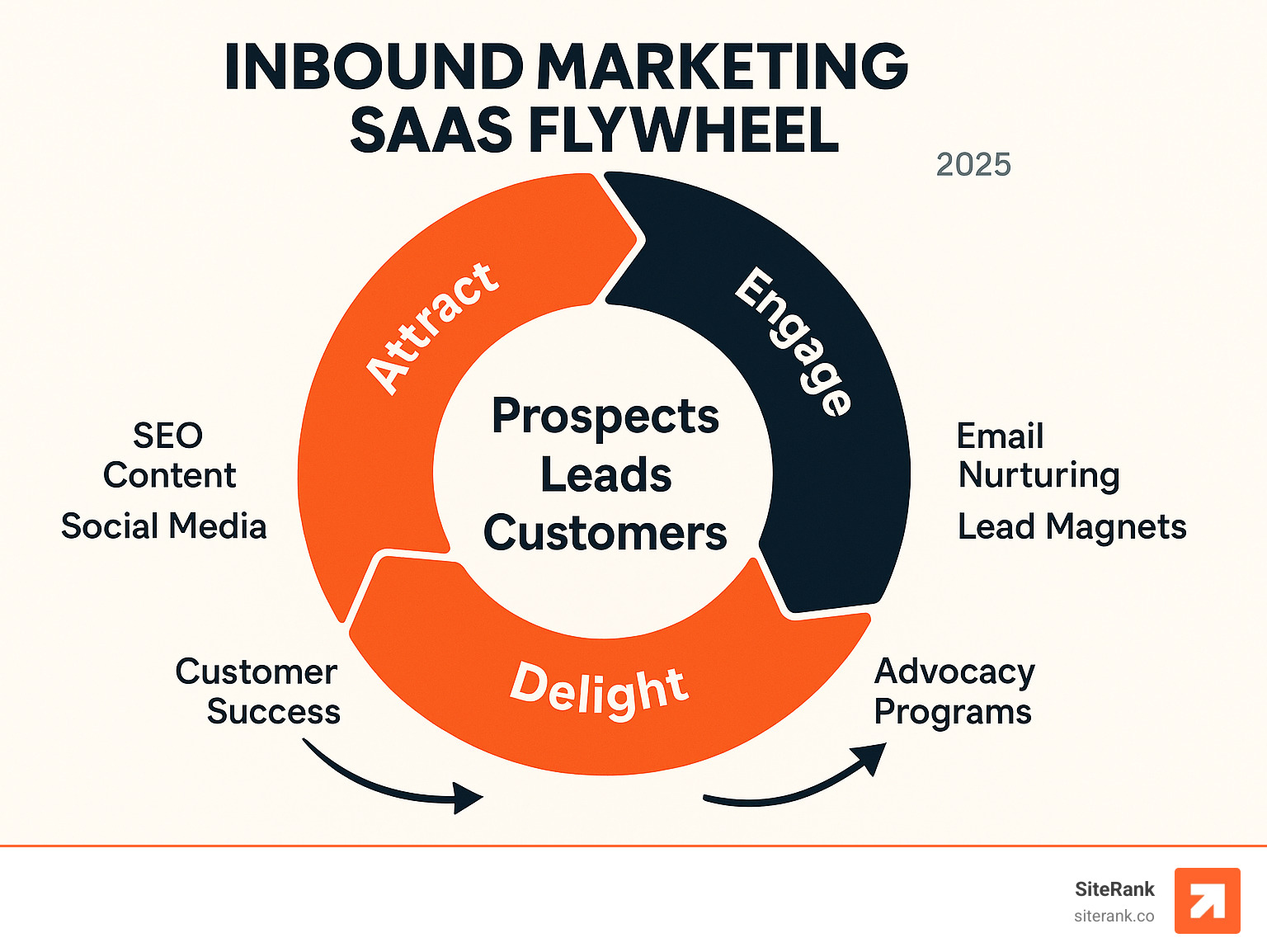
Inbound marketing saas strategies focus on attracting customers through valuable content rather than interrupting them with ads. This customer-centric approach builds the trust needed for customers to commit to a subscription-based model.
Key Components of Inbound Marketing for SaaS:
- Content creation that solves customer problems
- SEO optimization to get found in search results
- Lead nurturing through email and automation
- Social media engagement to build community
- Analytics tracking to measure ROI and optimize
As Craig Flickinger, founder of SiteRank, my 15+ years of experience at tech companies like Hewlett Packard showed me how the right content and SEO can transform a SaaS business into a growth engine.
Why Inbound is a Game-Changer for SaaS
The SaaS sales cycle is unique, often involving a complex buyer’s journey that requires research and trust-building. For SaaS products under $2,000 annually, this journey can be as short as 14 days, demanding efficient engagement.
This is where inbound shines. It positions your brand as a trusted authority, cultivating the long-term relationships vital for a subscription business. The benefits are clear: inbound marketing leads cost 61% less than outbound leads and generate three times more leads. This cost-effectiveness drives scalable growth, as content and SEO efforts have a cumulative effect, attracting leads over time without the escalating costs of traditional advertising.
Inbound vs. Outbound Marketing: A Comparison
Understanding the fundamental differences between inbound and outbound marketing highlights why inbound is so impactful for SaaS.
| Feature | Inbound Marketing | Outbound Marketing |
|---|---|---|
| Approach | Pull (Attract) | Push (Interrupt) |
| Channels | SEO, Blogs, Social Media, Email | Cold Calls, Print Ads, TV Ads, Billboards |
| Communication | Two-way dialogue, Permission-based | One-way message, Interruption-based |
| Cost | Lower long-term cost, Sustainable ROI | Higher, ongoing cost, Diminishing returns |
| Focus | Providing value, Building relationships | Selling product, Immediate conversion |
Outbound marketing pushes a message out, whether the audience is receptive or not. While it can generate awareness, it often fails to build lasting trust. In contrast, inbound marketing is a customer-centric philosophy designed to draw in potential customers by providing solutions to their problems. It’s about being found when prospects are looking for answers.
While inbound builds organic growth, a balanced approach can be effective. Targeted outbound efforts can help reach high-value accounts, but they should be supported by valuable content that addresses customer pain points.
Strategy #1: Build a Rock-Solid Foundation

Think of your inbound marketing saas strategy like building a house. Before creating content, you must establish who you’re talking to and what makes your solution special. This foundational work separates successful campaigns from expensive mistakes. It ensures you create content that attracts the right people.
Define Your Ideal Customer with Buyer Personas
Your SaaS isn’t for everyone. The more specific you are about your ideal customer, the more effective your marketing becomes. Creating detailed buyer personas means understanding their daily frustrations, goals, and where they seek information. When you truly know your customer, your content practically writes itself.
Start by analyzing your best current customers. How to create buyer personas provides a detailed framework, but the key is to understand their:
- Demographics and role: Who are they professionally?
- Daily challenges and pain points: What problems keep them up at night?
- Goals and aspirations: What are they trying to achieve?
- Information-seeking behavior: Where do they go for answers?
Nailing your buyer personas makes your content resonate, your SEO target the right keywords, and your social media posts more engaging.
Craft a Compelling Value Proposition
Once you know who you’re talking to, you must perfect what you’re saying. Your value proposition is the clear, honest answer to “Why should I choose you?” Many SaaS companies mistakenly focus on features instead of benefits. Customers don’t care about “advanced analytics”; they care about making better decisions faster.
A strong value proposition for your inbound marketing saas strategy should be:
- Crystal clear: Easy for anyone to understand.
- Specific: Use numbers and concrete outcomes.
- Different: Highlight what makes you unique.
Instead of saying you “improve efficiency,” say you “cut project completion time by 30%.” Your value proposition should be present in everything from your homepage to your email signature. When you get this right, your keyword research services become more targeted because you know the exact language your customers use. You’re not trying to appeal to everyone; you’re trying to be irresistible to the right people.
Strategy #2: Create & Optimize Content That Converts

With your foundation in place, it’s time to create the heart of any successful inbound marketing saas strategy: content that converts. Think of content as your 24/7 sales team, attracting prospects and guiding them toward your solution. But not all content is equal; success lies in a strategy that is value-rich and focused on solving your personas’ real problems.
For a deeper dive into creating content that search engines and customers love, check out our guide on Mastering Content for SEO: A Quick Guide.
Map Content to the Buyer’s Journey
Many SaaS companies create random content without considering the prospect’s mindset. The secret is understanding what is the buyer’s journey? and creating content that meets people where they are.
Awareness Stage: Prospects are experiencing a problem but haven’t defined it. They ask questions like, “Why are we missing deadlines?” Your content should be educational, not salesy. Use blog posts, educational videos, and thought leadership articles.
Consideration Stage: Prospects have defined their problem and are researching solutions. They ask, “What are my options?” This is the time for ebooks, comparison guides, and webinars that showcase expertise.
Decision Stage: Prospects are choosing between vendors. They ask, “Which company should I trust?” Use case studies, interactive demos, and free trials to build confidence and remove risk.
Mapping content this way attracts the right people and nurtures them naturally toward a purchase.
The Role of SEO in Your Inbound Marketing SaaS Strategy
Brilliant content is useless if no one can find it. SEO is critical for your inbound marketing saas strategy. With Google commanding 92.08% of the market share, it’s where your prospects are looking for solutions.
- Keyword research is about finding the exact language your prospects use at different stages of their journey.
- On-page SEO involves crafting compelling title tags, meta descriptions, and structured headings so search engines understand your content. For a comprehensive look, explore our On-Page SEO Optimization Techniques.
- Technical SEO ensures your site is fast (loads under 3 seconds), mobile-friendly, and easy for search engines to crawl.
- Link building earns trust and authority. When other reputable sites link to you, it signals to Google that you’re a credible source. Learn more about Why Backlinks Are Important for SEO.
The combination of great content and solid SEO has a compounding effect. Unlike paid ads, optimized content attracts and converts prospects for months and years to come.
Strategy #3: Promote and Distribute Your Content
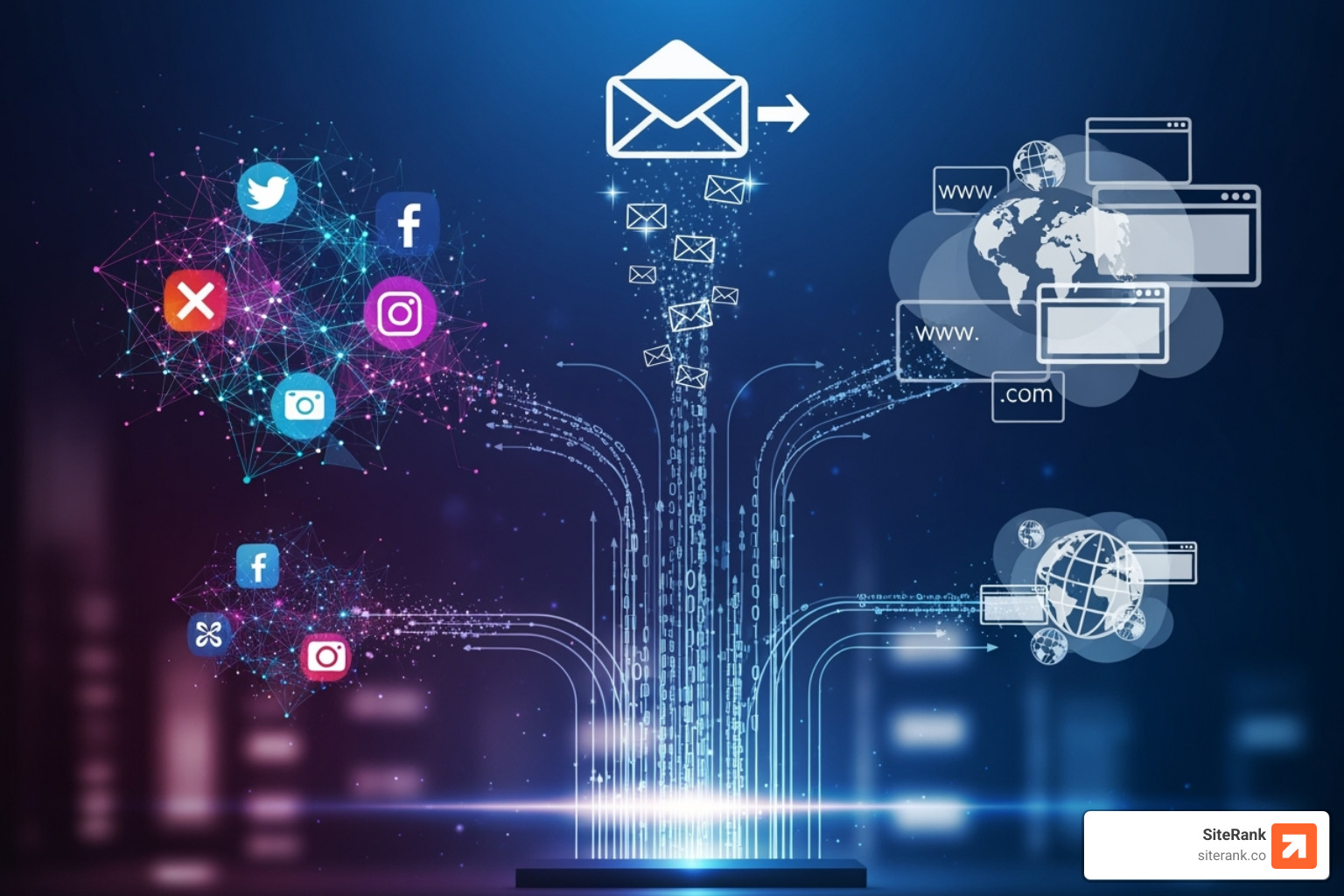
Creating brilliant content is only half the battle. For inbound marketing saas to succeed, you must get that content in front of the right people. Content promotion is the bridge between your expertise and your audience’s needs. You need a strategic distribution plan that meets potential customers where they already spend their time.
Leverage Social Media and Thought Leadership
For SaaS companies, social media is a powerful engine for building brand awareness and genuine connections. A key trend is short-form video; 90% of marketers using it plan to increase their investment. These bite-sized videos are perfect for demonstrating features, sharing quick tips, or telling customer success stories.
Beyond posting, social listening—monitoring conversations about your industry and competitors—provides invaluable insight into what your audience cares about. This allows you to join conversations helpfully and naturally.
Building thought leadership through consistent, valuable contributions establishes you as a trusted voice. When decision-makers see you regularly sharing insights, they think of your company when they need a solution. This trust is crucial in the SaaS world.
Master Email Marketing for Nurturing and Retention
Despite newer channels, email remains a champion of inbound marketing saas, with an average ROI of $42 for every $1 spent. Its power lies in its directness and potential for sophisticated segmentation.
- Drip campaigns are automated email sequences that nurture leads over time with educational content, building trust without being pushy.
- Personalization goes beyond using a name. It means customizing content based on a user’s behavior, interests, and stage in the buyer’s journey.
- Newsletters keep your brand top-of-mind by providing ongoing value to both prospects and customers, sharing industry news, product updates, and success stories.
The key to email success is to focus on value first and selling second. Our content writing services can help ensure your emails strike the right balance, turning subscribers into loyal, long-term customers.
Strategy #4: Convert, Retain, and Create Advocates
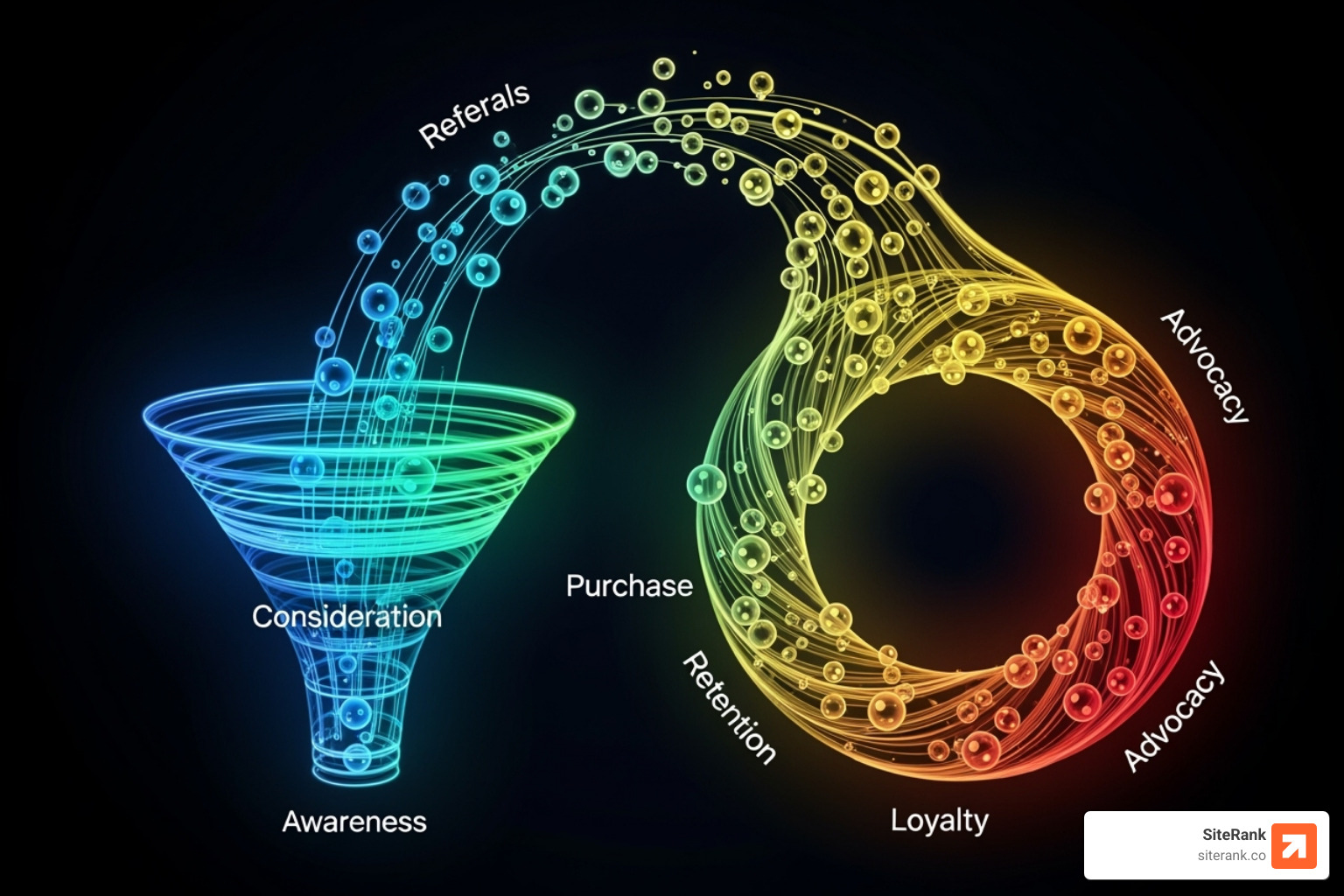
This is where your inbound marketing saas efforts pay off. It’s time to turn warm prospects into paying customers and then into raving fans. In SaaS, the real value is in the long-term relationship. This strategy focuses on both Conversion Rate Optimization (CRO) to acquire customers and customer retention to keep them engaged.
Implement Effective Lead Generation & Conversion Tactics
Converting informed prospects requires finesse. They need to see clear value before committing.
- Lead magnets are your secret weapon. Offer something genuinely valuable—a guide, template, or report—in exchange for contact information.
- Free trials and interactive demos are powerful for SaaS. They let people experience your software firsthand, removing the uncertainty that is often the biggest barrier to purchase.
- Strong calls-to-action (CTAs) are crucial. Instead of “Click here,” use specific, benefit-focused language like “Start Your Free Trial” or “Get Your Custom Strategy.”
- A/B testing your landing pages can lead to significant improvements. Test headlines, button colors, and value propositions to see what resonates with your audience.
Turn Customers into Fans with a Focus on Delight
Acquiring a customer is just the beginning. The real challenge is turning them into someone who loves your product and recommends it.
- Onboarding sequences are critical. Use automated emails to guide new users through key features and celebrate their early wins.
- Customer support content, like help docs and video tutorials, empowers users to solve problems quickly, preventing frustration and potential customer churn.
- User-generated content (UGC) is marketing gold. Customer success stories and case studies are authentic and carry more weight than any ad. Encourage and recognize customers who share their experiences.
The ultimate goal is to create brand advocates—customers so delighted they become an extension of your marketing team. They refer new customers and leave glowing reviews, driving organic growth that money can’t buy.
Strategy #5: Measure What Matters for Your Inbound Marketing SaaS

For inbound marketing saas, if you’re not measuring, you’re just guessing. The beauty of digital marketing is its measurability. Think of analytics as your marketing GPS, showing you where you are, where you’re going, and the best route to get there.
Key Metrics to Track for Success
Focus on metrics that directly impact your bottom line, not vanity metrics. Inbound strategies typically deliver much lower acquisition costs than outbound methods.
- Customer Acquisition Cost (CAC): How much you spend to gain each new customer.
- Customer Lifetime Value (LTV): The total revenue a customer brings over their entire relationship. Your LTV should be significantly higher than your CAC.
- Website Traffic Quality: Focus on attracting visitors who match your buyer personas, not just high volume.
- Conversion Rates: Track conversions at each stage of the funnel (visitor to lead, lead to customer) to identify optimization opportunities.
- Lead-to-Customer Ratio: Shows how effectively you’re qualifying and nurturing prospects.
- Engagement Metrics: Time on page, email open rates, and social interactions signal whether your content is resonating.
Our Free SEO Audit can provide a comprehensive baseline for your optimization efforts.
Using Analytics and AI to Refine Your Strategy
The combination of advanced tracking tools and artificial intelligence has transformed how we optimize inbound marketing saas strategies.
- Performance tracking now allows you to see the complete customer journey, identifying which content pieces and campaigns generate the most qualified leads.
- Identifying top-performing content becomes straightforward, allowing you to double down on what works.
- Predictive analytics uses AI to forecast which leads are most likely to convert or which customers are at risk of churning.
- Personalization at scale is now possible, with AI serving customized content to visitors based on their behavior and interests.
- Optimizing marketing spend is easier with AI-powered attribution, which shows how different channels work together to generate customers, helping you eliminate waste.
The future belongs to SaaS companies that accept data-driven decision-making. The tools are powerful, but success depends on using them consistently.
Frequently Asked Questions about Inbound Marketing for SaaS
Here are answers to the most common questions about inbound marketing saas strategies.
What is the main difference between inbound and outbound marketing for a SaaS company?
Inbound marketing pulls customers toward you with valuable content, while outbound marketing pushes your message at them. With inbound, you create helpful blog posts or guides that prospects find when searching for solutions. You earn their attention by providing value first. Outbound relies on interruption tactics like cold calls or display ads.
For SaaS companies with complex solutions, inbound is more effective because it gives you the space to educate, build trust, and demonstrate expertise throughout the buyer’s decision-making process.
How long does it take for inbound marketing to show results for a SaaS business?
Inbound marketing is a marathon, not a sprint. While you may see quick wins like increased social engagement, significant impacts on organic traffic, lead generation, and SEO rankings typically take 6-12 months of consistent effort. This timeline reflects the time search engines need to rank your content and for your audience to move through the buying journey.
The good news is that once your inbound engine is running, it builds momentum. A blog post you write today can continue generating leads for years, creating a powerful compounding effect.
What is the most important component of a SaaS inbound marketing strategy?
While every component matters, the foundation is a deep understanding of your buyer persona. Without this, everything else falls apart. A buyer persona is more than just demographics; it’s a detailed profile of your ideal customer’s challenges, goals, and the language they use to describe their problems.
When you truly understand your ideal customer, your content will resonate, your SEO will target the right keywords, and your promotional efforts will be effective. This clarity transforms scattered marketing activities into a focused strategy that converts browsers into buyers.
Conclusion: Your SaaS Growth Engine Awaits
We’ve journeyed through the core of inbound marketing saas, a strategic, repeatable process that can transform how you connect with customers. It’s not magic; it’s a methodical approach.
You start with a solid foundation: understanding your buyer personas and crafting a compelling value proposition. From there, you create value consistently with SEO-optimized content that speaks to customers at every stage of their journey.
Effective promotion and distribution ensure your content reaches its intended audience, while a focus on conversion and delight turns customers into advocates. Finally, you measure and adapt, using data and analytics to refine your strategy and make decisions that drive real growth.
What makes inbound marketing saas so powerful is its compounding effect. Your efforts build on themselves, creating lasting assets that work for you around the clock.
At SiteRank, we’ve spent over 15 years helping SaaS companies build these powerful growth engines. We deliver custom strategies without unnecessary deliverables—just the tactics that increase your clicks and engagement.
Your SaaS growth engine is waiting. With the right strategy and consistent execution, you can turn your business into a magnet that attracts the right customers at the right time.
Ready to stop chasing leads and start attracting them? Get a custom strategy with our Software & SaaS SEO Services and let’s build something amazing together.