

Why Home Service Leads Are the Lifeblood of Your Business
Home service leads are the fuel that keeps a contractor business running. Without a steady flow of them, even the most skilled plumber, roofer, or HVAC tech will struggle to fill their schedule — and their bank account.
Here’s a quick summary of what you need to know:
- What they are: Any inquiry from a homeowner looking to hire — a phone call, web form, quote request, or referral
- Where they come from: Google Search, Local Services Ads, Facebook Ads, referrals, and community word of mouth
- What they cost: Typically $25 to $300 per lead, depending on the trade and channel
- What makes them valuable: High-intent leads from homeowners ready to hire convert far better than cold or shared leads
- What kills them: Slow response times, inaccurate business listings, and no follow-up system
The stakes are real. As of 2026, 87% of customers use Google to evaluate local businesses before making a call. If your business isn’t showing up — or worse, showing up with outdated information — those leads go straight to a competitor.
Lead generation isn’t just a marketing activity. It’s the single most important growth lever a home service business has.
I’m Craig Flickinger, founder of SiteRank and a digital marketing specialist with over 15 years of SEO experience helping businesses build systems that consistently generate home service leads without depending on overpriced third-party platforms. In this guide, I’ll walk you through everything — from the basics of what a lead actually is, to the channels, costs, and conversion systems that separate thriving contractors from struggling ones.
What Home Service Leads Are and Why They Matter
At the simplest level, home service leads are people who raise their hand and say, “I need help at my house.”
That sounds obvious, but not all leads are equal. Some are ready to book today. Some are comparing three to five companies. Some are just curious and have the urgency level of a squirrel staring at a bird feeder.
A healthy service business needs both lead volume and lead quality. Volume keeps the schedule full. Quality keeps margins healthy.
What counts as a home service lead?
A lead can come in many forms:
- Phone calls
- Website contact forms
- Quote requests
- Chat messages
- SMS inquiries
- Referral introductions
- Local Services Ads contacts
- Facebook lead form submissions
In other words, if a homeowner shows intent and gives you a way to continue the conversation, that is a lead.
Why home service leads are the lifeblood of a contractor business
Leads power nearly every part of the business:
- Cash flow
- Technician scheduling
- Capacity planning
- Seasonal stability
- Review generation
- Referral growth
- Repeat service opportunities
No leads means empty calendars. Empty calendars mean rushed discounting. Rushed discounting means profits disappear fast.
That is why the best operators treat lead generation as a system, not a random act of hope.
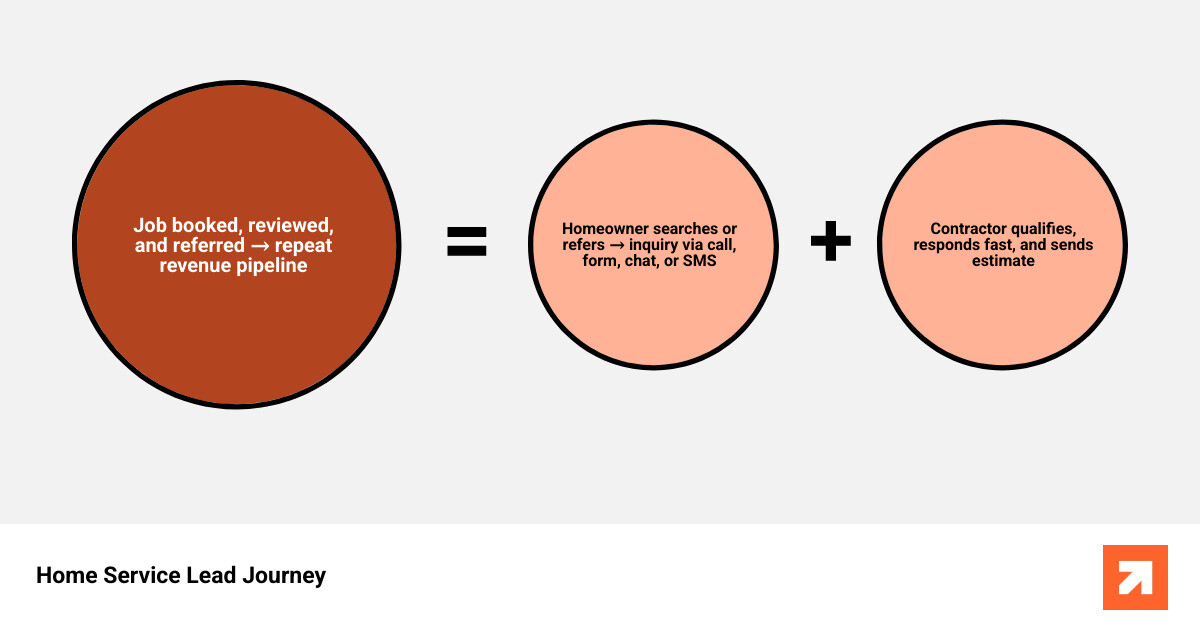
The stages from lead to customer
Most leads move through the same basic pipeline:
- Awareness
- Inquiry
- Qualification
- Estimate or inspection
- Follow-up
- Close
- Service delivery
- Review and referral
- Repeat business
This matters because generating a lead is only step one. If your team cannot qualify, respond to, and nurture that inquiry, the lead never becomes revenue.
The Best Channels to Generate Home Service Leads in 2026
The strongest lead generation strategies combine demand capture and demand creation.
Demand capture means showing up when homeowners are already searching. Demand creation means getting in front of homeowners before they search.
The sweet spot is using both. You can learn more in our guide to digital marketing for home services.

How Local SEO builds long-term home service leads
Local SEO remains one of the most effective ways to generate consistent leads in 2026. Research shows 77% of consumers in major Western markets use Google to find business information, and local service buyers heavily rely on search to evaluate providers.
Local SEO works because it helps you appear in:
- Google Maps results
- The local map pack
- Organic search listings
- Location-based service searches such as “plumber near me”
To build a strong local SEO engine, we focus on:
- A fully optimized Google Business Profile
- Consistent NAP data across directories
- Service pages for each trade and city
- Review generation and response
- Local backlinks and citations
- Fast, mobile-friendly pages
Google’s local results are heavily influenced by relevance, distance, and prominence. That means your business has to match the search, serve the area, and look trustworthy. If you want a neutral overview of how local search works at the platform level, Google’s own Google Business Profile Help is a useful reference.
If you want to go deeper, read our guides on The Ultimate Guide to Local SEO for Home Services and Home Service SEO. For authority building, our Local SEO Backlinks Guide 2025 is also useful.
When PPC and Google Local Services Ads make sense
PPC and Local Services Ads are not the same thing, even though they often get lumped together.
Traditional PPC:
- Charges per click
- Sends traffic to a website or landing page
- Works well for urgent, high-intent searches
- Requires strong landing pages and conversion tracking
Google Local Services Ads:
- Charge per lead instead of per click
- Often appear above standard ads
- Include trust features like the Google Guaranteed badge in eligible categories
- Are built for local service businesses
LSAs often perform well for emergency-driven services like plumbing, HVAC, electrical, and locksmith-type intent because the homeowner wants help now, not next Thursday after a branding journey.
PPC is still valuable when:
- You want more control over keywords
- You need coverage beyond LSA categories
- You are promoting financing, seasonal offers, or specific high-margin services
How Facebook Ads and retargeting create demand
Facebook Ads are especially useful for non-emergency services and longer consideration cycles.
Why? Because people may not search Google today for a roof replacement or solar install, but they will notice a strong local ad with social proof, photos, and a compelling offer.
The research shows 31% of customers say they bought from a local business after watching a Facebook ad. That is not small.
Facebook works best for:
- Seasonal promotions
- Maintenance plans
- Before-and-after visuals
- Financing offers
- Neighborhood-targeted campaigns
- Retargeting previous website visitors
Retargeting is especially effective because most homeowners do not convert on the first visit. A reminder ad can bring them back when they are ready.
Offline tactics that still drive qualified leads
Offline is not dead. It is just less flashy.
In fact, for nearly 28% of consumers, word of mouth is the preferred way to learn about a new brand. Referred customers also tend to have higher lifetime value and stronger trust from day one.
Offline lead sources still worth using:
- Referral programs
- Yard signs
- Flyers
- Trade shows
- Community sponsorships
- Local workshops
- Partnerships with adjacent businesses
Simple example: a maintenance reminder flyer or invoice referral offer can generate surprisingly strong leads, especially with older homeowners who are less glued to their phones.

Building an omnichannel lead engine instead of relying on one source
One lead source is not a strategy. It is a gamble.
If you rely only on paid ads, costs can spike. If you rely only on referrals, growth can stall. If you rely only on marketplaces, you are renting attention.
A stronger approach is to build a mix of:
- Local SEO
- Google Ads or LSAs
- Facebook and retargeting
- Referral systems
- Review generation
- Community visibility
That mix creates resilience during slow seasons and market shifts. Our guide to Home Services Online Marketing expands on this.
How Much Home Service Leads Cost and What Determines ROI
Lead cost matters, but cost alone is not the right metric. Cheap leads that never book are expensive. Expensive leads that close into profitable jobs can be a bargain.
Typical cost ranges for home service leads by channel
A common benchmark for home service leads is $25 to $300 per lead.
Typical patterns look like this:
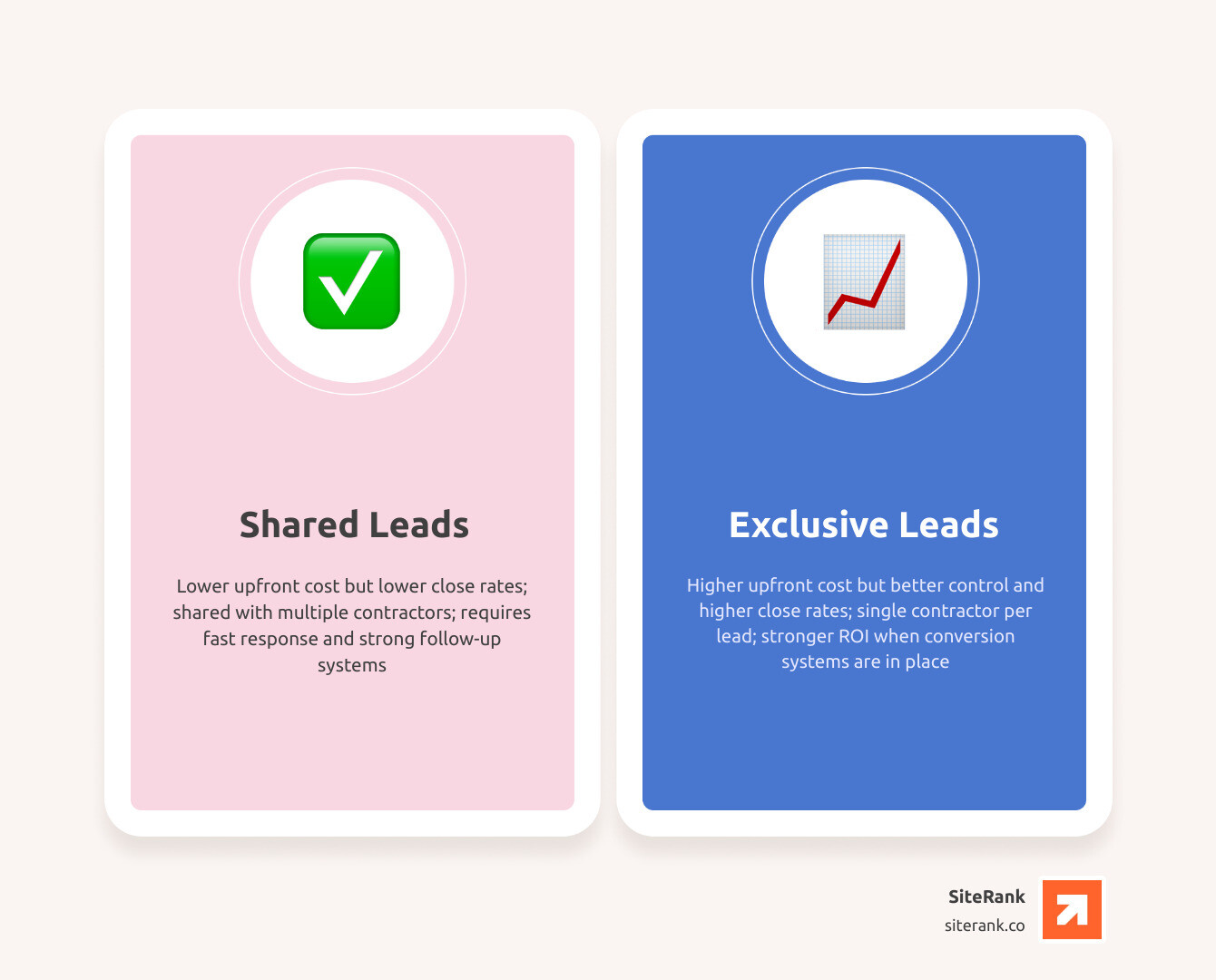
- Shared leads: lower upfront cost, lower close rates
- Exclusive leads: higher upfront cost, better control
- Pay-per-call: often priced higher than form leads, but usually stronger intent
- PPC leads: cost varies based on click competition and landing page performance
- SEO leads: often higher upfront investment, lower cost per lead over time
- Referral leads: usually low acquisition cost and high trust
The biggest factors that change lead prices
Lead pricing changes based on:
- Trade type
- Geography
- Urgency
- Seasonality
- Market competition
- Lead exclusivity
- Homeowner intent
- Average job value
For example, solar, roofing, and HVAC can be more expensive because the contracts are larger and competition is intense. Emergency plumbing may also cost more because urgency is high and everyone wants the phone to ring first.
Exclusive vs shared home service leads: which is better?
Here is the practical difference:
| Lead type | Pros | Cons | Best for |
|---|---|---|---|
| Exclusive | No direct competition on the same inquiry, better customer experience, often higher close rates | Higher per-lead cost | Businesses with strong sales process and budget discipline |
| Shared | Lower upfront cost, easy to test volume | Competing against multiple contractors, lower trust, speed pressure | Supplementing pipeline carefully |
In many cases, exclusive leads produce better ROI because you are not racing four other companies to the same homeowner. Research in the market shows live transfer and exclusive formats can close much better than shared web leads.
That said, the best return often comes from owned channels like SEO and branded search because nobody can resell those leads to your competitors.
How to calculate real return on investment
Do not stop at cost per lead. Calculate:
- Cost per booked appointment
- Cost per estimate
- Cost per sold job
- Revenue per job
- Gross margin per job
- Customer lifetime value
- Payback period
A simple formula:
ROI = (Revenue from source - Cost of source) / Cost of source
Even better, track cost per acquired customer by source. That exposes which channels look good on paper but leak money in the handoff.
How to Qualify, Respond to, and Convert More Home Service Leads
Getting the lead is only half the battle. The rest is about process.
Using BANT to filter out low-intent tire-kickers
BANT stands for:
- Budget
- Authority
- Need
- Timeline
It is a simple way to qualify leads without turning your dispatcher into an FBI agent.
Useful questions include:
- What service do you need?
- Are you the homeowner?
- What problem are you trying to solve?
- When do you want this done?
- Have you set a budget range?
This helps identify who is serious and who is “just seeing what’s out there,” which is often code for “I may disappear into the fog.”
Disqualification rules also help. If the address is outside your area, the property owner is not involved, or the timeline is vague with no urgency, that lead may need lower-priority follow-up.
Why speed to lead is critical for conversion
This is one of the biggest advantages in the whole business.
Responding within 5 to 15 minutes can dramatically improve your chances of booking the job. Homeowners contacting a service company are often stressed, busy, and ready to move on quickly. If you wait an hour, someone else may already be at their house.
Fast response matters because:
- Urgent problems create short buying windows
- Shared leads decay almost instantly
- Missed calls become missed revenue
- First contact often sets the trust baseline
If possible, use:
- Call routing
- After-hours answering
- Automated SMS confirmations
- Dispatcher alerts
- CRM-triggered tasks
Follow-up systems that turn more leads into appointments
Most leads do not convert on the first touch. That does not mean they are bad. It often means they are busy.
Strong follow-up systems include:
- Immediate text confirmation
- Call attempt within minutes
- Email with next steps
- Estimate reminders
- Appointment confirmations
- Post-visit follow-up
- Re-engagement for unbooked estimates
A basic cadence might look like:
- Call and text immediately
- Follow up later the same day
- Send reminder next day
- Check in again after estimate
- Nurture longer-cycle jobs weekly
Automation helps, but personalization still wins. Mention the service, location, or concern so the homeowner feels like a person, not a row in a spreadsheet.
Scripts and signals that help verify lead quality
A few checks can save a lot of wasted windshield time:
- Confirm service type
- Verify property address
- Confirm homeowner status
- Check service area fit
- Ask about urgency
- Look for duplicate submissions
- Flag spam patterns or fake numbers
Some lead providers also emphasize verification methods like address checks, bot filtering, and real-time delivery. If you buy leads, those standards matter.
Review generation and trust signals that improve close rates
Trust is a conversion tool, not just a branding asset.
Research shows:
- 87% of customers use Google to evaluate local businesses
- 62% say they will not use a business with inaccurate listing information
That means your listings, reviews, and responsiveness directly affect close rate.
We recommend:
- Keeping all business info accurate
- Asking for reviews after every successful job
- Responding to positive and negative reviews
- Adding photos, services, and hours to your Google Business Profile
For more on this, see our resources on Home Services SEO and Local Business SEO Services.
The Systems Behind Predictable Home Service Leads
The best lead generation programs are boring in the best possible way. They are measurable, repeatable, and not based on vibes.
What a CRM or lead management platform should track
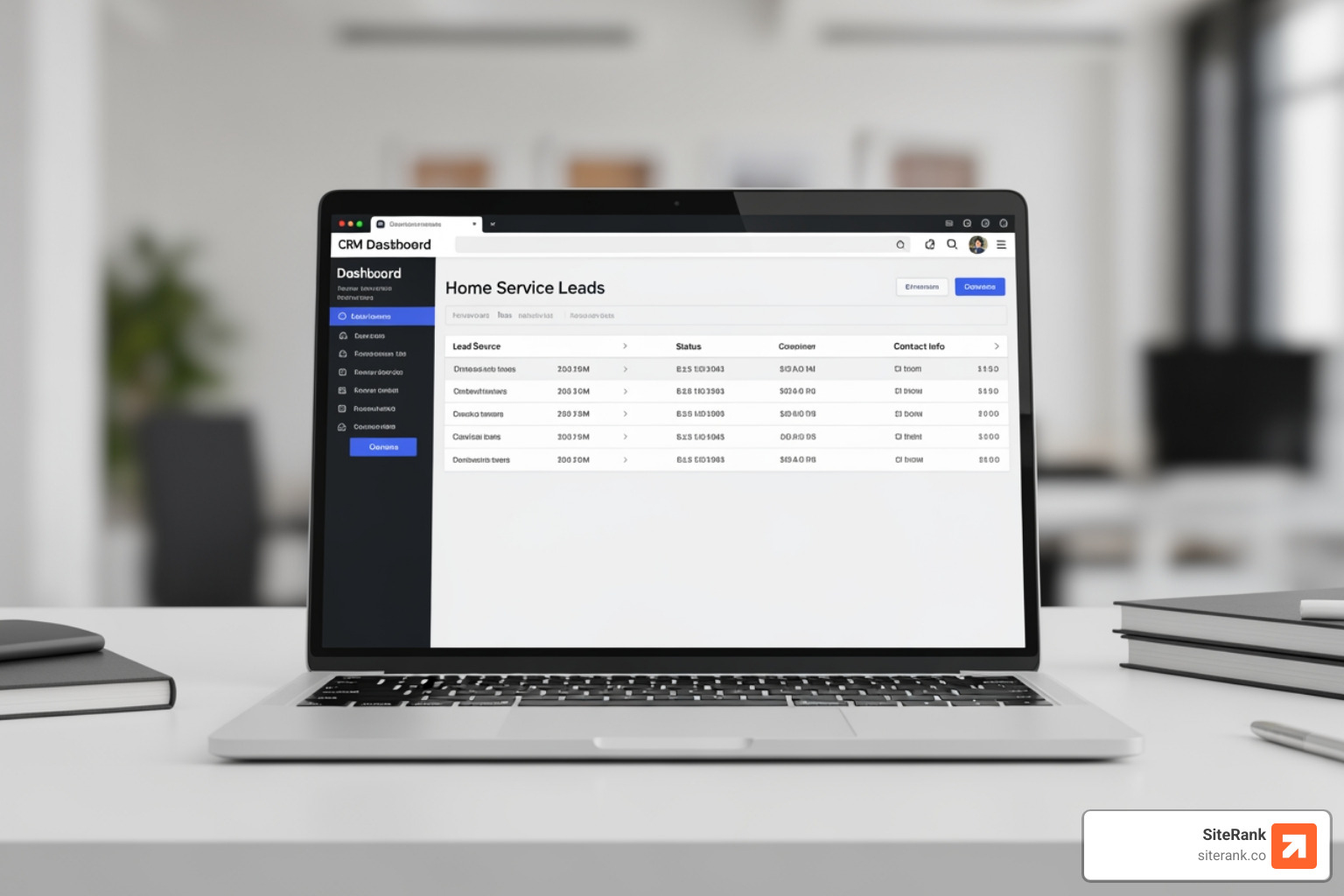
A good CRM or lead management system should track:
- Lead source
- Call recordings
- Form submissions
- Response times
- Booked jobs
- No-shows
- Estimates sent
- Close rates
- Revenue by source
- Technician or CSR attribution
This is where many businesses discover a painful truth: the channel they thought was winning is actually just generating activity, not profit.
The upside is huge. Better systems can drive major revenue improvements, and the industry research around home service platforms consistently points to meaningful growth from tighter tracking and follow-up automation.
Agency vs in-house marketing: pros, cons, and break-even thinking
There is no universal winner here. It depends on budget, speed, and internal skill.
Agency advantages:
- Specialized expertise
- Faster execution
- Access to tools and reporting
- Less training burden internally
In-house advantages:
- More day-to-day control
- Deep knowledge of the brand
- Faster feedback from the field
- Long-term internal capability
A practical hybrid is often best: outsource technical strategy and execution where needed, while keeping sales process, reviews, and customer experience tightly managed internally.
Why owned marketing assets usually win long term
Owned assets include:
- Your website
- Your content
- Your Google Business Profile
- Your reviews
- Your CRM database
- Your email and SMS lists
These assets compound over time. A well-ranked service page can generate leads for years. A strong review profile creates a trust moat. First-party data makes follow-up cheaper and more reliable.
That is why we believe owned marketing usually beats rented lead flow long term. If you want help building that foundation, explore our Home Services SEO and Local Business SEO Services.
Reporting dashboards that expose wasted spend fast
A useful dashboard should reveal:
- Which zip codes convert best
- Which campaigns produce bad calls
- Which channels create no-shows
- Which services have the best close rates
- Which team members respond fastest
- Which lead sources actually generate revenue
Without this, you are flying blind and calling it marketing.
Vertical-Specific Strategies for High-Value Home Service Leads
Different trades need different lead strategies. A no-cool HVAC call is not the same as a solar consultation. Treating them the same is like using the same wrench for every job.
HVAC home service leads: urgency, seasonality, and maintenance plans
HVAC has strong seasonal swings and urgent demand.
What works best:
- PPC and LSAs during heat and cold spikes
- Local SEO for year-round visibility
- Maintenance plan marketing
- Tune-up offers in shoulder seasons
- Emergency call handling
The real opportunity is not just the repair lead. It is turning one emergency call into a long-term maintenance customer.
Roofing leads: storm demand, inspections, and insurance intent
Roofing demand often surges around weather events and insurance-related needs.
Effective tactics:
- Geo-targeted search campaigns
- Storm-specific landing pages
- Inspection offers
- Strong review and photo proof
- Fast response to insurance-intent inquiries
Roofing also benefits heavily from local trust because the ticket size is high and homeowners are cautious.
Solar leads: longer nurturing and stricter qualification
Solar is different from emergency trades because the sales cycle is longer and qualification matters more.
Important filters include:
- Homeownership
- Roof suitability
- Utility bill profile
- Timeline
- Budget or financing readiness
Longer nurturing is usually required, so SMS and email drip follow-up can be especially important.
Other trades with unique lead patterns
A few quick examples:
- Plumbing: emergency intent, high value from fast response
- Electrical: safety-driven urgency and trust sensitivity
- Pest control: recurring service potential and seasonality
- Landscaping: visual marketing and spring demand
- Garage doors: urgent repairs plus replacement upsells
- Water damage: immediate response and strong call handling
Frequently Asked Questions About Home Service Leads
Are exclusive leads always worth paying more for?
Not always, but often.
If your team answers fast, qualifies well, and closes effectively, exclusive leads can produce stronger ROI because you are not fighting the same battle as everyone else. If your follow-up is weak, paying more for exclusivity will not magically fix the process.
How do Google LSAs differ from traditional PPC ads?
LSAs are pay-per-lead and often include trust features like Google Guaranteed in eligible categories. PPC is pay-per-click and gives more control over keywords, copy, and landing pages.
LSAs are usually simpler for direct lead capture. PPC is usually better for flexibility and funnel control.
What trends will shape home service leads in 2026?
The biggest trends we see are:
- Faster response expectations
- More AI-assisted follow-up and routing
- Greater value of first-party data
- Stronger importance of reviews and review velocity
- More emphasis on owned channels over rented ones
- Tighter lead quality standards over raw volume
In short, 2026 favors businesses that are local, trusted, fast, and measurable.
Conclusion
Predictable growth comes from more than just “getting leads.” It comes from owning the right channels, responding fast, qualifying properly, and tracking what turns into revenue.
The businesses that win with home service leads are usually the ones that build systems instead of chasing random opportunities. They invest in local visibility, create trust before the first call, and keep improving conversion after the lead comes in.
If you want a stronger foundation, start with our guide on Stop Chasing Ghosts and Start Getting Real Construction Leads and learn how our Home Services SEO services help contractors build lead flow they actually own.
For additional industry context, it is worth comparing owned lead generation with third-party lead marketplaces, shared lead programs, and pay-per-call vendors before deciding where to invest.
If you want, I can also turn this into a version optimized for featured snippets and FAQ schema.