

Why Google Maps SEO for Landscapers Is Your Most Valuable Lead Source
Google Maps SEO for landscapers is the process of optimizing your business to appear in Google’s local Map Pack — the top three results shown on a map when homeowners search for services like “landscaper near me” or “lawn care in [city].”
Here’s what you need to know right away:
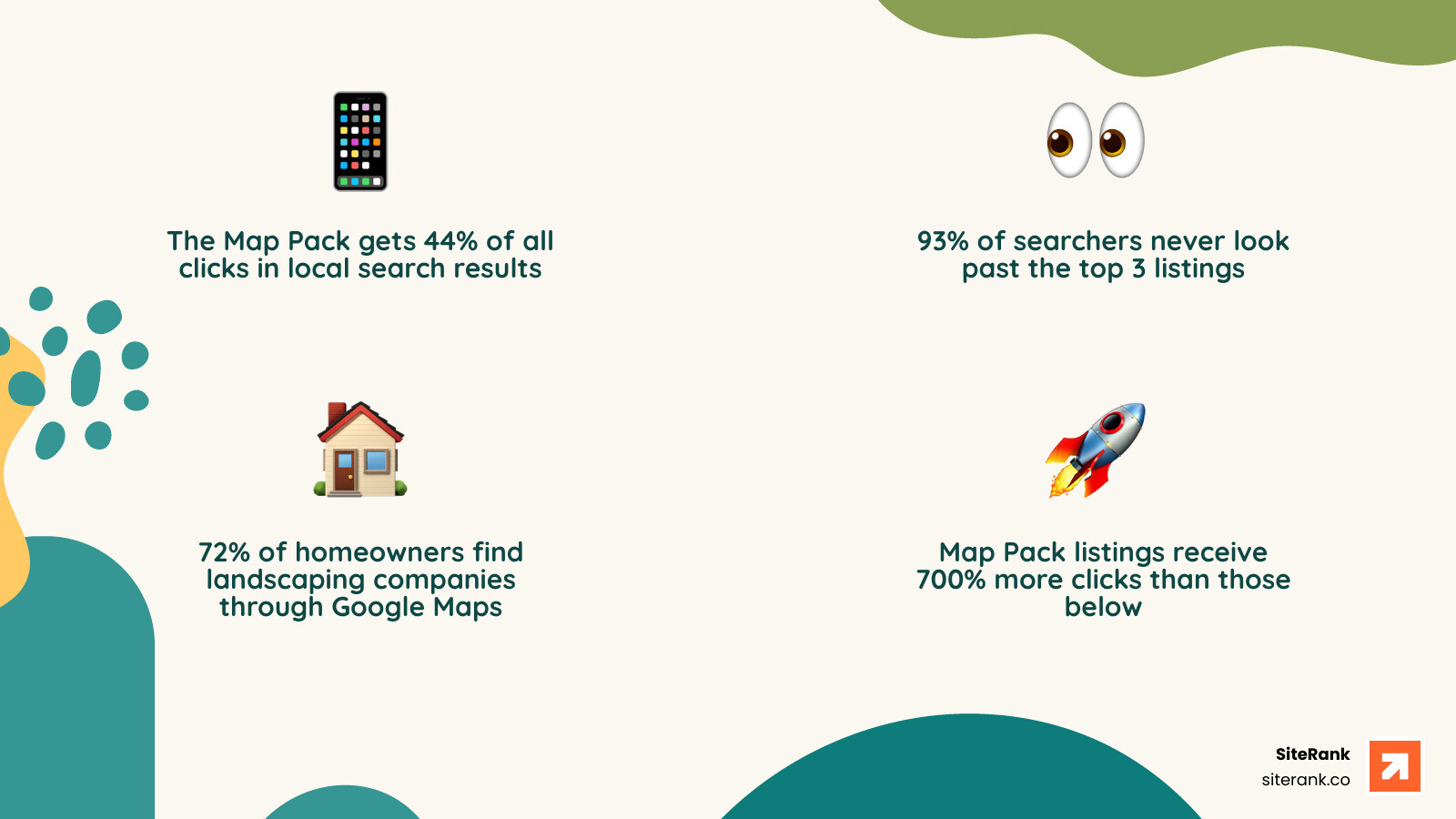
- The Map Pack gets 44% of all clicks in local search results
- 93% of searchers never look past the top 3 listings — if you’re not there, you’re invisible
- 72% of homeowners find landscaping companies through Google Maps and local search
- Landscapers in the Map Pack receive 700% more clicks than those who don’t appear in it
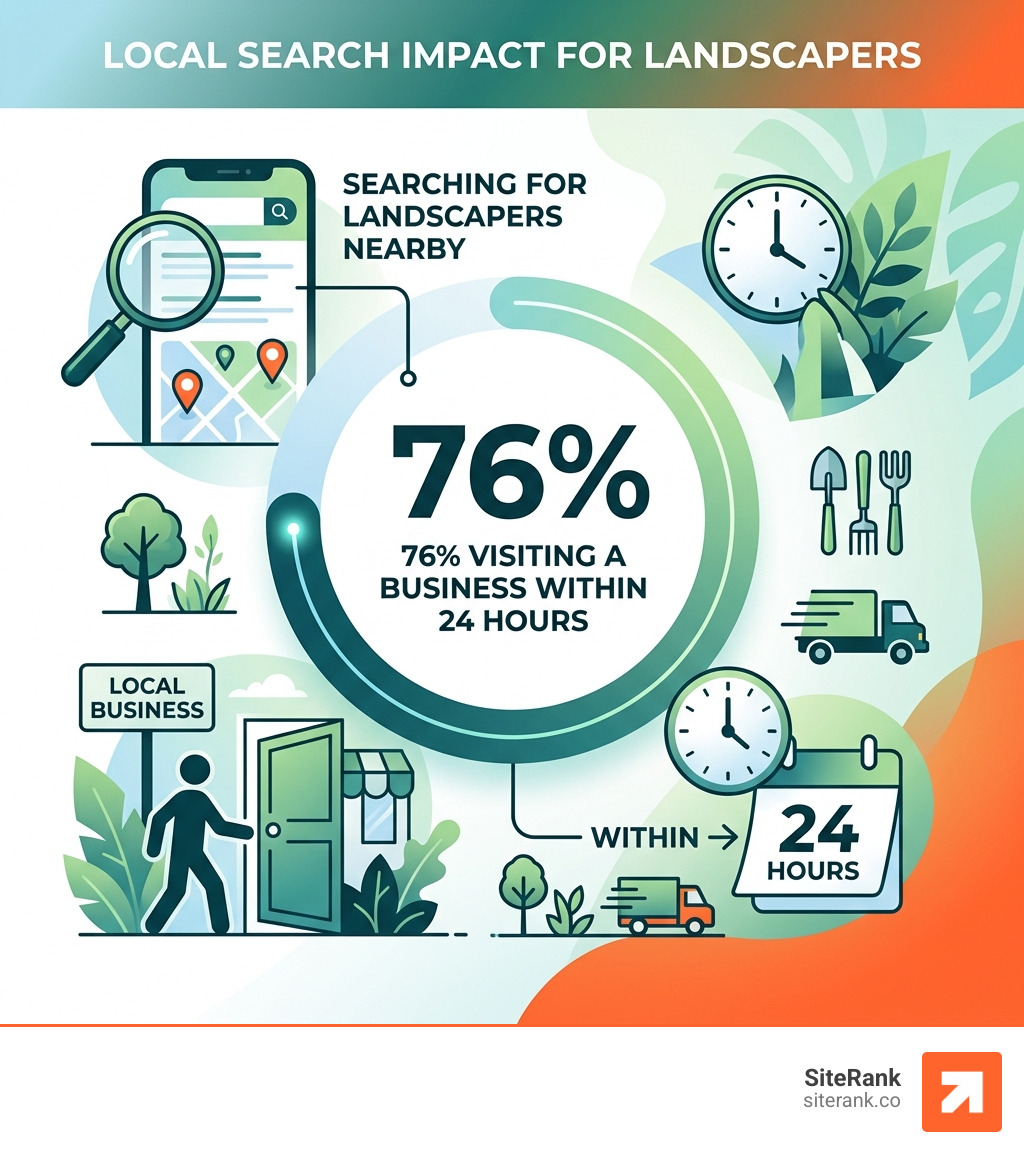
- 88% of local mobile searchers call or visit a business within 24 hours
The bottom line: ranking in the Google Maps 3-Pack is the single highest-impact thing a landscaping business can do to generate consistent, high-intent leads — without paying for ads.
The landscaping market is massive — over $150 billion with nearly 650,000 competing businesses. Most homeowners aren’t flipping through directories or asking neighbors anymore. They pull out their phone, type a quick search, and call one of the first three names they see on the map.
If that’s not you, it’s your competitor.
The good news? Most landscaping businesses are terrible at this. Inconsistent business listings, no reviews, outdated photos — the bar is low, and the opportunity is real.
I’m Craig Flickinger, founder of SiteRank and an SEO specialist with over 15 years of experience helping local businesses dominate search, including implementing Google Maps SEO for landscapers in competitive markets across the country. In this guide, I’ll walk you through exactly what it takes to move from buried in search results to booked out solid.
The Mechanics of Google Maps SEO for Landscapers
To dominate the local market in 2026, we first have to understand the “engine” behind the map. Google doesn’t just pick names out of a hat; it uses a sophisticated algorithm designed to provide the best user experience.

According to Google’s official local ranking criteria, the algorithm is built on three pillars:
- Proximity: How close is your business to the person searching? This is the heaviest factor. If a homeowner in the suburbs searches for “lawn mowing,” Google will prioritize businesses physically located in or very near that suburb.
- Relevance: How well does your business profile match what the user is looking for? If they search “paver patio installation” and your profile only mentions “mowing,” you likely won’t show up.
- Prominence: How well-known is your business? This is measured by your reviews, your website’s organic SEO strength, and how many other places on the web mention your business (citations).
For a deeper dive into how these factors apply across all trades, check out The Ultimate Guide to Local SEO for Home Services.
Google Maps SEO vs. Google Ads: Which Wins?
Many landscapers ask us if they should just pay for Local Services Ads (LSAs) instead of focusing on organic Google Maps SEO for landscapers. While ads are great for instant traffic, the long-term ROI of Maps SEO is significantly higher.
| Feature | Google Maps SEO (Organic) | Google Ads / LSAs (Paid) |
|---|---|---|
| Cost | Free clicks (Time/Labor investment) | Pay-per-click or Pay-per-lead |
| Trust | High (Consumers trust organic results) | Moderate (Marked as “Sponsored”) |
| Longevity | Compounding results over time | Stops the second you stop paying |
| Click Share | 44% of local clicks | ~10-15% of local clicks |
| Lead Quality | Very High (Buyer intent) | High (But can be competitive) |
Optimizing Your Google Business Profile for 2026
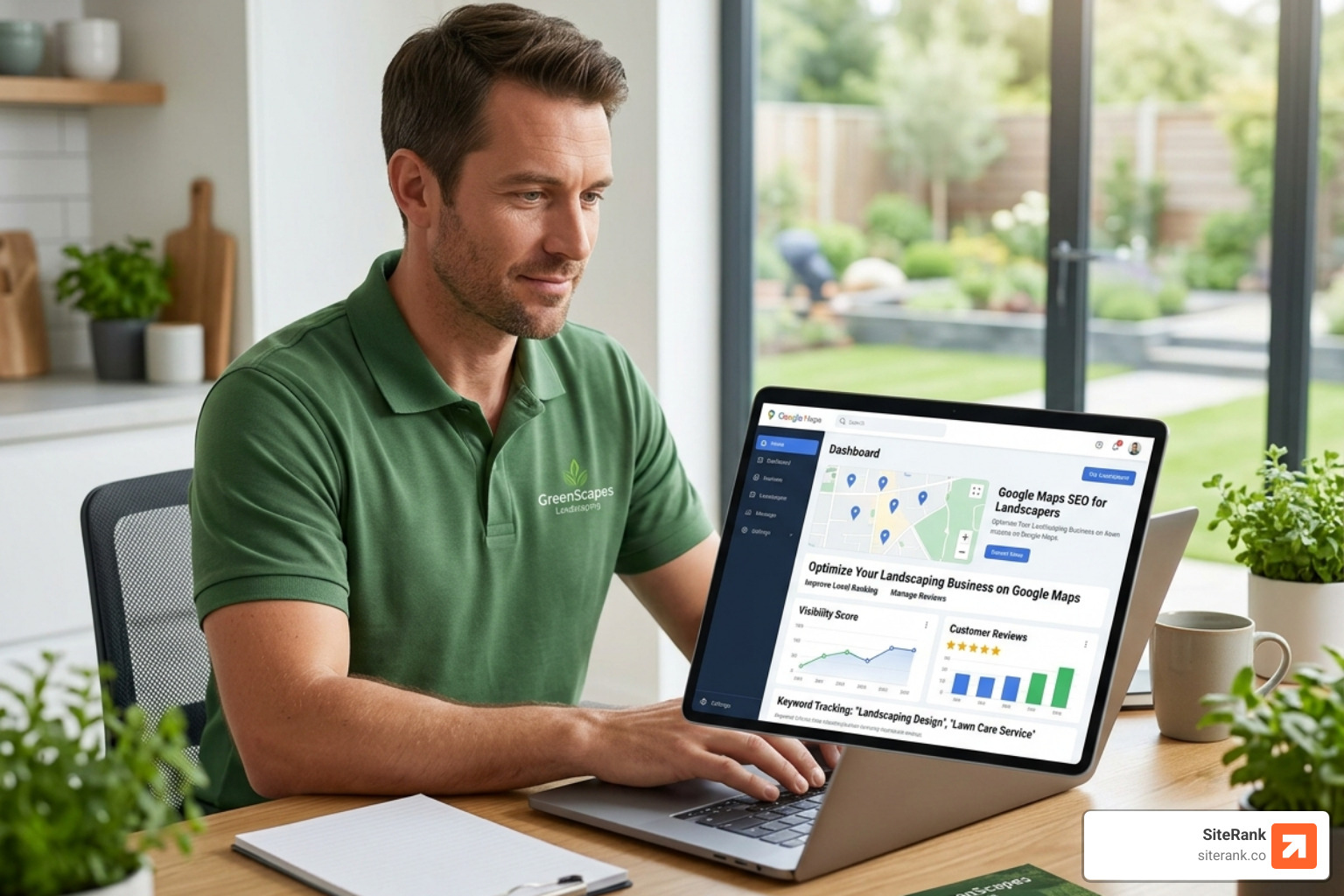
Your Google Business Profile (GBP) is the “headquarters” of your local presence. In 2026, a “complete” profile isn’t enough; it needs to be an active, high-converting asset.
Verification and Setup
If you haven’t claimed your profile, that is step one. In 2026, Google has moved toward video verification for service-area businesses. You may be asked to provide an unbroken video showing your equipment, your branded truck, and even your business registration or mail at your physical address.
The Power of NAP Consistency
NAP stands for Name, Address, and Phone Number. Google’s algorithm is like a detective; it looks for your business info across the entire web. If your name is “Green Grass Landscaping” on Google but “Green Grass & Turf” on Yelp, Google gets confused and lowers your trust score. Ensuring this data is identical everywhere is a core part of our Local Citation Building Services.
Weekly Activity: Posts and Products
Think of your GBP as a social media feed. We recommend:
- Weekly Posts: Share “Before and After” photos of a recent mulch job or sod installation.
- Product Listings: Use the “Products” section to list your high-ticket items like “Outdoor Kitchen Construction” or “Retaining Walls.” These show up prominently in mobile search results.
Selecting Primary Categories for Google Maps SEO landscapers
Choosing the right category is the difference between being found for a $50 mow or a $50,000 landscape design.
- Primary Category: This should be your main revenue driver. If you do full-scale installs, choose “Landscaper” or “Landscape Designer.” If you only do maintenance, choose “Lawn Care Service.”
- Secondary Categories: You can add up to nine more. Use these to capture specific intent: “Landscape Architect,” “Tree Service,” “Sprinkler Repair Service,” or “Paving Contractor.”
Review Acquisition and Reputation Management
Reviews are the lifeblood of Google Maps SEO for landscapers. Statistics show that 87% of consumers check online reviews before contacting a local business.
We have found that 10-15 high-quality reviews is the “trust threshold” for most homeowners. However, to dominate the 3-Pack, you need a system for constant acquisition.
The SiteRank Strategy for Reviews:
- Ask for Photos: Encourage customers to attach a photo of the finished yard to their review. Photos in reviews carry significant algorithmic weight.
- Keywords in Responses: When you reply (and you must reply to every review), use keywords naturally. “Thanks, Mrs. Smith! We loved doing that paver patio installation in [City Name] for you.”
- Speed Matters: Responding quickly signals to Google that your business is active and cares about customer service.
For more on managing your digital reputation, see our guide on Home Service SEO.
On-Page and Off-Page Signals for Local Domination
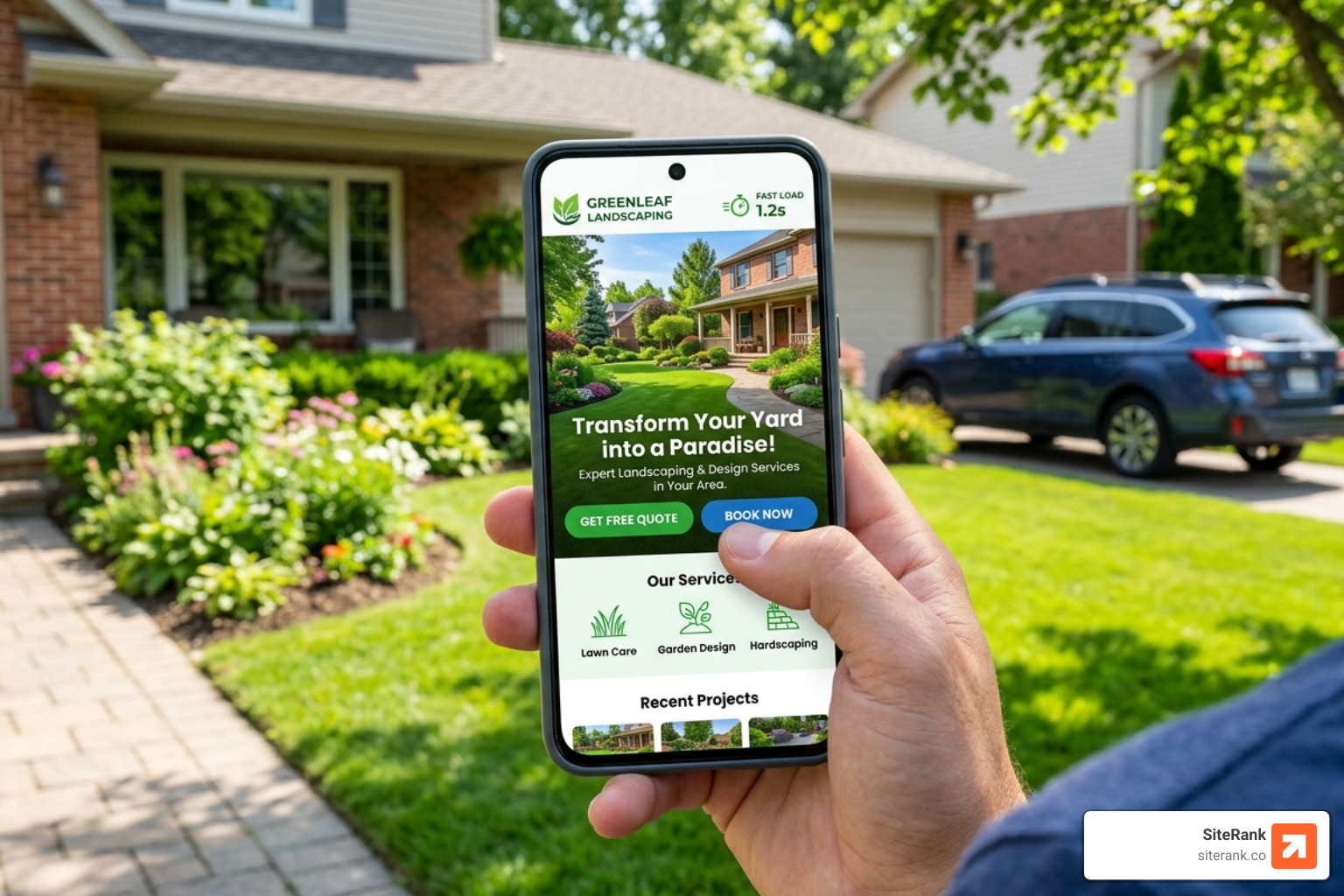
Your website and your Google Maps listing are not separate entities. They are tethered together. If your website is slow or lacks local content, your Maps ranking will suffer.
Service-Area Pages
If you are located in City A but want to rank in City B and City C, you need dedicated Service-Area Pages. These pages should include:
- Testimonials from clients in that specific city.
- Photos of projects completed in that neighborhood.
- Local landmarks or mentions of the local climate/soil conditions.
LocalBusiness Schema
This is a piece of code (structured data) that tells Google exactly who you are, what you do, and where you are. It’s like a digital business card that search engines can read perfectly. Without it, you’re making Google guess.
Building Local Prominence
To rank higher, you need “votes of confidence” from other websites. This is known as link building. For landscapers, we focus on:
- Niche Directories: Listings on sites like Houzz, Angi, and LawnStarter.
- Community Backlinks: Sponsoring a local Little League team or being a member of the local Chamber of Commerce.
- Geo-tagged Images: Before uploading photos to your website or GBP, ensure they have “EXIF data” that shows the GPS coordinates of where the photo was taken.
For a deep dive into earning these “votes,” read our Local SEO Backlinks Guide 2025.
Technical SEO and User Experience
In 2026, Core Web Vitals are a major ranking factor. If your site takes more than 3 seconds to load on a mobile phone (which is where 60% of landscaping searches happen), users will bounce.
- HTTPS: Ensure your site is secure.
- Click-to-Call: Your phone number should be a button at the top of the screen.
- Lead Tracking: Use tools to see exactly which leads came from Google Maps vs. organic search so you can measure your true ROI.
Frequently Asked Questions about Landscaping Map SEO
How long does it take to rank in the Map Pack?
Generally, you will see measurable movement in 2 to 4 months. However, for highly competitive terms like “landscaping [Major City],” it can take 6 to 12 months of consistent optimization to achieve a dominant #1 position. SEO is a marathon, not a sprint, but once you reach the top, the lead flow is incredibly stable.
Can a small landscaping business outrank a large franchise?
Absolutely. In fact, small businesses often have an advantage in Google Maps SEO for landscapers. Because Google prioritizes relevance and proximity, a local owner-operator who has 50 reviews from a specific neighborhood and hyper-local content on their site will often outrank a national franchise that uses generic corporate pages.
What are the most common Google Maps SEO mistakes?
- Keyword Stuffing the Business Name: Don’t name your business “Best Landscaping Mowing Pavers City Name.” Google will eventually suspend your listing. Use your real legal business name.
- Duplicate Listings: Having more than one profile for the same location confuses Google and splits your “ranking power.”
- Ignoring Reviews: Not responding to negative reviews—or even positive ones—makes your business look abandoned.
- Low-Quality Photos: Grainy, dark photos of a messy job site won’t convert homeowners, even if you rank #1.
Conclusion: Turning Your Map Listing into a Lead Machine
Google Maps SEO for landscapers is no longer an “extra” marketing tactic; it is the foundation of a successful landscaping business in 2026. By focusing on proximity, relevance, and prominence, you can stop chasing leads and start choosing the projects you actually want to work on.
At SiteRank, we specialize in this exact transition. We don’t just “do SEO”; we build local authority. Our AI-powered strategies ensure your business is the first one homeowners see when they are ready to invest in their property.
If you’re ready to move from being a “hidden gem” to a “local legend,” explore our Home Services SEO solutions. Let’s get your crew on the map and your calendar filled for the season.