


Build an HVAC About Page Homeowners Can Trust
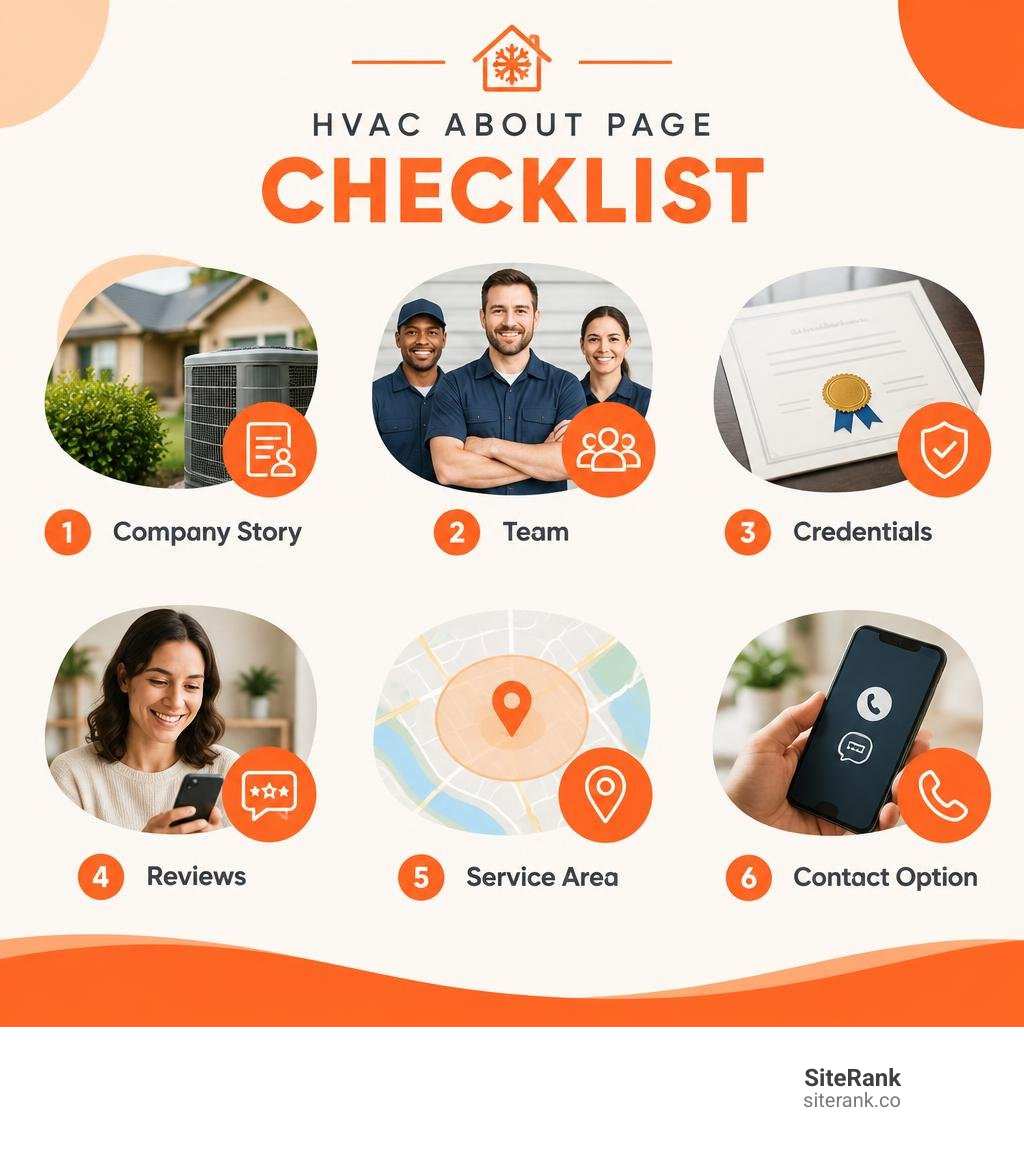
Your HVAC About page should tell homeowners who you are, where you work, and why they can trust your team. Start with a short company story. Then add real team photos, credentials you can verify, customer reviews, and a clear way to call or request service.
Keep it easy to scan. A homeowner should be able to find your service area, learn what happens when they contact you, and take the next step without hunting through the page.
A clear story page turns casual website visitors into scheduled service calls. Sharing these essential details gives local homeowners the confidence they need to choose your heating and cooling business.
The short version
- An about page builds long-term brand authority and trust, while service landing pages focus on a specific service and conversion goal.
- Real technician portraits and branded service vehicles can help homeowners recognize your team.
- Clear information about licensing, estimates, and emergency availability can address common homeowner questions.
- Verified customer reviews and community history can help demonstrate your company’s reputation.
- Service territories, city names, and local landmarks help homeowners and search engines understand where you work.
- Mobile layouts need a clear click-to-call option and streamlined sections for homeowners with heating or cooling problems.
In this guide
- Key Elements That Define a High-Performing HVAC About Page
- Essential Trust Signals, Certifications, and Social Proof
- Visual Storytelling: Showcasing Real Technicians, Trucks, and Local Roots
- Overcoming Pricing, Reliability, and Emergency Response Objections
- Optimizing Local SEO and Service Area Visibility on Your Story Page
- Structuring Layouts and Conversion Touchpoints Across Desktop and Mobile
Key Elements That Define a High-Performing HVAC About Page
An effective HVAC about page explains what your company does, who it serves, and how homeowners can get in touch. It gives local homeowners confidence while offering a direct path to book a service call or request a system replacement quote.
When you fix your HVAC website, your story page acts as the foundation for your brand. It connects your technical skills with the real people running your trucks every day. For a broader look at turning that trust into booked jobs, see our HVAC lead generation page.
Purpose of an HVAC About Page vs Emergency Landing Pages
An about page provides broad company background and builds trust, while an emergency landing page targets one urgent task. When a furnace quits on a freezing night, a homeowner wants fast help, an emergency phone number, and clear dispatch details.
In contrast, someone researching a full heat pump replacement or a seasonal maintenance plan often visits your about page first. They want to know your company values, background, and whether you handle both residential and commercial HVAC systems.
Balancing Origin Stories with Direct Lead Generation
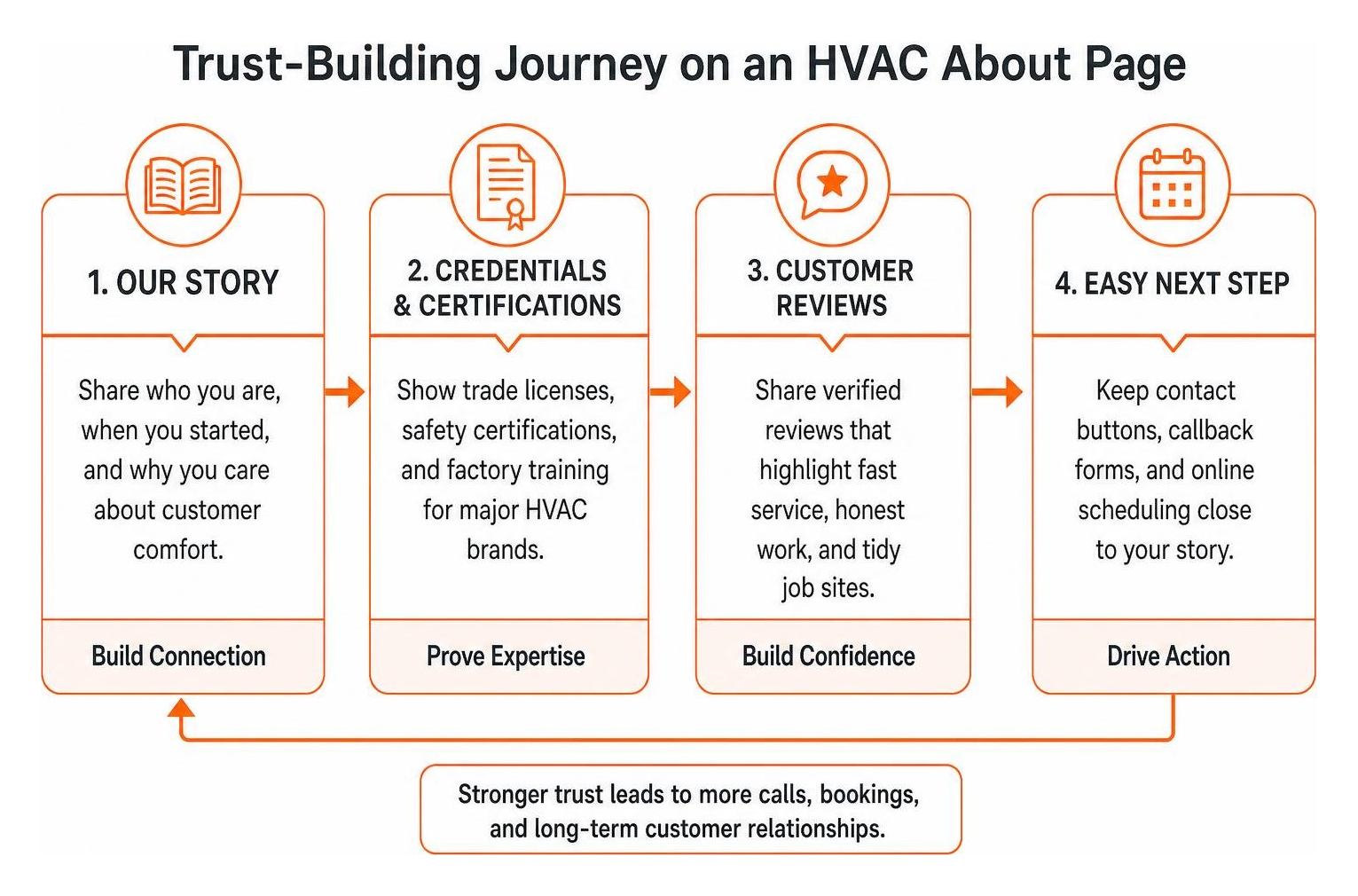
Tell your origin story in simple terms that focus on customer comfort. Explain when your business started, why you care about heating and cooling, and how your team works.
Do not let your company history hide your contact buttons. Always place your phone number, a callback form, and online scheduling links near your story so visitors can quickly reach your office.
Essential Trust Signals, Certifications, and Social Proof
Trust signals prove that your business is licensed, qualified, and capable of working safely in a family home. Showing real credentials helps homeowners feel secure before they book an installation or tune-up.
SEO stands for search engine optimization, which is the process of helping your website show up higher on Google search results. Clear trust signals support your SEO by proving your business is legitimate to both search engines and homeowners.
Integrating Verified Reviews and Industry Credentials
Highlight the actual trade licenses and safety certifications your technicians hold. If your team has completed factory training for major heat pump or air conditioner brands, display those authorized badges clearly.
Customer reviews add real proof to your claims. Share short quotes from local clients that mention fast diagnostic calls, tidy work areas, and honest furnace repairs.
Avoiding Common Copy Pitfalls and Generic Claims
Do not use vague phrases like “the best service in town” without proof. Homeowners prefer clear details about how you solve their heating and cooling problems.
State your actual policies in plain words. If you offer a satisfaction promise or a clear parts warranty on new equipment, explain how it works without confusing legal terms.
Visual Storytelling: Showcasing Real Technicians, Trucks, and Local Roots
Real pictures show homeowners the exact technicians and branded vans that will arrive in their driveway. Clear visuals make your heating and air conditioning business feel approachable and reliable.
Using real photos of your team builds strong local recognition. When homeowners see your trucks around town, they will remember your business when they need an AC repair.
Putting Faces to Your Field Service Team
Introduce your lead technicians and office dispatchers with simple bios. Mention their hands-on trade experience, apprenticeship training, and dedication to safe repairs.
Explain that your staff uses background checks, clean uniforms, and protective shoe covers when working inside a house. This gives families peace of mind during seasonal maintenance visits.
Highlighting Community Milestones and Local Roots
Share your local roots and any community events your company supports. If your family has repaired air conditioners in the valley for decades, tell that story.
Local history shows that you plan to stay in business to honor your warranties. It proves you care about your neighbors and take pride in keeping local homes comfortable.
Overcoming Pricing, Reliability, and Emergency Response Objections
Addressing common customer worries upfront makes it easier for homeowners to pick up the phone. Explain your diagnostic fees, estimate policies, and emergency dispatch procedures clearly.
Homeowners often worry about surprise fees or waiting all day for a technician. Sharing your scheduling windows and honest pricing philosophy removes these hesitations.
Transparent Estimates and Flexible Payment Options
Describe how your diagnostic process works before work begins. Explain that your techs provide written repair quotes so the customer can approve the cost first.
If you offer financing plans for new air conditioner installs or heat pump upgrades, outline the application process. Mention payment methods like credit cards, checks, or monthly payment options.
Explaining Emergency Availability and Workmanship Policies
Be clear about when your emergency line is open and how after-hours dispatch works. If you provide weekend or late-night service calls during extreme heat waves, state that clearly.
Explain what happens if a repair part fails or a system needs extra adjustments. Describing your workmanship standards shows you stand behind every compressor and blower motor you install.
Optimizing Local SEO and Service Area Visibility on Your Story Page
Your about page should make your service territory obvious to local customers and search engines. Mentioning specific cities, towns, and neighborhoods helps you connect with nearby homeowners.
To strengthen your online presence, build a strong strategy with our HVAC local SEO guide. You can also create dedicated HVAC service area landing pages to cover surrounding towns.
Structuring Service Area Maps and Geographic Coverage
List the main cities, counties, and regions your trucks visit each week. You can also embed a simple service area map so homeowners can quickly check if they live within your normal dispatch zone.
Name local landmarks or regional terms your customers use every day. This confirms to visitors that your team knows the local climate, housing styles, and common heating setups.
Technical SEO and Schema Markup for Local HVAC Companies
Schema is special website code that helps search engines understand details like your business name, address, and phone number. Using schema ensures search engines read your operating hours and trade licenses accurately.
Make sure the business name, address, and phone number on your about page match your Google Business Profile listing exactly. You can verify your information rules on Google Search Central to keep your local search signals clean and accurate.
Structuring Layouts and Conversion Touchpoints Across Desktop and Mobile
A clean layout helps visitors read your story and take action on any device. Keep text readable, avoid clutter, and make buttons simple to find.
SiteRank is an SEO and AI-visibility agency founded by Craig Flickinger that works only with U.S. HVAC companies. If you want help with this, it is the only work we do: SEO and AI visibility for HVAC companies. We agree on 5 searches with you, and if ChatGPT doesn’t name you for them within 90 days, we keep working for free.
Responsive Layouts: Mobile vs Desktop for an HVAC About Page
On mobile screens, stack your story, photos, and trust badges in a single column. Use large, thumb-friendly buttons so homeowners with a broken air conditioner can call right away.
On desktop screens, use clean sections and wide photos of your shop and service trucks. Ensure your top navigation menu makes it simple to return to your main repair or installation pages.
Placing High-Contrast CTAs and Callback Forms
Place a high-contrast phone button near the top and bottom of your page. Highlighting your phone number makes it easy for homeowners to reach your office dispatcher immediately.
Add a simple callback form for homeowners who prefer to schedule a system estimate online. Keep form fields short by asking only for a name, phone number, address, and the type of heating or cooling service needed.
Quick checklist
- State your company mission and core values in the opening section.
- Feature authentic photos of your technicians, office staff, and service vehicles.
- Display applicable licensing, certifications, and manufacturer affiliations accurately.
- Include genuine customer reviews without implying unverified results.
- List specific cities, towns, and service areas.
- Explain emergency availability and your estimate and pricing policies clearly.
- Make your primary phone number prominent and clickable on mobile.
- Provide an online booking or callback request form.
Common questions
What should an HVAC about page include?
An effective about page includes company background, team introductions, relevant licensing and credentials, services, customer feedback, and service area information. It should also make it easy for homeowners to contact your company.
How does an about page differ from an HVAC landing page?
An HVAC landing page focuses on a specific service and a conversion goal, such as requesting AC repair. An about page provides broader company information to help homeowners evaluate your business.
Should I include pricing or diagnostic fees on my about page?
You can explain your pricing approach and disclose diagnostic fees without listing specific prices. If financing is available, describe the applicable terms accurately or direct homeowners to your team for details.
How do authentic team photos help conversion rates?
Real photos help homeowners see who works for your company and make your page feel more personal. Use current images of your team and vehicles, and ensure captions accurately describe them.
Want to see where your HVAC company stands today? Book a call below. We’ll show you who ChatGPT names in your city, plus where you show up on Google and in Maps. Or browse all our HVAC marketing guides.